
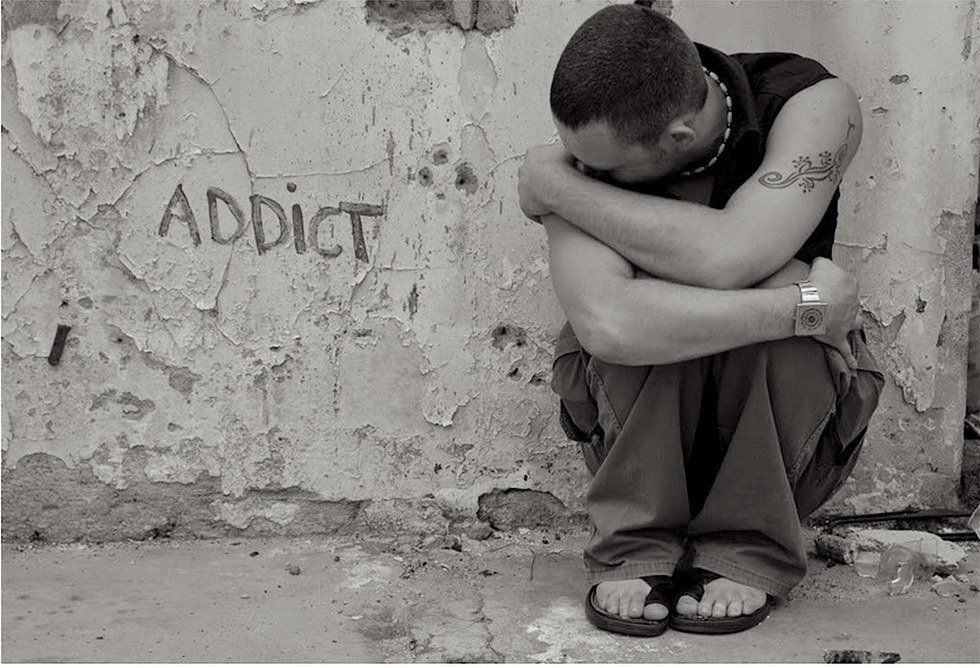
Nowadays, Facebook is being used less as a social media and more as a platform for people to share their opinions on current events. One trending opinion that recently caught my attention was the one widely adopted after Lamar Odom's recent drug overdose. I noticed that this particular celebrity addict gained a good deal of sympathy from the same people that condemn the addicts on our streets and in our jails. The only difference between the two is socioeconomic status. So why do people like Lamar Odom get national news coverage, and in some cases, get put on a reality show like Celebrity Rehab, whereas the rest of the population gets neglectful jail sentences? This is what our criminal justice system believes addicts deserve, and that's not the case. It's time for major reform on how our government handles addiction, beginning with investments in recovery rather than imprisonment.
Let's start with defining addiction biologically. It is a chronic mental impairment of the brain's reward, memory, and motivation circuitry. It’s the inability to abstain from or control cravings of a substance, until the body physiologically cannot function without its presence. However, let’s focus on the term "mental impairment." Now, replace the word "mental" with the word "physical." If someone had a physical impairment, how could anyone possibly expect him or her to recover without the proper medication, therapy, or treatment? The same applies to any mental illness, but because the two manifest differently, mental illnesses are automatically dismissed as less significant. Unfortunately, those suffering with these diseases are facing the consequences.
In 2010, The National Center on Addiction and Substance Abuse (CASA) released a report that found that 65% of all U.S. inmates met the medical criteria for substance abuse, yet only 11% received any treatment. Susan Foster, CASA’s Vice President and Director of Policy Research and Analysis, discussed in this report that states consistently complain about rising prison costs, yet don't spend any public funding on providing treatments to inmates with alcohol and drug problems. Incarceration does not address the roots of addiction; in some cases, it may actually provoke them. Considering a major trigger for addicts is emotional trauma, situational stressors that result from being in jail are only going to fuel an impending relapse.
After facing a rise of opioid overdoses, the police department in Gloucester, MA has begun to address this issue with a more effective approach. Over the summer, its chief announced an amnesty program that allows users to turn themselves in without any criminal charges. Instead, they are admitted directly into treatment programs to medically address their disease. Since the implementation of this program, hundreds have turned themselves in and begun the road to recovery. Additionally, many other towns are following Gloucester's example by implementing similar programs within their police departments. It’s not a simple fix, but it’s a huge step in the right direction to reform.
If you're still not convinced, watch this video of Chris Christie pleading for Americans to reconsider the stigma surrounding addiction. Just as he stated, addiction is an illness that requires psychological care, not incarceration. It's a vicious, unforgiving disease that can effect any one of us. The homeless veteran without family, the teenager that wanted to experiment, those that turned to chemical substances to cope with hardships- all of these people deserve treatment too. Let's stop contributing to the cycle by locking addicts up in jail cells, and start providing more opportunities for them to recover.