
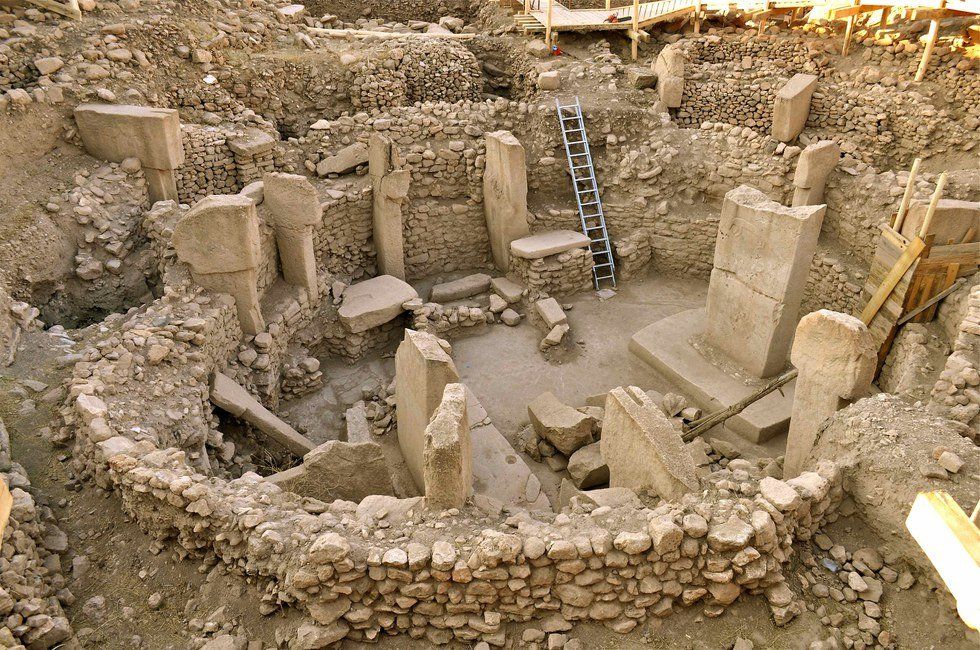
Mesolithic religions brought about a new way of life for the people of that time. They built a stone temple at Urfa to use for their religious practicing. I think that the erection of this stone temple meant bringing together the people. It was a way for the people to be more open about their religious beliefs, although this led to conflict, and giving them a way to express themselves. The purpose of the temple was a place for people to gather and practice their religion once or twice per year. It was not a lived in, or home base, temple. I think that it is important to understand that although the temple was monumental in changing the lives of these people, it was also responsible for a lot of their pain. The construction of the temple at Urfa caused a new set of religious behaviors.
The new set of religious behaviors presented in the people where a dramatic shift in their overall attitudes towards nature. The people began changing their entire way of life because of the new religious concepts they were learning. Herders stopped hunting the animals. They started using them as ritual sacrifices. They thought that by being more understanding towards their gods and giving offerings, they would be spared ill-will. Some of the farmers even began using humans for sacrificial purposes. It went as far as ritual sex and human sacrifice because the farmers believed that this would make their crops more fertile and grow larger. This is a huge form of corruption by the religious leaders of these times. These issues are more thoroughly available to be seen in the myths and artifacts of that time.
These people in the myths and legends were always trying to find the spiritual center of the world. In their native language, Urfa translated to Gobekli Tepe, which loosely means, Mount Bellybutton. In other sources, such as the Bible, there are prime examples of these concepts. In the stories of Adam and Eve, The First Flood, and The Tower of Babel, the people portrayed were attempting to find the answers to their deepest questions. They wanted truth above all else. For the people of Urfa, the myths suggest that what started as one culture with one language became three cultures with three separate languages. This is symbolized once again by the three sons of Noah.
The biggest issue I find with this temple being built and used for religious purposes is that it was never about the religion. The temple created an empire and changed the way the people thought. The Stone Temple created in Urfa caused three main things to happen to the people. Firstly, it caused a new way of life for the people, having them meet for religious service rather than worship alone or as a family. Secondly, it changed the behaviors of the people outside religion by first forcing a new set of religious behaviors to emerge. Finally, it changed the way the people of today interpret that time, by altering the artifacts and myths we see today.
So why should we, the people of the 2000s care about this long forgotten time and religion? Everything we have learned about this temple has come from the field of anthropology. I think Mesolithic religion, and the Temple of Urfa, should be important to us today. The past can teach us how any one leader for a group of people can lead us into corruption without the proper knowledge. So when you choose who you will follow, choose wisely and with as much research as possible.