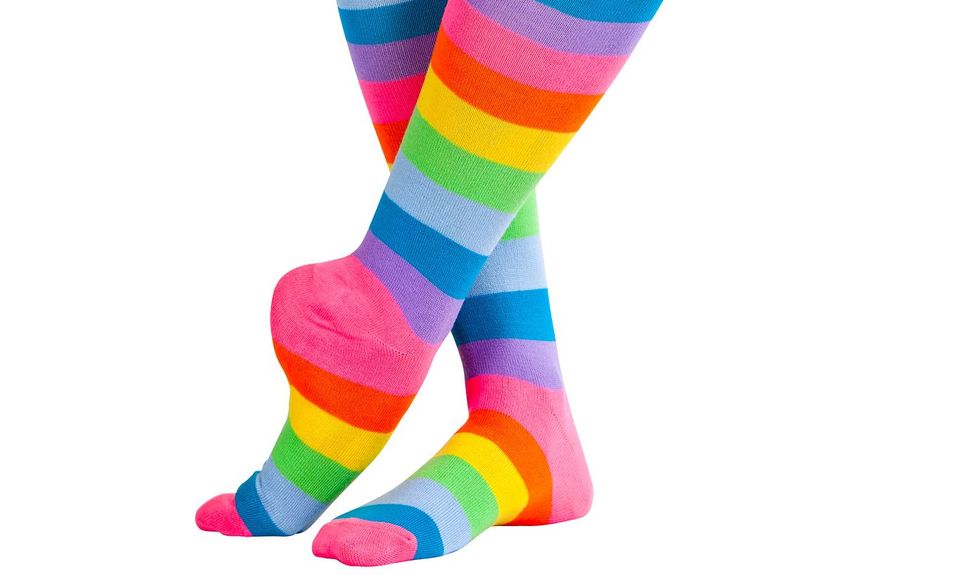
One afternoon I was on a quick Target run with my mom. As we slowly made our way towards the furniture section a little girl, about 4 years old or so, ran in front of us. She was laughing and waiting for her dad to catch up to her. She was wearing polka-dot pants and a sweater with a star print, along with rainbow socks. She turned in response to a “Wait!” from her dad, and obediently stood still with a huge smile on her face.
“Someone dressed herself today.” I commented to my mom as we walked past. As we continued walking, I tried to think back to a time when I had been that happy wearing a mismatched outfit.
“I hope she still has that confidence when she grows up.” I continued.
“I know,” my mom answered, “She thinks she looks fantastic, so she’s happy.”
Seeing how happy that toddler was in the outfit she most likely picked out herself was a little bittersweet. The immediate reaction of “Oh, how cute!” quickly turned into sadness when I considered that pretty soon, she was going to be dealing with society. Several years in the future she was going to start reading magazines that detailed the latest trends, implying that if you didn’t dress that way, you didn’t fit. She would start to respond to how advertisers and popular culture made her feel when they preyed on the basic human instinct to belong, just to sell something.
She will start to analyze and criticize her wardrobe, forgoing what makes her happy for what “everyone else is wearing”, because she, like many other girls, is going to wholeheartedly buy the message that if she isn’t the same, she isn’t good enough. It made me sad that soon she was going to be worrying if she was thin enough, or pretty enough, or if she was wearing something totally off-trend. I desperately wanted that little girl to grow up confident. I wanted her to still be wearing rainbow socks and star-sweaters when she was in middle school or high school, because no matter what anyone said, she was being true to herself.
It’s not as though asking someone to be a functioning member of society is a bad thing. It’s the way we are asking. We should be encouraging our children to be kind, positive, and deeply respectful of others and themselves, and not demanding they focus on staying on trend. Our children should care more about improving society than about if you can really wear Birkenstocks with socks anywhere other than Omaha.
Finally this culture of the follower is changing for the better. More and more children are feeling the freedom to be true to themselves and to challenge “what’s trending”. But there’s still a long way to go. If we want the 4-year-olds of today to grow up and be the confident, genuine people we tell them to be, we need to take a long, hard look at how we approach the subject of “fitting in”.
So the next time you debate whether you should wear those toe socks you like, or get the jacket that’s definitely too 90’s to wear outside, ask yourself why you should care. And when you come up with an answer that satisfies you, own it.
Have the courage to be confident.