I want to be angry about Columbus Day. I am angry about Columbus Day. But lately I find myself more tired than angry. More exhausted than determined. This is not to say that I have any intention of giving up on my anger—quite the opposite. But I am simply worn out with the way the world turns.
We are supposed to talk about Christopher Columbus. But the thing is, I don’t want to talk about Columbus anymore. Many people far better equipped to tell you all the facts have already done that. If you don’t know why he was evil, find out for yourself. I don’t want to educate anyone about things they should have been taught from the very start. I don’t want to defend my anger, because it is my anger, and I have a right to it.
But I feel that I have to defend it, because there are scores of dead Native children reaching from today to the 15th century when European sailors first began to explore the “New World.” This is not all Columbus’s fault. The indigenous Taíno people of the Caribbean suffered directly from Christopher Columbus’s hands.
Christopher Columbus, in this part of the world at least, is more of a legend than anything else. He died without ever stepping foot on what we now know as the United States. But it was his impact on every other European “explorer” that implicates him in the genocide of indigenous people from the Caribbean to the plains of America and even beyond.
Columbus went back to Spain with gold. His successes funded more and more voyages to the “New World.” And in his diaries and reports back to the monarchy and Catholic church, he spoke of the people he found:
They will give all that they do possess for anything that is given to them, exchanging things even for bits of broken crockery. They were very well built, with very handsome bodies and very good faces....They do not carry arms or know them....They should be good servants.
How could anyone see the beauty and strength and purpose built into the muscles of ancient and prosperous tribes and only think of subjugating them? How could this be the person that we honor every year with a national holiday?
This is not what I mean to focus on.
Suicide among Native American youth 15 to 24 years old is 2.5 times higher than the national average. Suicide is the second leading cause of death for ages 10-24 in the United States. That’s a very high chance that any teenager might kill themselves. If they’re a Native American teenager, it is much, much higher.
This is not unrelated to the actions of Christopher Columbus or his legacy—the national holiday in his name. Indigenous people across North American have been treated as less than human since European settlers first laid eyes on them. A way of thinking, a pattern of dehumanization, a precedent of mistreatment was established then and survived throughout time. Each new generation of white faces pointed back to the generation before, citing the actions and attitudes of their forefathers as all the push they needed to continue killing Native Americans, in whatever ways the world will allow them.
We are dying. We have been dying for hundreds of years.
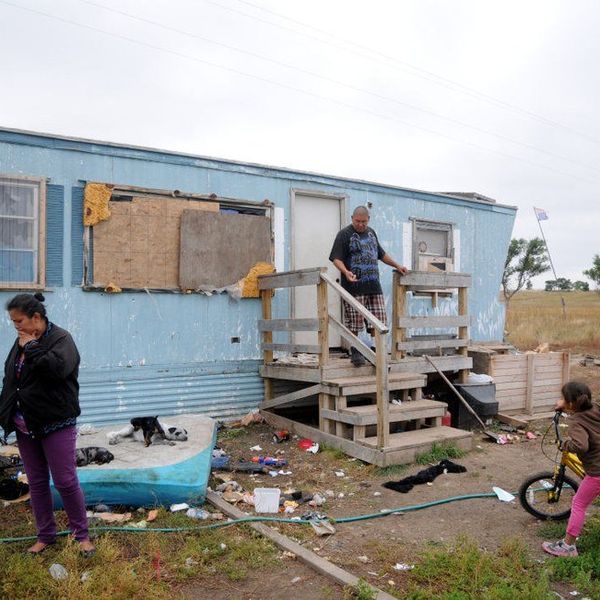
You have to hear this. You have to hear these numbers and understand that each number represents a child, a human being, a copper skinned person with thick, dark hair and even thicker skin. You have to close your eyes and picture every lost child, every grieving part, every empty bedroom gathering desert dust in reservations across the country.
Listen.
One-quarter of Indian children live in poverty, versus 13 percent in the United States. They graduate high school at a rate 17 percent lower than the national average. Their substance-abuse rates are higher. They’re twice as likely as any other race to die before the age of 24. They have a 2.3 percent higher rate of exposure to trauma. They have two times the rate of abuse and neglect. Their experience with post-traumatic stress disorder rivals the rates of returning veterans from Afghanistan. – Theresa Pouley
Native Americans are twice as likely as any other race to die before the age of 24.
I am a Native American woman. I am 21 years old. I have been suicidal for as long as I can remember.
“In the US, between 1 in 9 and 1 in 5 AI/AN youth report attempting suicide each year.” - Suicide Prevention Resource Center
I am a Native American woman. I am 21 years old. This is not about me, but I need you to understand that this is not something that is disconnected from your daily experience. If you’re reading this, you’re reading the words that I lived long enough to type. Words that I fought to stay alive to type. And I am one of the luckiest ones.
Please. This is not about nitpicking at things that are offensive because we are overly sensitive, or too politically correct. Trying to expose the absolute horror of having a national holiday in the name of a man who did nothing but open up the eastern slave trade and reap genocide—like trying to get racist and dehumanizing mascots removed from NFL teams and high schools—these things are just our very few visible issues.
You don’t see it. You don’t see all the dead children. All the poverty. All the broken families. We have been screaming about it, but we are not heard. We learned long ago that we are not heard. You see the Redskins logo. If we scream loud enough about that, maybe you’ll start to hear the rest.
Our dead children cannot speak. Our ancestors cannot speak. But I can, and I am trying to be heard now. Please hear me. We are still alive, and we are still dying. We have survived genocide, the decimation of our culture and our land, and we will keep surviving. But after this long, I have to ask myself—what for? What is it all for?
I don’t know. I don’t have any answers. There’s nothing I can tell you now that will tie all of this together. There’s nothing I can tell you now that can make any of this better. I just want to be heard, because so many other Native children can never be heard.
It is not our genetics. We are not predisposed to alcoholism, misery, or early deaths. It is the direct result of governmental policies and societal attitudes. On reservations, Natives are set up to kill themselves.
We don’t have to ask why the way we do with most other epidemics. We know why. They tell us it’s in our blood.
But here. There are a lot of things in my blood. There is strength. Power. Pride. Resilience. Survival. Love. There are a lot of things in my blood, and the impact of Christopher Columbus and every other early European settler who saw my ancestors as less than human is not one of those things.
Those of us who can speak are always trying to do better. In reservations across the country, people are learning about mental illness, suicide prevention, and our own history.
“Look at our history. It’s been survival of the fittest. We’re the smartest and the toughest anyone can be. Our message to our kids should be, ‘We’re okay.’” – Alvin Rafelito, Ramah Navajo
We’re a lot of things. We’re okay.
We’ll be okay.