

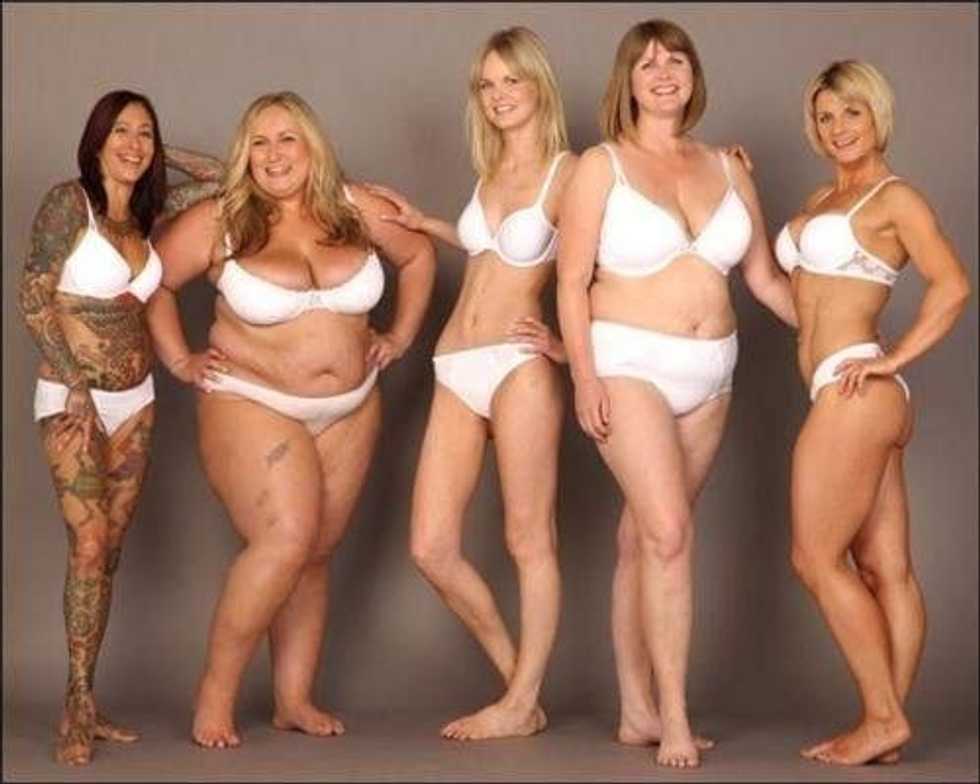
A previous queen of France, Marie Antoinette, is famous for a quip, “Let them eat cake!” There is no hard, historical evidence to prove that these words came from her mouth, but, it is what she is known for. David Engber calls upon Marie Antoinette in his text, “Let Them Drink Water!” to symbolize excess. However, historically, there have been plenty male monarchs that created similar situations. So, why did Engber pick her? Marie Antoinette's reign was during a time of poverty and aristocracy in France. The rich, comfortable life style of the aristocrats enabled them to eat cake, when the poverty stricken commoners could not even afford bread. This made the rich, consequently, obese and the poor skinnier. Irony can be found here, because, today, the roles have completely switched. People of better financial status are generally healthier, therefore skinnier. On the opposite side, people on a budget have higher obesity rates because unhealthy foods are often cheaper than healthy alternatives. Engber recognizes the unfairness related to economic status, “Some tastes, it seems, are more equal than others” (Engber 643). Additionally, Louis XVI of France would have never taken Marie Antoinette as a wife is she hadn’t been overweight. Women were considered to be of undesirable status if they were skinny, which is the radical opposite of what has been required of women in the updated world. However, society is beginning to relapse, but not completely. The partial relapse is due to women who believe that their bodies are not dictated by the patriarchal male, or anyone else, for that matter. Body positivity has ruptured the idea of an “ideal” female body and is rejecting any traditional connotations or restrictions toward the image of a woman. Society should advocate body positivity to avoid repressing human qualities, because labels, rules, and shaming directed at the female body is ridiculous; all bodies are beautiful.
One of the most damaging things associated with body image are labels. Mostly because they are extremely hollow and arcane. Terms such as “skinny” and “fat” are just not necessary. There are so many different definitions of what is considered “skinny” or “fat”, and they are so individualized, and so based on opinion, that they are just vindictive. Furthermore, these terms are wholly subjective and constantly changing. What was “fat” and “skinny” a month, a week, or even a day ago, isn’t anymore. It is constantly changing. There is no way to look around, point these things out, and define someone as such, because no one can agree what these destructive words even mean. This makes the ridicule so meaningless and sporadic that it is even more harmful. However, there is one trusted source for accurate information about this impossible subject. Unfortunately, it survives and flourishes at the cruel hands of society, and should not be trusted at all.
Media consistently vandalizes everything beautiful about a woman’s body, as explained by Jean Kilbourne in “Killing us Softly 4.” Kilbourne’s motive is actually directed toward the exploitation of the body in advertisement, however, she does defend the female body against the venom women are burdened by in society,
“... girls are getting the message these days just so young, that they need to be impossibly beautiful. Hot, sexy, extremely thin- they also get the message that they’re going to fail, there’s really no way that they’re going to achieve it” (Kilbourne).”
It is obvious to Kilbourne, and many others, that these labels are illusory and unattainable, so women should not continue to be restricted by them. Although obesity is a health issue, so is societies inflation with being “skinny,” “The obsession with thinness is a public health problem, the tyranny of the ideal image of beauty…” (Kilbourne).
Recently, though, there has been an incline in the use of “plus-sized” models. This comes along with a surge of positive labels, such as “thick” (which means not skinny, with a nice butt and legs). Society is becoming more susceptible to different body types, but there is still judgment passed because of differences, and that is still a big issue. Certain body types are still being strived for, when what needs to be strived for is acceptance.
Another abusive, societal quality that the bodies of women face are rules and standardization. The “rulers,” in this case, are the patriarchal males. It is true that everyone has their preferences, but it is not alright for the preferences of others to become a global standard. Traditionally, women are objectified and surrounded by double standards, living for nothing more than to serve men and reproduce. But all these rules rely on tradition. The enemy of tradition is change, and, while change is really scary to society, it is happening. There is a rebellion forming against the traditional rules, in the most positive way. Society is working to retrieve the pre personified female body. Women are doing whatever they want, regardless of what anyone thinks. They are doing it for their own self-confidence, and that is the healthiest adaptation society can make.
These effects of body shaming are as lethal as obesity. The mental corruption that can be linked to body image is substantial. It can also be a hindrance to the development of a healthy self-esteem, and, accordingly, a healthy lifestyle. Over the course of the last ten years, Dove has been surveying women on body image related pressure, and uncovered some expected results,
- “Nine out of 10 girls want to change at least one aspect of their physical appearance
- Six out of 10 girls are so concerned with the way they look that they are holding back from participating in important life activities
- Only 4% of women around the world consider themselves beautiful
- 72% of girls feel tremendous pressure to be beautiful
- 80% of women agree that every woman has something about her that is beautiful but do not see their own beauty” (Dove).
Women who have body positivity are not sensitive to the dramas of fitting the criteria of society, and in result, tend to be more confident and make better choices. They are also less likely to body shame someone else, which initiates a fantastic, reconstructive, counteractive cycle.
The labels, rules, and shame created by society are oppressive. Slowly, however, women are now making a drastic, much needed change in society. This evolution will conjure a much healthier mainstream that avoids conformity. Confidence among the masses is rare, but there is still an epidemic sparking. Bodies of all types should be celebrated, not shamed or restricted. The efforts made by women now will dictate the divergence for future generations. Body positivity is beyond important and should be advocated for as much as obesity is disputed. There is no room to compromise with the old, traditional values. These new, enlightened ideas must be solely enforced. As a result, a lot of anger and self-esteem issues will diminish, making the world a happier place. The battle to meet impossible societal standards will subside, and everyone will be at peace with their beautiful bodies without fear of judgment, because there will no need for validation; all bodies are beautiful.
Work Cited
Dove. "Our Research." Dove. N.p., 2013. Web. 17 Nov. 2015.
Engber, Daniel. “Let Them Drink Water!” Patterns for College Writing, Ed. Kirszner, Laurie G.
& Mandell, Stephen R, Twelfth Edition, Boston Bedford, 2012. Print.
Kilbourne, Jean. "TRANSCRIPT: KILLING US SOFTLY 4: ADVERTISING’S IMAGE OF
WOMEN." Definatalie.com. Ed. Natalie Perkins. Natalie Perkins, 2014. Web.
17 Nov. 2015. .