


*Disclaimer: Graphic photos ahead
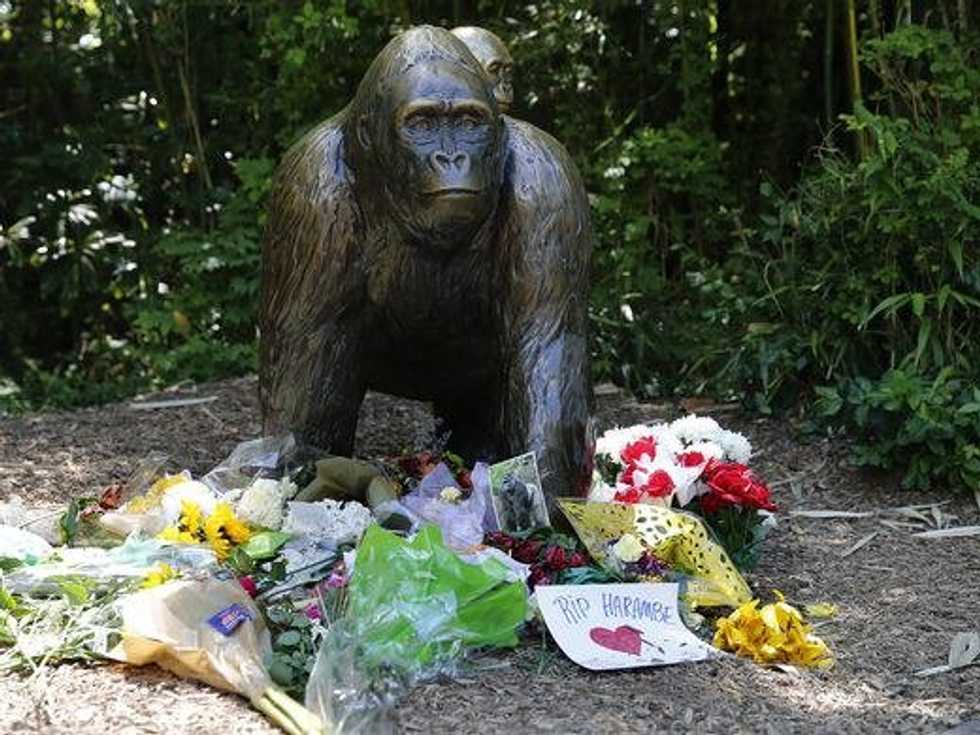
Harambe, a western lowland gorilla, was killed a day after his 17th birthday.

And social media went nuts. Almost immediately after the story of Harambe made it out, social media began to create several hashtags demanding justice. Petitions were started to hold people accountable, and now all gorillas are receiving much more attention regarding the issue of their captivity.

This isn't the first time social media has come out in defense for animals. People demanded the same justice for Cecil the Lion, and decided that they would also #boycottseaworld.
The most popular anti animal cruelty campaign, is probably the effort to end the Yulin Dog Festival. A festival held in China during the summer solstice, where about 10,000 to 15,000 dogs are consumed in a 10-day period.
As great as it is to see our friends, families, classmates, and coworkers using social media for such powerful causes, it's also indicative a much bigger problem: We're extremely hypocritical when it comes to animal suffering.
We've chosen to care about some animal suffering, while fully and willingly neglecting others.
If you go out in public and ask every person you run into, most of them will tell you that they are 100 percent against animal suffering and animal cruelty. But most of those people, including the people reading this article, are hypocrites about animal suffering and actually directly contribute to the suffering and torture of animals almost every day.
Harambe
Social media went insane when Harambe The Gorilla was killed, yet many people probably wrote their angry Facebook posts and tweets while chewing on chicken nuggets which came directly from drugging, torturing, and then slaughtering innocent chickens.
And while I'm glad people are upset that an innocent gorilla's life was taken, they're still missing the point. People should be outraged that Harambe was being kept in captivity to begin with. Gorillas are meant to live their life in the wild, not in captivity for human profit. For more information about the zoos and how their treatment of all of their animals is much more upsetting than just one gorilla, click here.
Cecil The Lion

Social media also cried foul when Cecil The Lion was killed for hunting. Online protesters only seems to care that Cecil was killed because there aren't that many lions left on this planet. Because those same people demanding justice for Cecil, did not advocate that we outlaw hunting in general. This gives off the message that society will stand up for an animal only after we've killed off a certain amount of them, and that's just not a very compassionate message. What's the moral difference between the Cecil, and this?

Sea World
I'm ecstatic that #BoycottSeaWorld actually became a thing. For me, seeing my social media timelines blow up with that hashtag was a dream come true. But it also revealed to me how clueless we are about these things. The #BoycottSeaWorld movement made me very happy, but why weren't those same efforts directed towards zoos? It's the exact same thing but with land animals. Both zoos and Sea World take animals from captivity, breed, keep them in small enclosed areas, and greatly shorten an animals natural life expectancy. But for some reason, zoos get a free pass from society while Sea World takes a hit.

Yulin Dog Festival
This one is the most astonishing, to me at least. The Yulin Dog Festival is an event during the summer solstice in which 10 to 15 thousand dogs are killed and eaten in the span of 10 days. When social media found out about this, they went nuts. We've all seen long posts and tweets about how dogs are so precious, how their torture is immoral and disgusting, how they couldn't imagine why people would participate in such horrible acts.
What baffles me about all of this is that this dog festival is only 10 days, and only about 15 thousand dogs are killed there for their meat, but somehow that is enough to upset the internet.
Yet farm animals like pigs chicken and cows are killed 24 hours a day, every day of the year, in the billions, and social media stays nearly silent. Now, after reading this, some might come up with excuses like "Dogs are pets not food" or "Pigs are different than dogs", and my second hypothetical quote is actually accurate. Pigs are different than dogs. That's because they're actually more intelligent and have feelings closer to humans than dogs do. Some studies suggest that pigs have the same intelligence as a three year old child. But pigs, chickens, and cows, continue to be treated much worse than the dogs in Yulin.


Pigs get castrated at adolescence, often times without any pain medication. The methods used for killing them are just as cruel, if not worse than for dogs. Their throats can get slit, or they can be shot in the back of the head with a dart gun, or they can be hanged, and in some cases, they can even be thrown in a gas chamber.

Chickens are crammed into extremely tight living spaces, where the conditions are horrible. Many chickens have to spend their whole lives standing on top of their own feces. Chickens are also drugged to become artificially large. The picture on the far left is how big a chicken is supposed to be at that age. The picture on the far right is how big they are now. They're drugged to grow fast because they want to kill them quickly. Which means that the chickens that people consume aren't adult chickens, they're chicks. Imagine a 2 year old child that weighs 300 pounds. That's proportionally how big the chicks are forced to grow.

Cows also get castrated. On top of that, it's common for them to also have their horns and tails removed, as well as being branded.
Most of us are hypocrites. But it's probably not your fault.
If you told people that they were being hypocritical about animal suffering, they'd most likely be very upset with you. You might also be upset right now that you've also been a huge contributor to animal suffering as well, but it's the truth.
But this doesn't make you, or anyone else a bad person. We only miss all of these details because we've been trained at birth to not care, and even as people become more aware of animal cruelty, it's probable that there's still more they'll miss.
But it's never too late for anyone to make a change. Websites like peta.org or worldwildlife.org provide a lot of information regarding many animal welfare issues available for anyone who's interested in learning more.
Nobody can change the past, but anyone willing to learn more and take a look at a wide variety of issues, can change the future by making more ethical lifestyle choices.

















