

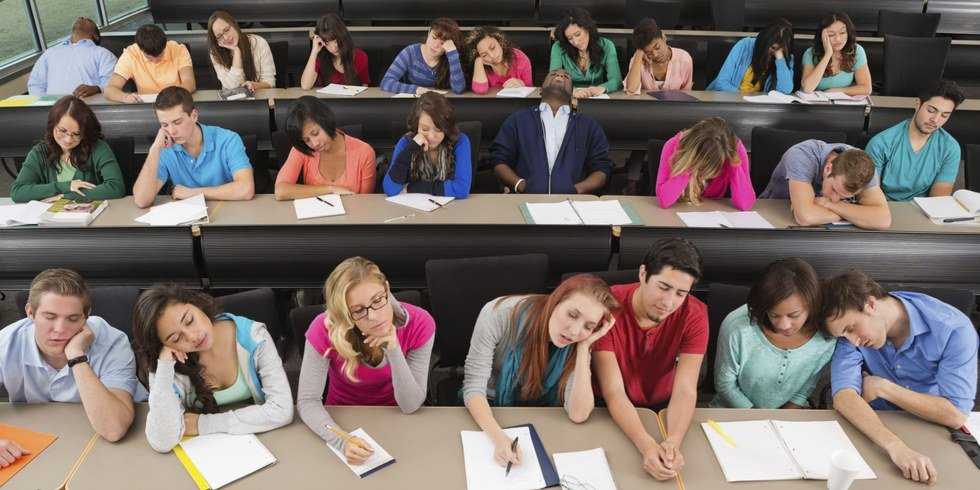
As I walk into my 10 a.m. class, the first thing I see is people yawning. When I sit down and greet my friends, we always complain about how tired we are. As midterm season approaches, it’s almost like getting the least amount of sleep is a contest. When someone says they stayed up late, another person always enters the conversation claiming he or she stayed up later. Getting so little sleep is almost seen as an accomplishment, when in reality doing so is a disservice to both your body and mind.
According to Gallup, the average American gets around 6.8 hours of sleep. College students sleep about the same amount overall as the average American, but many get far fewer hours than seven, especially during exam periods. It has been clearly established that not sleeping at least eight hours a night is majorly detrimental to both your body and your mind. If you do not get enough zzzz, your brain cannot function at full capacity. This makes all the learning that college students need to do every day much more difficult. In a study published by the Journal of Geriatrics, a group of women were interviewed about memory and thinking habits. The study found that women who slept a good eight hours every night were mentally about two years ahead of women who got less sleep. Furthermore, if getting little sleep becomes a habit, you are much more likely to be prone to serious medical conditions such as obesity and heart conditions.
So why would college students neglect sleep even though they know it is important? One of the main reasons why so few college students fail to hit the hay enough is because of the sheer amount to do on any given day. In high school, balancing school, social life, and extracurriculars is difficult, but fairly manageable. In college, though, everything is amplified. Material covered in a year of a high school class is covered in a semester of college. Clubs are competitive and require a lot more time commitment than they did in high school. Socially, your friends are always around you, which can be great but also distracting. Because college students are trying to balance all these things, sleep is pushed to the bottom of the priority list.
While all college students have issues getting enough sleep, freshman particularly tend to struggle as they are not used to the lack of structure that college provides. I often feel obliged to hang out with people even after I finish my work, which leads to little sleep. What I, along with many other college students, need to realize is that saying no to a hangout session or leaving the library even when you have more reading to do because it’s 12 a.m. is OK.
Sleep, just like water and food, is a necessity for living and college students need to get more of it. If college students can get more sleep, they will be more healthy, less stressed, and overall more satisfied with their lives. I have noticed that if I do not get enough sleep I am unproductive the next day and spend way more time thinking about sleeping than actually getting what I need done. This is why I am making it a priority to sleep more for the rest of this year. Sleep is not for the weak, as many college student seem to think. Instead, it is vitally important and is instead for the strong and mighty who need it to help them recover from their busy lives.