


It's time that we speak up about the different kinds of abuse in relationships. The past week a new hashtag addressing the different kinds of abuse that take place in domestic relationships emerged on Twitter.
The hashtag, #MaybeHeDoesntHitYou is followed by experiences that victims of relationship abuse have experienced. Sure, no solution can take place by only raising your voice. But, this hashtag is a step in the right direction in helping everyone recognize the importance behind recognizing that abuse isn't always physical.
This hashtag is significant because it's time that we start talking about emotional abuse as victims and supporters. We need to talk about emotional abuse because the long term effects are just as harmful. We need to talk about emotional abuse because being controlling is not a personality trait. We need to talk about emotional abuse because people are shamed for divorcing their abusive spouses instead of receiving the help they need. We need to talk about emotional abuse because it won’t stop until we do. We need to talk about emotional abuse because the abuse will never stop if we don’t tell people what it looks and feels like.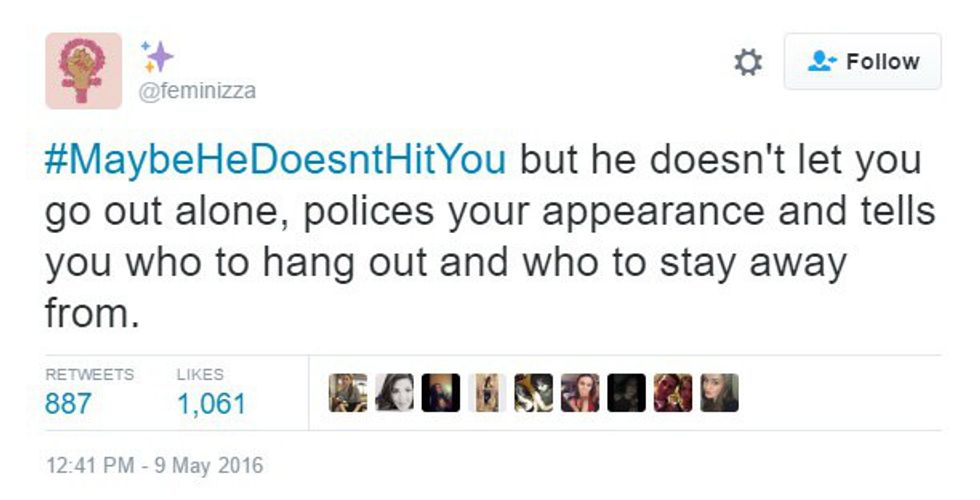
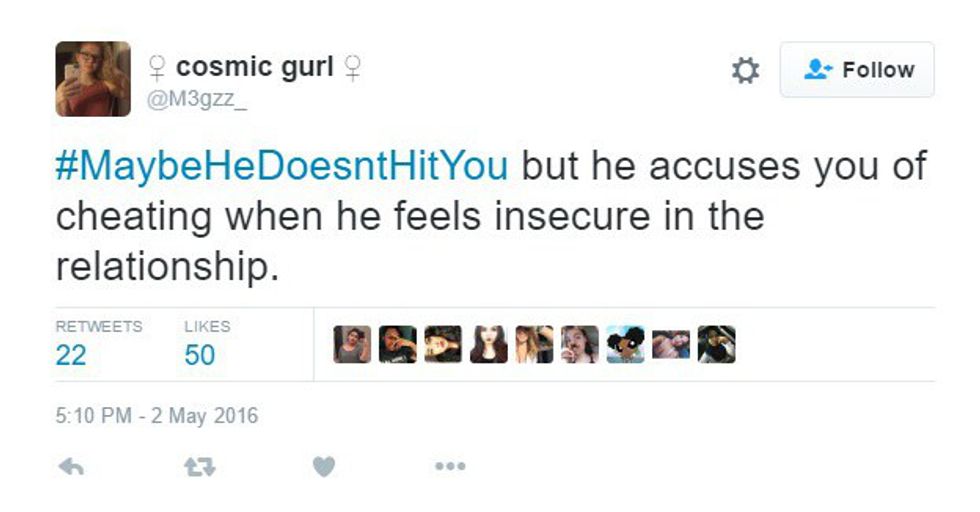
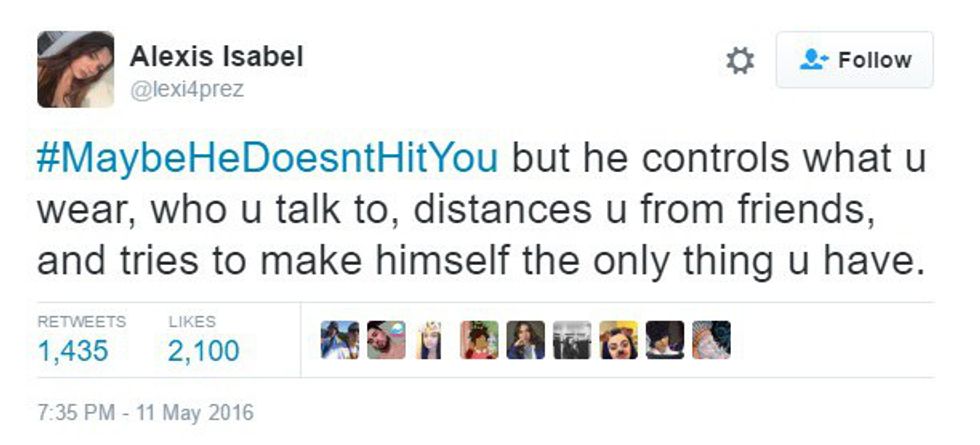
I always take the chance to speak on behalf of this kind of abuse because to a lot of people, it isn’t actually abuse. Whatever it will take to make others see the severity of these kinds of relationships, we need to do that.
There are still many people who believe that emotional and social abuse are not real, or at least, not as serious as physical abuse. It’s also necessary to mention that the posts have been in support of all genders and all dynamics of relationships.
These kinds of relationships have been around for years and years and it’s time that we start acknowledging them. According to The Huffington Post, one in four women will be in an abusive relationship, one in seven men will experience it as well. Two in five gay men will experience abuse in their relationship, 50% lesbian couples will experience abuse. 98% of all abusive relationships include financial abuse.
The most shocking thing about these statistics is that these are only the reported numbers. Men and women keep quiet about their relationships to protect themselves and their abuser, thus making the problem bigger than we can actually see it to be.
It is time to speak up for those who cannot.
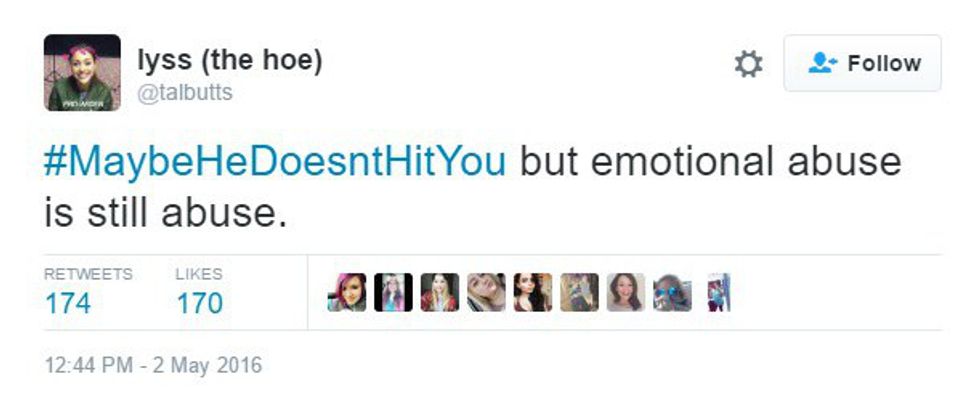
#MaybeHeDoesntHitYou