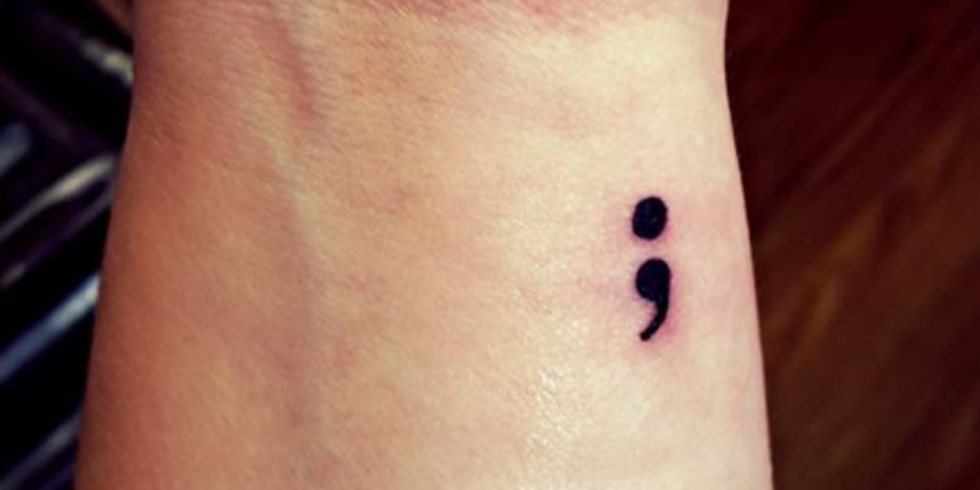
Earlier this week, a close friend of mine sent me a text containing a link to a recent MTV article entitled, “Here’s The Heartwarming Reason People Are Getting Semicolon Tattoos”, with another text that read, “let’s do this together”.
Initially, I was a little confused. A semi colon, permanently on my body for the rest of my life? I was admittedly a little sheepish; why in the world would anyone do that besides a profound love of grammar and punctuation? Still, I was curious, so I clicked the link and began to read about the meaning and significance of the tattoos. By the end of reading the article, I not only understood why she had sent it to me (we had spent years watching each other define the core meaning behind this tattoo together), but had entirely committed to getting one, and was nothing short of certain that I had to spread this inspiring message through any means and medium that I could.
With a similar essence to the “butterfly project” made famous in previous years (individuals who struggled with depression and self harm were encouraged to draw butterflies in the places they self harmed in an effort to “not kill their butterfly”), the tattoos stand as part of a movement called Project Semicolon, described by its website as, “a faith-based movement dedicated to presenting hope and love for those who are struggling with depression, suicide, additction, and self-injury.” The movement was founded by Amy Bluel in 2013 after her father committed suicide ten years prior. Bluel, according to the Project Semicolon website, despite dealing with “the pain of rejection, bullying, suicide, self-injury, addiction, abuse and even rape, kept on fighting.”
Why a semicolon? The tattoo is a testament to the very fundamental definition of the punctuation mark, but with an entirely new and powerful meaning. According to the website, “A semicolon is used when an author could’ve chosen to end their sentence, but chose not to. The sentence is your life and the author is you.”
To many struggling with depression, addiction, self harm, or any kind of mental illness, suicidal thoughts and tendencies are a very real and prevalent part of every day life. MTV writer Rachel Paoletta explains in her article that these tattoos are, “an external reminder of an internal triumph over mental health issues.” For many who have fought and fought for their sentences to continue, or for those who stand in solidarity with those facing and dealing with these challenges, this tattoo is a beautiful symbol and reminder of persistence, love, courage, faith in healing, and inner strength.