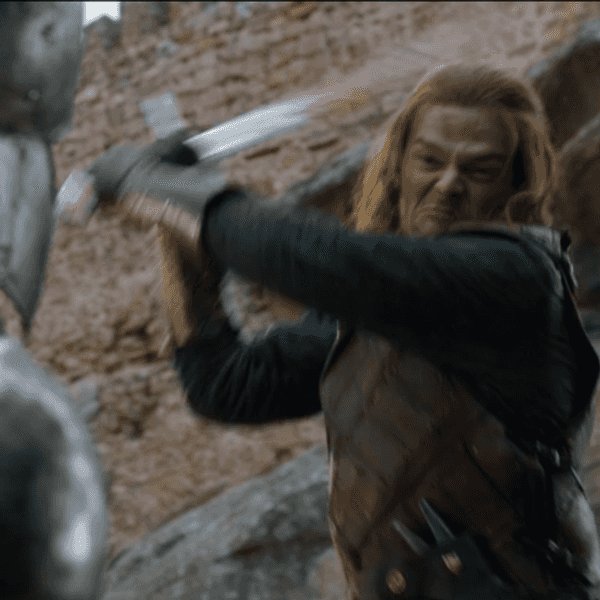
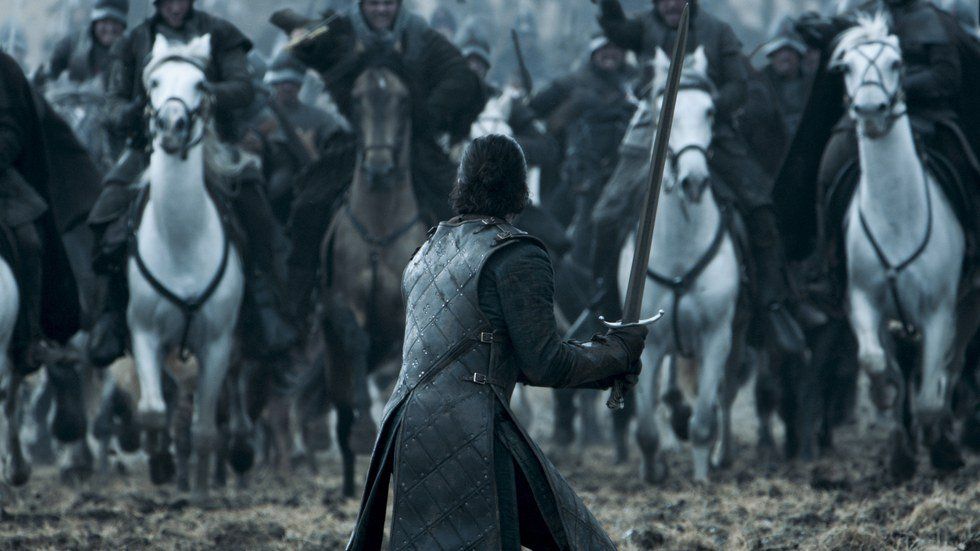
‘Game of Thrones’ serves up a lot of confusion in the name of no larger or really relevant idea beyond sketchily fleshed-out notions that war is ugly, families are insidious and power is hot. If you are not averse to the Dungeons & Dragons aesthetic, the series might be worth the effort. If you are nearly anyone else, you will hunger for HBO to get back to the business of languages for which we already have a dictionary.
Believe it or not, this is how a New York Times reviewer described the first season of "Game of Thrones" five years ago.
Season six of "Game of Thrones" recently concluded on Sunday and it has never been more apparent how wrong The New York Times was. According to USA Today, the show now regularly averages over 23 million viewers each episode. Episodes in season 5 set records for piracy, with viewers illegally downloading “Hardhome” 2.2 million times only 12 hours after its release. According to Cinemablend, it is the most pirated television show in history.
The record ratings beg the question of why 'Game of Thrones" has performed so well. Excellent acting, well developed characters, shocking twists, gorgeous cinematography, and Peter Dinklage are all fair answers. Clearly there is no single element of the show that is responsible for its success; one that shines particularly bright, however, is the marvelous world of Westeros itself.

Setting is an important component of any piece of storytelling. Nonetheless, for fantasy and science fiction stories such as "Game of Thrones", utilizing a compelling setting is essential. Worldbuilding, the process of constructing imaginary places and societies, is the key to these genres. Without a solid background, readers and viewers find it hard to suspend their disbelief and are unable to properly immerse themselves in the adventures of the characters. Just as a historical fiction writer must extensively research the period to set a story, so fantasy and science fiction writers must also intimately survey the worlds that characters will populate. This process is difficult and complex because the writer or director needs to construct every aspect of the setting. Locations are only the start; a good world will have a coherent history, climate, civilization(s), geography, and more.
In an NPR essay, novelist Saladin Ahmed writes about listening to a lecture by "A Song of Ice and Fire" writer George R.R. Martin, whose books are the basis for the HBO show. “[I attended a talk by] the man Time called ‘the American Tolkien,’ the now-world-famous Martin. The grizzled master described the very early days of Tolkien's cult popularity to a room of us wide-eyed newbies. When college students and hippies started hanging up Lord of the Rings posters, Martin pointed out, ‘It wasn't the book covers or some artist's conception of Frodo that went on our walls. It was the map of Middle-earth.’”
Take Star Wars, for instance. Luke Skywalker is a wonderful protagonist with a magnetic personality and charming nature. Yet he is more defined by his backstory as a farmer’s boy on Tatooine, unexpectedly thrust into an age long galactic conflict between good and evil. The war between the Empire and the Rebels, which swallows worlds like Tatooine, Hoth, and Endor, gives dimension to extraordinary characters like Darth Vader and Yoda. It is the presence of fascinating, well constructed worlds, backstories, and conflicts that bring words of fantasy novels to life and in our imaginative dreams.
The Star Wars wiki, Wookieepedia, provides an extensive library of material, attempting to summarize and explain every character, location, and event from the source content. The sheer size of the Wookieepedia demonstrates how captivated the fans are with the Universe that George Lucas created. The passion that drives Star Wars fans has allowed the creation of numerous movies, television shows, and books to explore Lucas’ creation far beyond Luke Skywalker and Princess Leia.
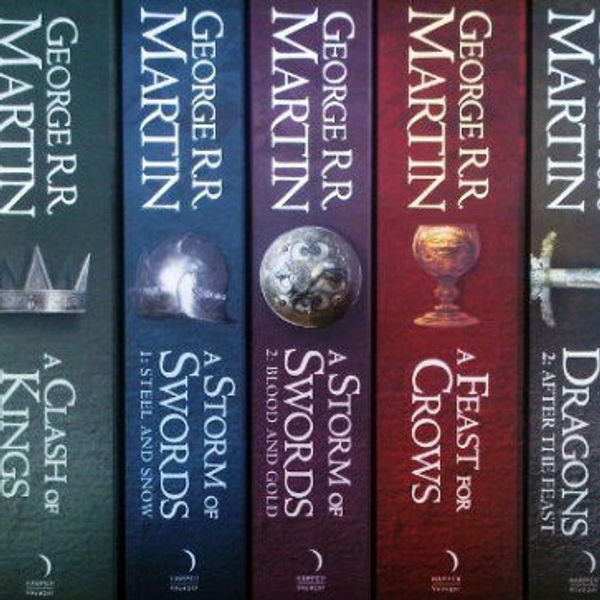
George R.R. Martin has performed a similar feat in creating Westeros. The fight for the Iron Throne of the Seven Kingdoms encompasses a massive cast and we see Westeros from many of their perspectives. Often, characters never meet one another, however, they all find themselves caught in the widespread events of the plot. Daenerys Targaryen may never meet Cersei Lannister, but both of their lives have been indelibly changed by Robert Baratheon’s rebellion. The identity of Jon Snow’s mother likewise may have implications for all of Westeros. This is the secret that makes the show’s infamous brutality pay. Even if it would make sense in context, a show like Orange is the New Black could never get away with a Red Wedding scene. Other shows rely solely on the development of their characters and interpersonal relationships to create drama and hook viewers. Game of Thrones manages to hook viewers on the development of the overall narrative arc, the progress of Westeros as a whole. Each character has a role to play, but none of them are actually essential to the plot.
The title sequence for "Game of Thrones" is itself a homage to worldbuilding, inspired by the tradition of placing maps at the start of fantasy novels. Each Sunday as the instantly recognizable theme music begins, viewers watch the camera panning over the world of Westeros and visiting the episode's featured locations. As the camera moves from location to location, the rings of an armillary sphere pass by with imagery of Robert’s Rebellion, a key part of the backstory to the show. The end of the peaceful reign of King Robert is the major inception for the conflict which embroils Westeros.
Unsurprisingly, Westeros proves to be such an exciting and interesting setting for "Game of Thrones". Martin’s world seamlessly blends together historical and fantasy elements. The War of Five Kings, occupying most of the show’s plot from the start of season two, is mostly fashioned on the real life War of the Roses in England. The infamous Red Wedding is based upon the Black Dinner in Scotland. The Wall and the Night’s Watch were inspired by Hadrian’s Wall, which separated the Roman Britain from the barbarians tribes to their north. The dragons, giants, and white walkers do not have a historical basis, however. Martin manages to make Westeros feel both familiar and fantastical at the same time; he has one foot in medieval Europe, and another in Tolkien's Middle Earth.
Equally unsurprising, the show suffers when it deviates from the books. Viewers of season six have bemoaned of the total futility of Arya’s Braavos storyline and Sand Snake’s Dornish plot. Directors David Benioff and D.B. Weiss have deserted the source content to the chagrin of many fans. It is not solely purists that have been angered. Many of the story arcs, left unfinished in "A Song of Ice and Fire" by Martin’s slow writing pace, have been utterly ruined in the show. The plots in Dorn and Braavos are neither convincingly real, nor particularly relevant to the grand story. It helps that the trademark high production values and quality acting remain, but the show is lacking when it abandons the unique, intricate, gear like mechanism of Martin’s novels.
We read books and watch television as a form of escapism. We love to be transported from our living rooms to galaxies far, far away and planets where winter lasts decades. George R.R. Martin was able to construct a world so real, that it is hard at times not to completely immerse yourself in his creation. Game of Thrones is not just for Dungeons and Dragons fans; it is an excellent piece of worldbuilding that will make you fall in love with fantasy.