
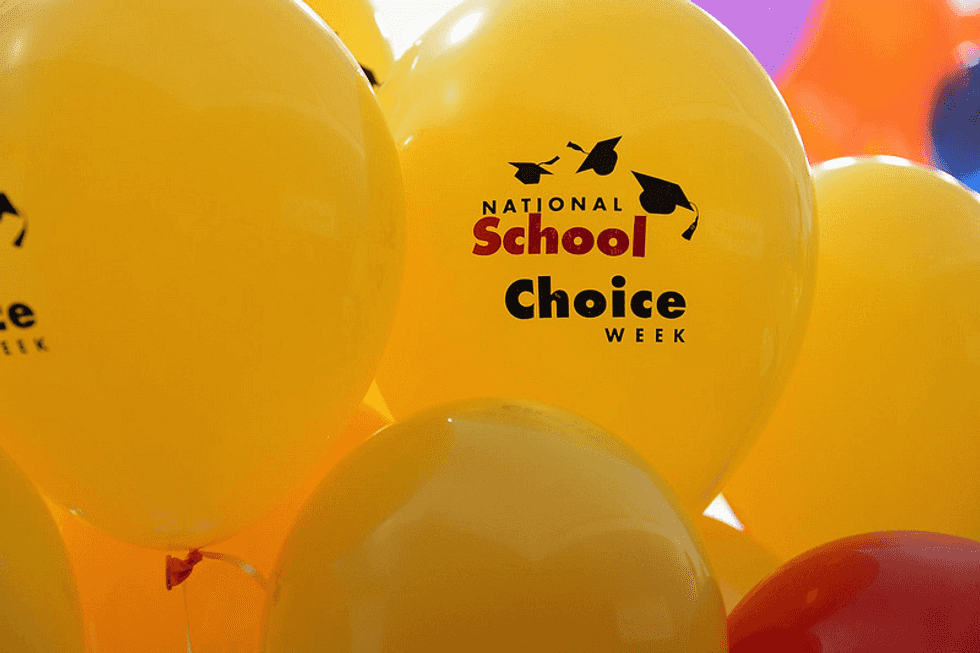
In the course of my young life, I have attended three elementary schools, two middle schools, and three high schools. All public. So with #NationalSchoolChoiceWeek happening (Jan. 24-31, 2016), I am looking back, once again, on what my education meant to me, for better or for worse. As a child from a high-income family, I didn’t have to worry about being put in a school that wasn’t educationally nourishing or was even physically deteriorating.
While some of the schools I attended were noticeably lacking in quality compared to others, I still had it pretty good. It wasn’t until I got to college that I learned how bad the conditions in public schools can be. Determined to find effective solutions for problems plaguing certain schools, I came across the notion of school choice. This is a concept foreign to many, but the idea has been growing in popularity. With more attention being focused on school choice, we need to learn some of what the term encompasses.
Charter Schools
Probably the most commonly touted school choice option, charter schools sometimes get a very bad reputation for their sensationalized failure rates. What critics rarely address is how they have been improving over time. In a charter school system, the curriculum is designed based on the students’ needs. With many students not doing well because of a lack of motivation, or having a need for more personalized help, this could be a well-suited option. As obstacles concerning charter schools are being pointed out and addressed, this form of education is becoming a more viable alternative.
Magnet Schools
Like charter schools, magnet schools are also publically funded. As these schools concentrate on certain themes, such as the fine arts and performing arts or STEM fields, they allow for attendees to focus on personally appealing curricula. Children shouldn’t have to drop out or wait until college in order to pursue their passions. This choice of school keeps in mind the importance of receiving an education, while upholding the values of teaching students what they want to learn.
Private Schools
Since low-income families are usually the ones burdened by substandard education, it may seem that it is illogical to expect them to be able to send their children to private school, which is often thought to be overpriced. Around the world, researchers have collected information that has shown that even poor children have found ways to pursue private education. With greater government subsidies (such as through a voucher system) or scholarships, private schools can become more accessible to those who cannot typically afford this kind of education. With schools from religious institutions to academies based on different learning philosophies, parents and their children have an expansive range to choose from.
Neither socioeconomic class nor geographical location should affect a child's education. Unfortunately, along with other systematic and political issues, traditional public schools have failed many students. Instead of seeing public school as the only educational choice, we should explore and expand on educational alternatives.