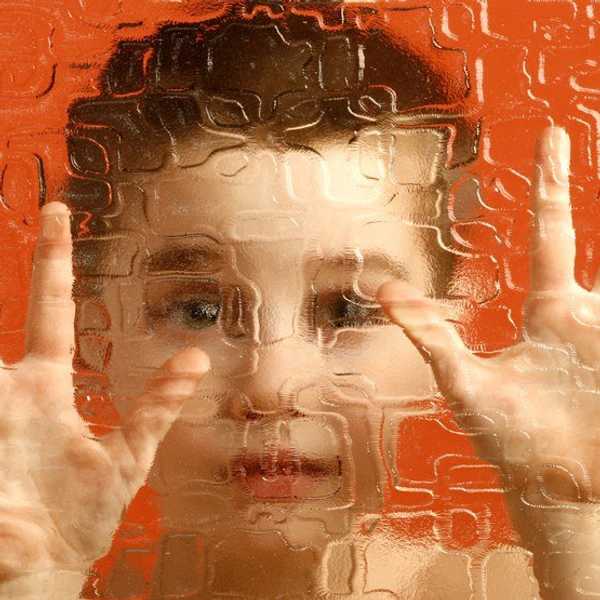
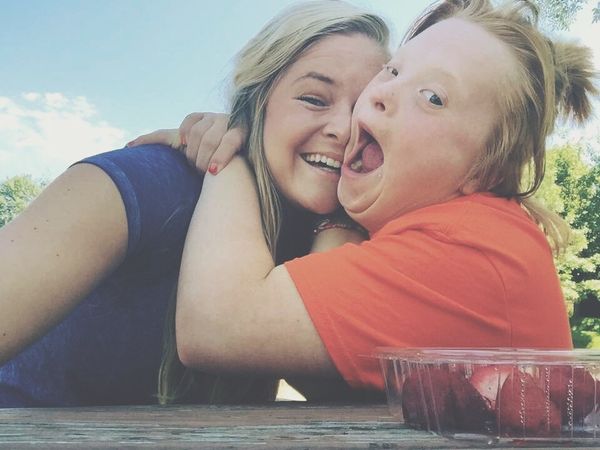
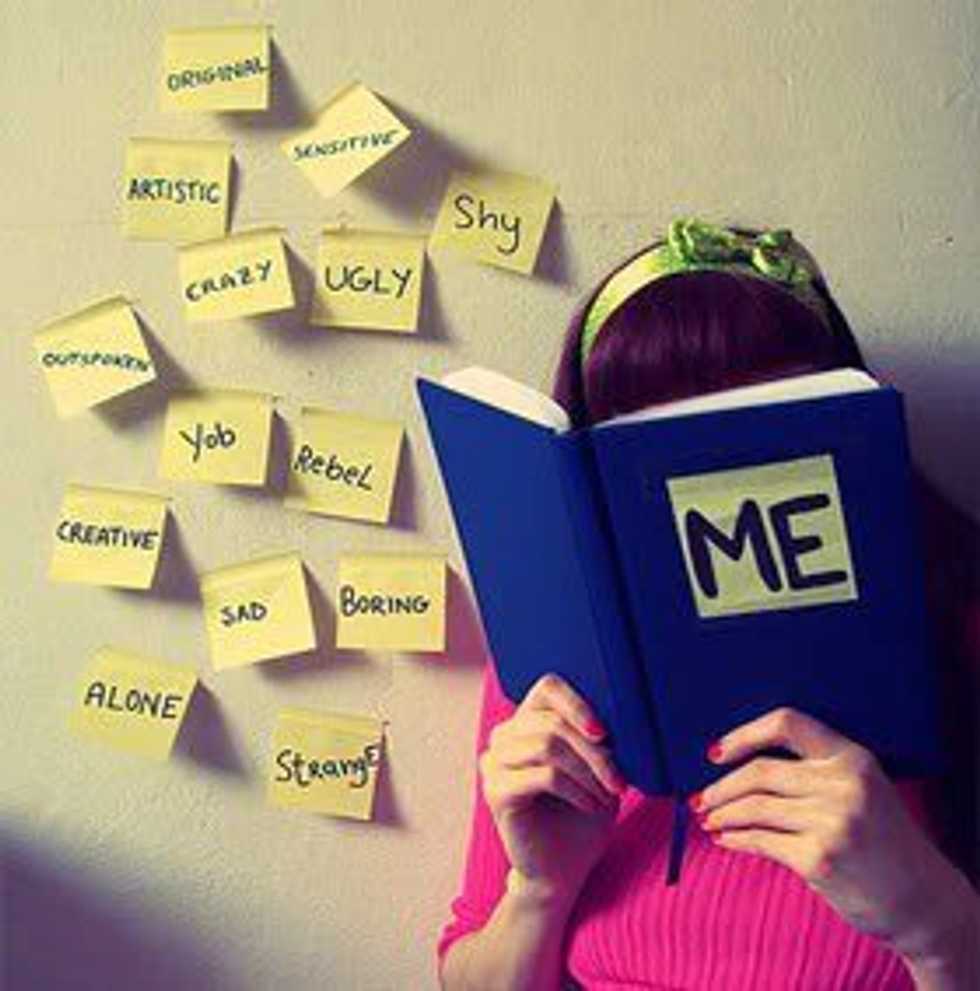
He's deaf...she's anorexic...he's autistic...she's albino.
Daily, labels such as these are attached to individuals. Often, these labels are assigned to people, along with unfair stereotypes and stigmas, without a clear understanding of the disability, and without a true knowledge of the real person behind the disability.
“[It was] Extremely difficult,” Rachel Revennaugh said. “For a while, in high school I felt very "wrong" and self-conscious because of how much I stand out in a crowd. People make very rude comments, even though they do not mean to, but the comments still hurt.”
Unfortunately, this is likely a very common feeling for people dealing with disabilities across the world. Along with the stereotypes, labels and stigmatizing, these people are often made to feel worthless, different and inferior because they were created a little differently than others. People with disabilities are misunderstood and much of society does not give them the chance to succeed, be social and live generally normal lives.
The thing is, many people who deal with disabilities are very capable of being normal, social, loving, successful people, but much of society misses this. Many are unwilling to let their disability stop them in any way, but again, society typically misses this aspect of them.
My friend Rachel is a wonderful example of this. She is a gracious friend, a gifted pianist, a writer, an encouragement, and whether she realizes it or not, a leader.
Rachel has something else that makes her stand out from other people. She has Oculocutaneous Albinism – a disorder which causes partial lack of pigment in the hair, skin and eyes. She also deals with quite severe visual problems as a result of the disability.
“It's hard to summarize this, but my main challenges are having difficulty with seeing far distances (glasses cannot totally correct this), seeing double (despite 3 eye surgeries), depth perception, light sensitivity to outdoor and indoor lights and windows, fatigue, and then in general I have a hard time remembering/comprehending some things that I see,” she said. “This last thing is at least in part due to the fact that the muscles from my eyes to my brain do not function correctly.”
While many people would let this inhibit them, Rachel embraces it. She is currently a junior double major in Music (piano), and Literature – two highly visual majors. Rather than letting her disability stop her from attempting these areas of study, Rachel works to find ways to accommodate it, and conquer it.
“A few specific examples of accommodations would be getting accompaniment music early, audio books, extended test time, and sitting on the front right of my classes (the front so I can see; the right so I see less double),” she said.
After a long time of struggling with the fact that she has albinism, and being very self-conscious of that, Rachel has now learned to embrace her disability. Not only does she refuse to let it decide what she can and cannot do, but she also has realized she can use the place she is in life to spread awareness about the disorder. Since being in college, Rachel has started a blog and has written for the student newspaper at her school. She has used both of these as platforms to speak of her own journey in dealing with albinism, and to spread awareness about the disability. (You can check out her blog at http://againstthedyingbioethics.blogspot.com/)
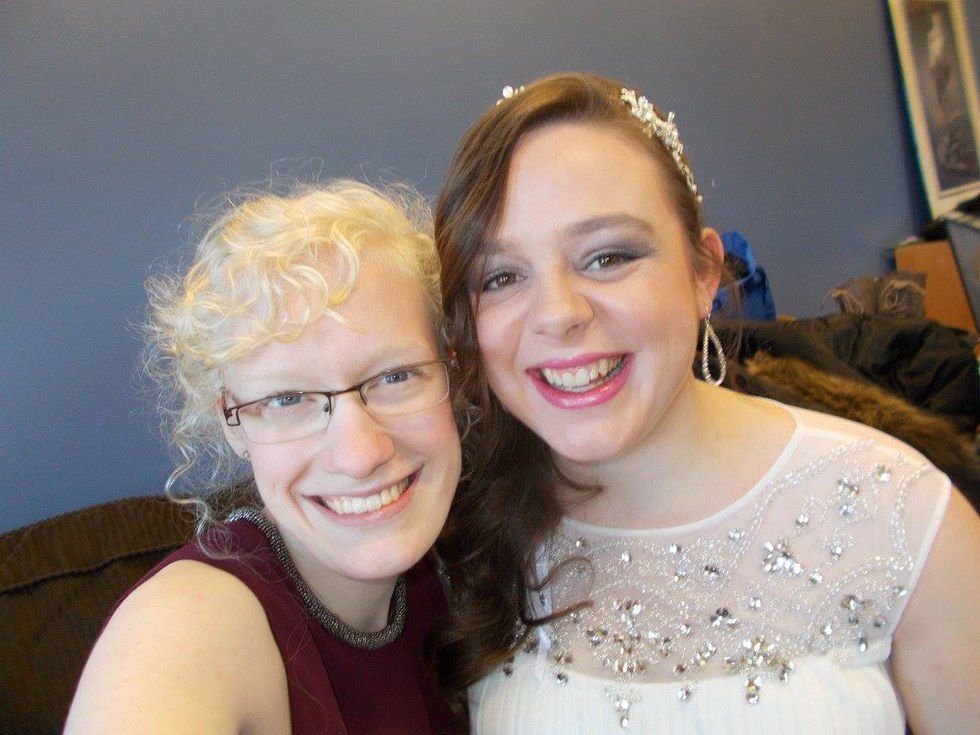
Rachel does not want people to ignore the fact that she has a disability, or pretend that it does not exist.
“That's like saying there's something wrong with me that thankfully, these people don't notice,” she said.
Instead she thinks that disabilities can affect and be a part of someone, but they do not have to define them.
“[I]f God caused it, there's nothing WRONG with me, so they can feel free to notice and APPRECIATE how I deal with disability and be amazed at my uniqueness and then realize that God is such a creative Designer,” she said.
Now let me introduce you to another friend. After graduating with honors from college last year, Glen Jennings became a reporter for a community news publication near his hometown. He is a writer, friend, and musician, and his extensive knowledge of classic rock, classic movies and Sergio Leone rivals even the biggest fans.
Glen has Aspergers Syndrome, which is a form of autism. While mild in comparison to other forms of autism, there are still many symptoms associated with Aspergers which can affect daily life and functioning.
“It's commonly characterized primarily by difficulty with social interaction,” he said. “It's also known to commonly include very passionate interests among its symptoms. For example, when I was in high school, I was so into cars that I made it a goal in life to one day own an awesome Camaro. Other symptoms include high sensitivity to sensory input, a lack of eye contact and anxiety.”
Glen noted that while growing up, he noticed that there was a social disconnect between him and others. He said that aspect was and is frustrating, but when people take the time to connect socially on a closer level with him, he feels just that much more connected to them.
“There's also some of the other symptoms, like the eye contact - it just doesn't come naturally to me,” he said. “I have to remind myself to do it, and since I have difficulty with some aspects of nonverbal communication, I don't always realize when someone has heard what I said. I'll just keep saying something over and over again until someone acknowledges that they heard me or give up. There's also the fact that I have a different nonverbal language than most people have. That causes some occasional misunderstandings.”
One of the worst things Glen had to adapt to and deal with in facing Aspergers was the stigma that is attached to it.
If people tell you something's wrong with you for long enough, you start to believe it,” he said. “When you have Aspergers, you see a lot of people telling you that all around. People have argued with me when I tell them I don't like being called disabled. When I was younger, I had teachers think I would never make it to college. Someone called me a robot once, which is sort of like a slur to Aspies.”
Glen feels that it is very important for people with Aspergers to find positive social circles that will allow them to grow around people who take the time to understand and value them. He says that you need people to understand when things are difficult for you and why they are that way and how they can help, but you also need people to help you get rid of destructive habits.
Finding this circle was not always easy for Glen. He dealt with stigma, and worked hard to try to fit in with everyone else during middle school and high school. He also dealt with personal issues of self-esteem and who he was, and was essentially bullied.
“I felt like I was weird and out of place,” he said. “Like I didn't belong. All I saw was that I just didn't fit. Like I said, when you hear people telling you that you're never going to amount to anything for long enough, you eventually start to believe it, especially when you can't always pick up on it when people are joking. I had people say my voice made them want to strangle kittens. That's hard to come back from.”
What began to change this for Glen was finding a group that truly valued him for who he was and embraced that, and realizing that he actually did have talents and skills that made him unique.
“It took me a while to fully believe this since I was used to special needs kids getting praised for doing things that most people thought of as second nature, but then I actually started getting indisputable evidence,” he said.
Glen was accepted into the Kentucky Governor's School for the Arts creative writing program. He became an eagle scout. And importantly, he realized that some of his successes and abilities actually came because of his disability.
“The way I think tends to be very detail-oriented, I have a strong memory, I have a sort of obtuse way of coming at certain problems, I have great pattern recognition and a lot of people tell me I'm really a smart person,” he said. “I'm reasonably sure that without Asperger's, I wouldn't be like I am. Part of embracing it was realizing that.”
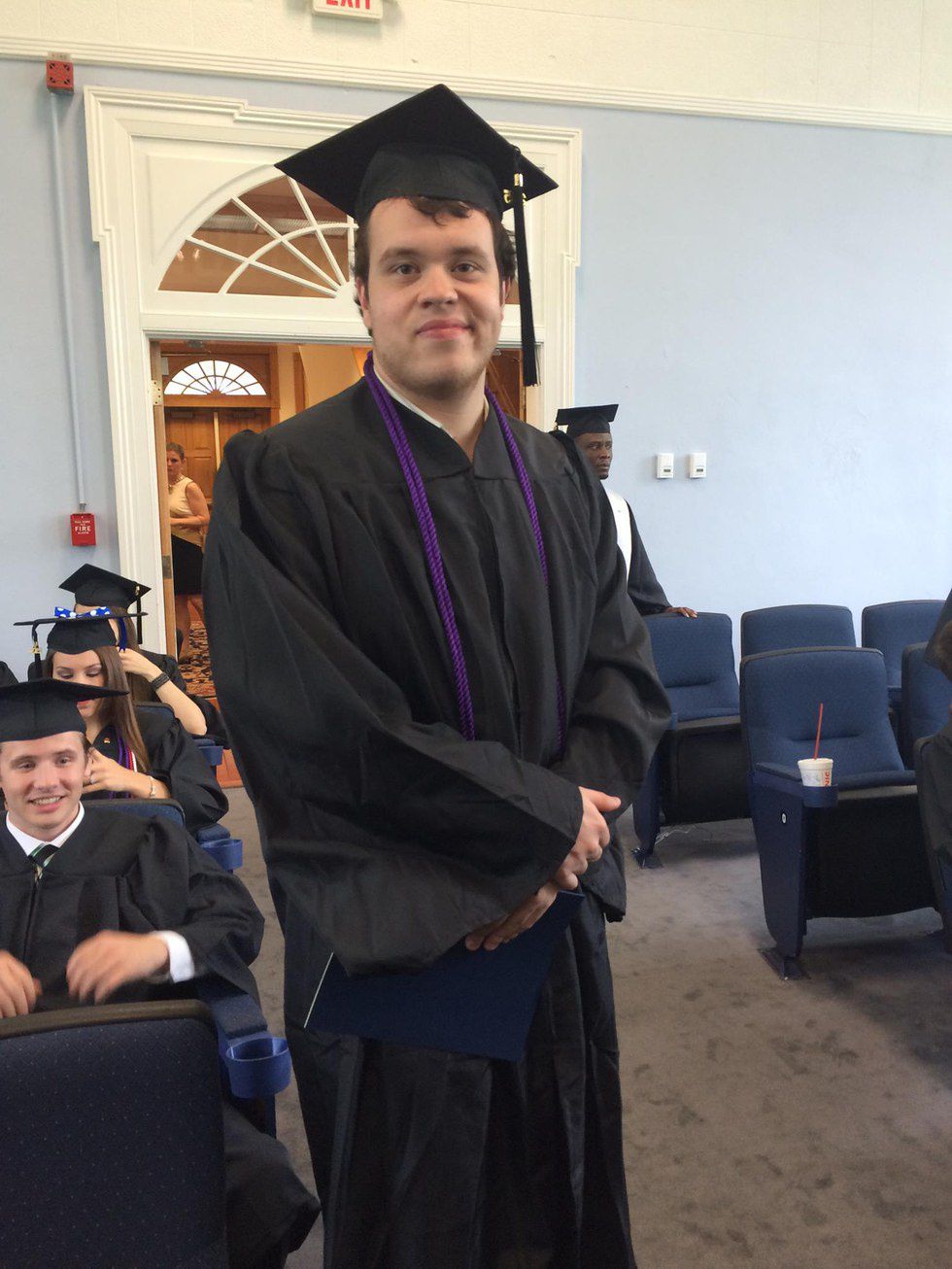
Photo By: Glen Jennings
Glen has come to realize that Aspergers is a part of what makes him who he is. He argues that people should not allow their disabilities to completely define who they are, at least not in a negative sense. He says if you listen to the negative voices around you, and allow yourself to pulled down, it can be very easy to be pulled into a pit of low self-worth which makes you believe that you are pathetic and really cannot do anything. Another negative of allowing it to be a defining label is;
“[W]hen people start using it as an excuse. 'I can't do this because I have Aspergers, so I'm not even going to try,'” Glen said. “Whether or not you actually believe what you're saying, you've let yourself be limited by Aspergers. You have let it become a disability. In reality, I don't think there's any reasonable thing that someone with Aspergers couldn't do as well as a neurotypical person. That's a harder issue to solve, but still it ultimately ends with accepting that as just another aspect of who you are rather than the dominant aspect.”
He believes that embracing Aspergers for what it is can lead to a success of its own that is free of any burdens. To him, that is very important.
“Asperger's is a facet,” he said. “In a way, it does define me, but it's not the only thing. I'm an Aspie, yeah, but I'm also a musician, a journalist, a writer, a nerd, a history buff, a cinephile, a Christian, and so many other things. It's not so much not letting it define you as realizing it's a part of who you are, but it's not the only part.”
These people are an inspiration. They have refused to let their disabilities define and defeat them. They live full lives and work hard in school and their jobs. They have found ways to accommodate and adapt to the disabilities they face, and they are open about the struggles they deal with sometimes. They have and will continue to make a difference.
Let's stop defining people by the labels their disorders and disabilities create. Instead, let's define them as just what they are – people like all of us. People with dreams, goals, struggles, friends, family, hobbies, successes and failures – people with very normal lives. Instead of acting uncomfortable around them and labeling them, let's show these individuals love and acceptance, realizing that they are just like all of us. Only then, can we make the world a better place.