
I’m in no particular position to write on this subject with any amount of authority, my privilege and socio-economic/gender normative status shielding me from any true understanding of the black experience in America. I won’t pretend that what I have to say is important because I don’t know that it is — such proclamations are exercises in that same privilege anyway. What I can speak to is how a pair of lessons I learned while at SAU has helped me understand the undercurrent of toxic privilege inherent to the national dialogue regarding race and police brutality. At risk of being guilty of exercising that same privilege... here goes nothing.
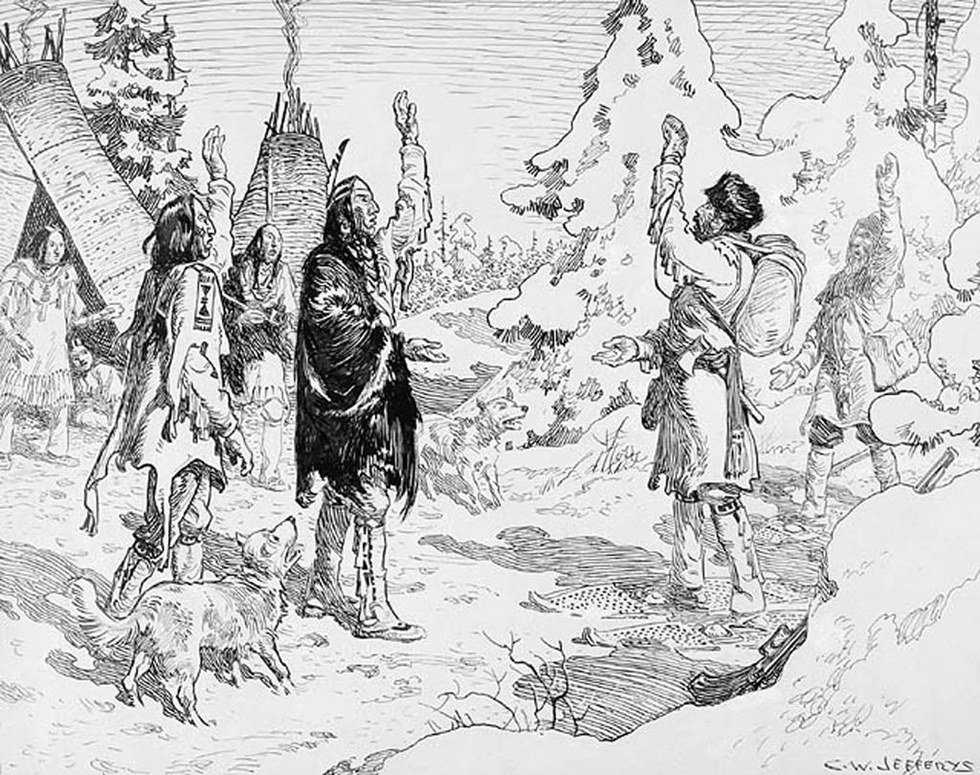
I learned the first lesson while researching and writing my senior thesis for Philosophy of History. The thesis detailed a collection of works written by the Jesuit Order during their time among the first nation peoples of North America during the 17th century, and the subsequent translation and editorializing of those works by American historians in the late 19th century. In reading the English versions of the Jesuit Relations, I began to realize how far removed I was from the truth of what the Jesuits experienced, let alone the experiences and self-understanding of their native hosts. The Relations were written by men whose primary concern was not relational understanding of the men, women, and children with whom they missioned, but rather the primacy of their own worldview — the proselytization of a reinvigorated Catholic faith during the counter-reformation.
But while the Jesuits wrote in French, I was reading their work in English. This added another point of removal from that original, untainted experience. Much as the intent with which the Jesuits wrote, this English edition of the Relations was translated to demonstrate the prevailing intellectual and historical ideology of late 19th century America: civilization results from advanced stages of human evolution, and since whites have the most advanced civilization they’re more highly evolved than other humans.
How could I trust any information about the Ojibwe, the Iriquois, or the Algonquin when it was filtered, garbled, and ultimately mutilated to serve the purposes of two powerful groups at two separate points in history?
I couldn’t. There was no way of knowing what parts had been exaggerated or by whom. What was truth and what was fiction? The line separating history from literature became muddied, indistinct, and knowledge itself became slippery. How could I trust these men, so convinced of the primacy of their own world views and so contemptuous of anything foreign, alien, or contradictory to their myopic narratives? How could I trust anything? Again, I couldn’t. And so I interrogated their motivations for writing and translating, the manner in which they unconsciously used their privilege and power to further those narratives at the very real expense of others.
After months of having carefully studied them and their work, I’m convinced there was no malice in the motivations for writing, but that hardly excuses what amounts to colonization through commas. And that’s the problem. So often we aren’t selfish and myopic out of spite and malice, but rather out of a lazy self-preservation, an un-interrogated and unintentional reversion to the tribal instinct that assumes our own people group as sole claimants to the validity of human experience.
If we’re going to move forward as a nation, let alone one with any aspirations of Judeo-Christian morality, we need to be intentional about what we do and say and think, nationally and individually. This requires a constant interrogation of our own motivations, relationships, and perceptions, and a willingness to be and admit to being wrong — that great, unspoken cardinal sin of American civic religion. It requires we turn off the news and talk to people whose experiences differ wildly from our own, whose families and educations and cultures are unknown to us. It requires we engage as relational beings.
And I recognize that in saying “us” I’m speaking to an audience I automatically presume is white, who may not agree with the Black Lives Matter movement or empathize with the black experience in America. Addressing that audience exclusively, no matter my intentions, feels like an exercise of privilege because it disallows for most any other type of audience, making me guilty of the very things I’m decrying. If anything, it showcases the ease with which we slip into presuppositions of perspective and primacy, and the difficulty inherent to true and intentional understanding of another. It was never going to be easy, as Christ’s sacrifice shows us.