The search for extraterrestrial life outside our own planet
has been a long one, with still no definite results. There have been a few
possible positives, such as the ALH84001 Meteorite, which has magnetite
structures suggesting there was biological activity on Mars sometime in the
distant past, and may also be the host to several fossils of micro-organisms
(though that’s disputed). However, thus far there’s been nothing definite.
That’s really to be expected, however. We’ve probed only a
tiny corner of our own solar system, much less our galaxy. As a species, we’ve
only managed to send humans to the moon a few times, and have only sent robots
and probes to do superficial examinations of a few other planets, and
occasionally their moons.
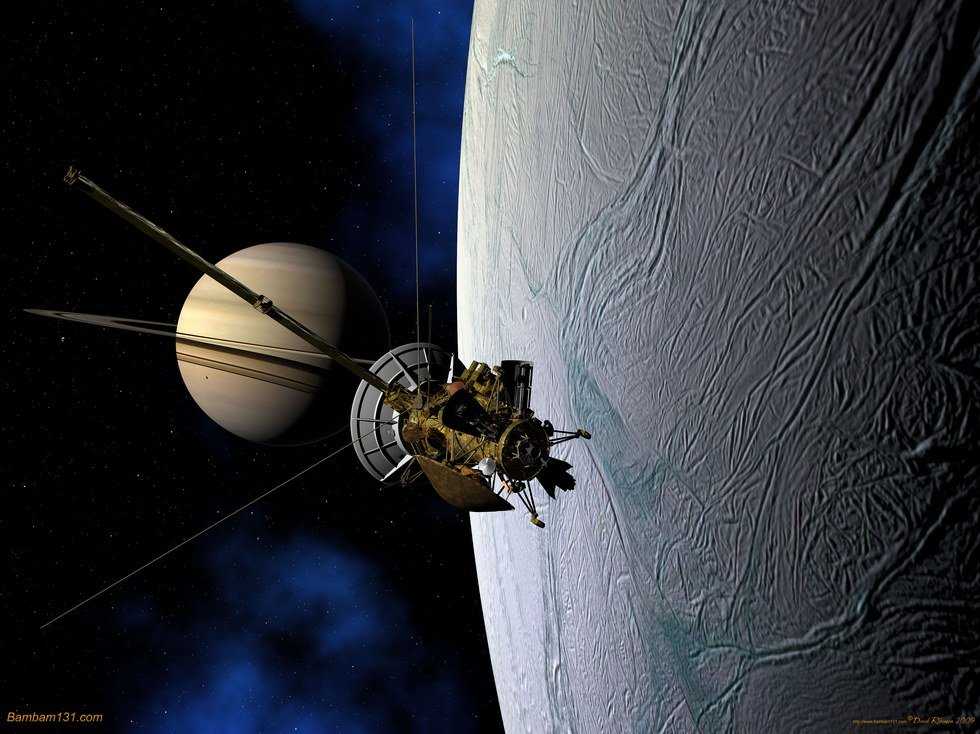
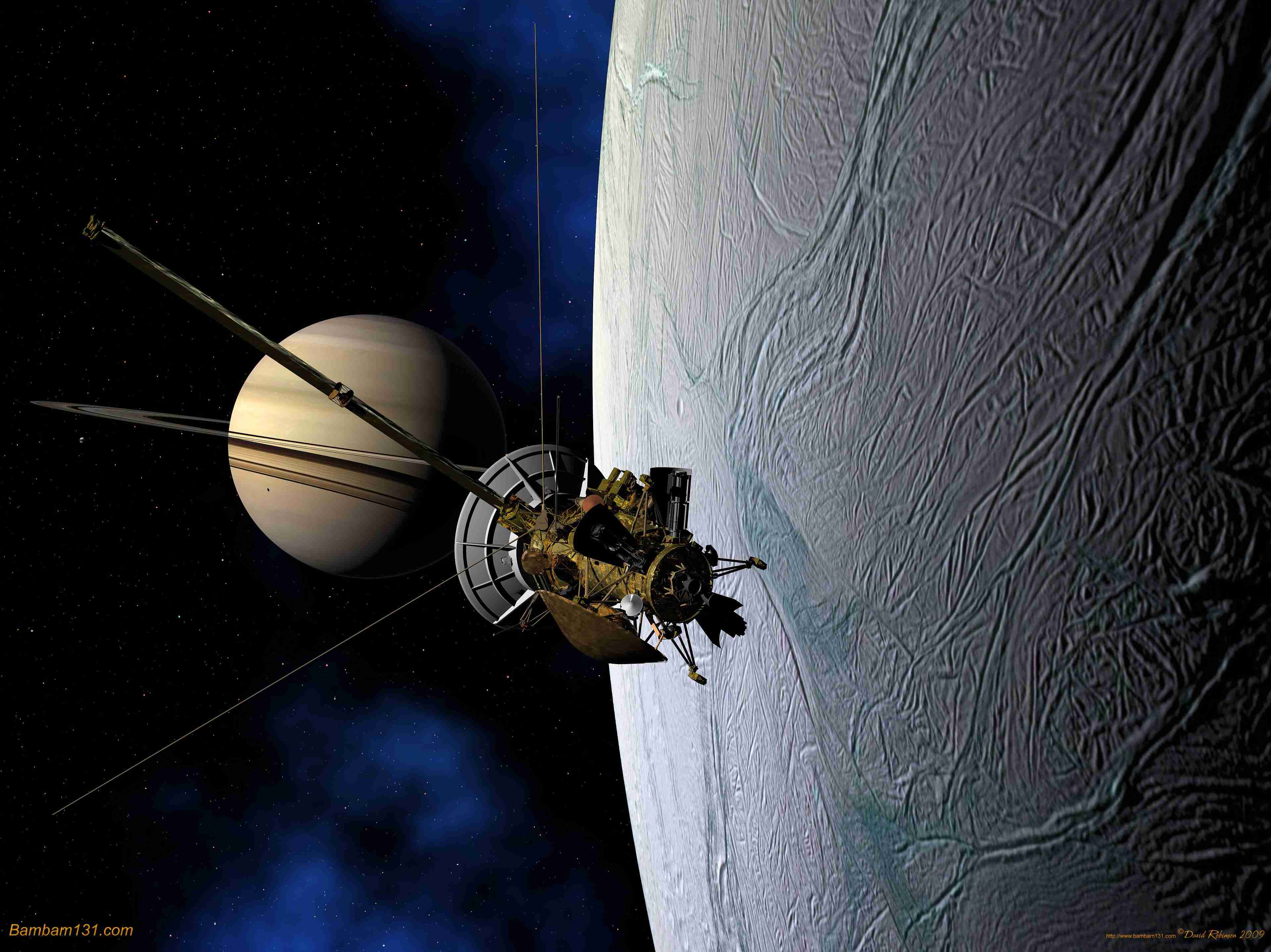
 The Cassini is one such probe, launched in 1997 with a specific destination: the moons of Saturn. It arrived in 2004 after a long and somewhat roundabout journey, and has been used to make observations of the Saturn system ever since. Thanks to Cassini and its attached lander Huygens, we know much more about Saturn and its moons than we did even ten years ago.
Cassini has already made remarkable progress, being the instrument for the discovery of three new moons, the depositing of a lander on Titan (Saturn’s largest moon), and what may ultimately turn out to be its most important discovery: the Plumes of Enceladus.
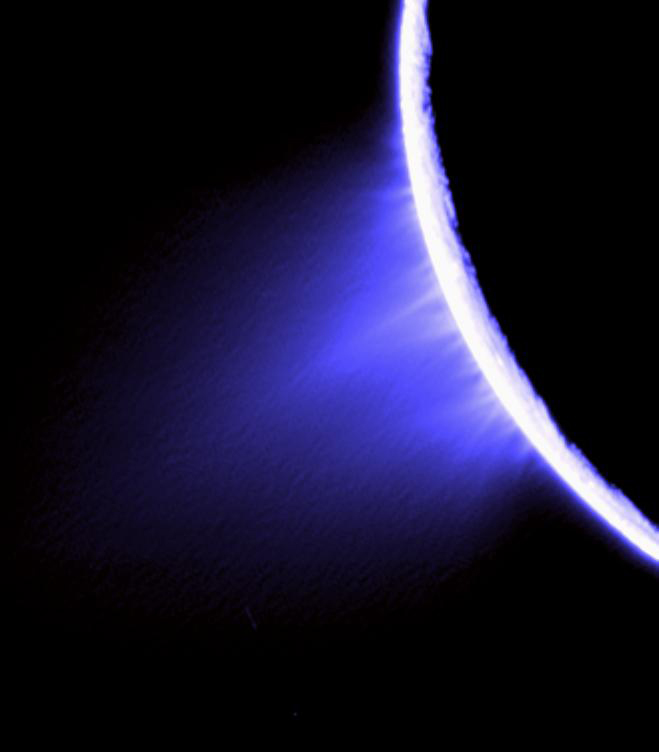
However, just getting the spacecraft funded and off the
ground isn’t necessarily the hard part. It’s an enormously complicated problem,
and scientists are still in debate over how exactly to search for life with the
limited resources available. More probes could pass through the plumes and do a
finer chemical analysis, but it’d be difficult for them to differentiate
between true life and naturally-formed biological molecules (such as amino
acids).
But if such a mission were successful, it would mean so much
for us. It would be a huge leap forward in terms of space exploration, and it
would answer so many questions we have about the nature of biological life and
how it arose.