


“If you are curious, you’ll find the puzzles around you. If you are determined, you will solve them.” – Ernö Rubik
Six faces with six different colors. Nine cells on each face. 26 total miniature cubes, which are known as “cubies” or “cubelets.” There are more than 43 quintillion possible configurations for the cube, but only one solution.
For the longest time, being able to solve a Rubik’s Cube was at the top of my bucket list. I was always mesmerized by people who could solve the cube. About four years ago, I finally bought a Rubik’s cube and determined that I would not rest until I had figured it out. After great persistence, then frustration, some internet tutorials and the help of my best friend, I learned how to solve the elusive Rubik’s cube. It took Ernö Rubik himself one month to solve his own cube!
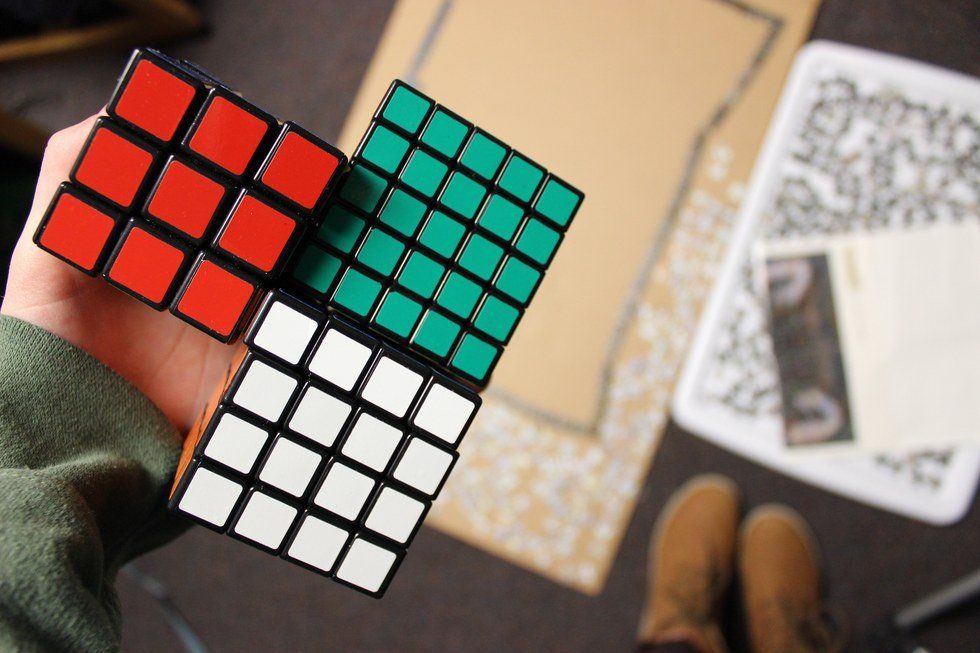
Now I can’t put the cube down. Besides the traditional 3x3x3 cube, I’ve also learned to solve the 2x2x2, 4x4x4 and 5x5x5 cubes. Solving the cube has been therapeutic for me, not to mention a great conversation starter! I have also learned that there is a term for those who are obsessed with solving Rubik’s cube: Cubaholics.
The traditional Rubik’s cube is one of the most popular ways to test one’s spatial and problem-solving skills. The cube is an amazing way to keep your mind active. The cube also teaches you perseverance and determination, as well as the importance of every move you make. You also learn how to notice visual patterns. The Rubik’s cube is an open-ended puzzle that can be solved without an instruction book or manual. You don’t have to consider yourself a mathematician to be able to solve the cube.

Once you learn how to solve the cube, you can solve it over and over again. The cube won’t look the same every time you set out to solve it. However, once you develop the skills necessary to solve it, you can solve any cube set in front of you. The beauty of the cube is that once you can solve the cube, it is no longer an impossible task ahead. You know what you need to do to solve it simply by looking at it.
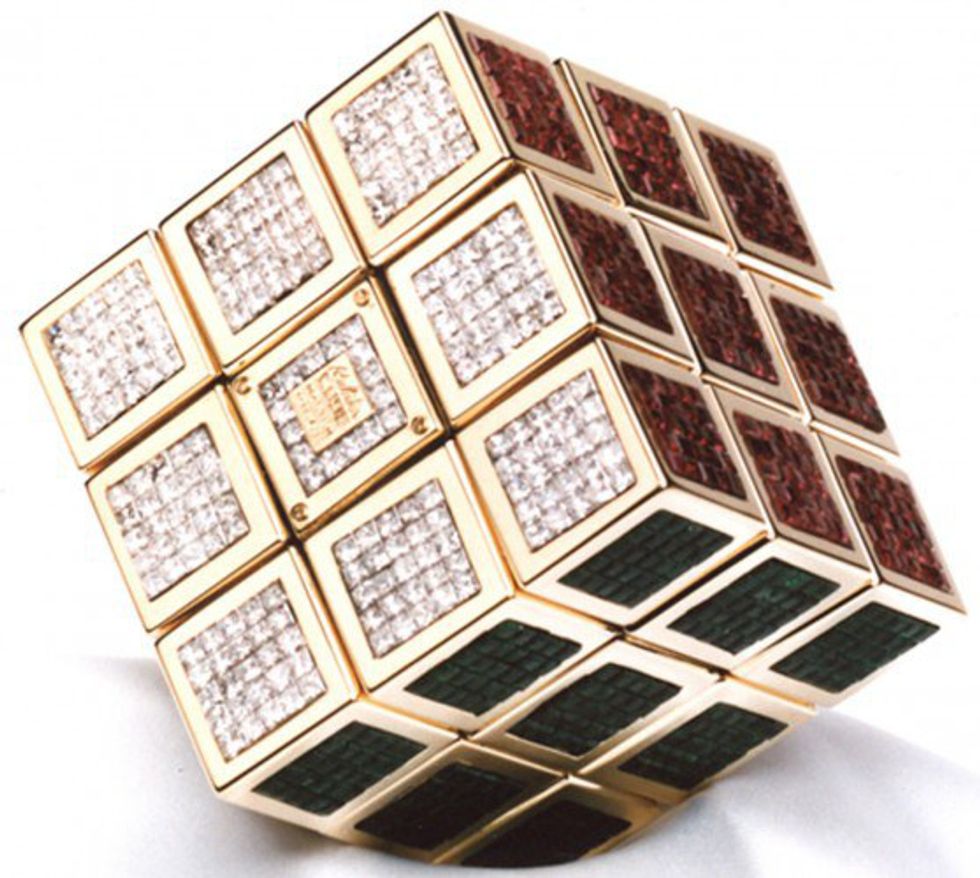
Why has the Rubik’s Cube topped the list of best-selling toys ever since its creation in 1974? Ernö Rubik only created the cube as a teaching aid for his small class of students in Hungary. Since then, more than 350 million Rubik’s Cubes have been sold worldwide and approximately one in every seven people alive have played with a Rubik’s Cube. The little six color cube has spurred art movements (Rubik cubism), created a sport competition (Speedcubing), and it has even been sent into space! Diamond Cutters International created a Rubik’s Cube out of precious stones that is valued at 2.5 million dollars.
The huge popularity of the Rubik’s Cube will likely not disappear anytime soon – you might as well join in on the fun!















