The first thing I remember about ASL (Academic Sports League, also known as Academic Decathlon) was this cult of students hanging out after hours in the library with three inch binders overstuffed with paper. I had no idea what their affiliation was, or its purpose for that matter, but anything with the threat of extracurricular schoolwork was a No Go for me. I could hardly remain complacent for the duration of an average school day. I wasn’t the most social kid, either. Like, to the point where I was withdrawn from the school for a few days due to crippling depression. About a week after my return, my favorite teacher (not just inhigh school, but ever, with no offense to all the other greats I’ve studied beneath), who was their coach and ring leader, pulled me aside and offered me a position on their team. On one hand, I didn’t want to disappoint one of my role models, but on the other hand…did I really want to commit to all that extra work. Pushing my lethargy to the side, I reluctantly accepted. As I was filling out the form, my friends began to poke fun at the program, making remarks about how I’d have to run laps and jump over hurdles (because it’s called Academic Sports League, get it?). That’s when I realized, I had absolutely no idea what I was getting myself into. What is ASL, anyways?

Academic Sports League is an academic competition in which students study seven different topics based on a particular time period or theme which changes on an annual basis. Over three meets spread throughout the first half of the academic year, tests would be taken on these subjects, with each meet consisting of a select portion of the curriculum. (Meet One pertains to: Art, Music, and Language/Literature. Meet Two tests for Math and Science. Meet Three finishes with Social Science and Economics.) After the main testing is completed, there is a quick trivia competition called Super Quiz, where three representative members of each division of every school’s team answer five questions in succession. The meets conclude with an awards ceremony, where top-scoring members are awarded with medals and the congrats of their coaches. At each of these meets, students are also graded for a speech (impromptu or prepared), interview, and impromptu essay on a given topic related to the year’s theme. After these three “practice meets” (which are considered the Academic Decathlon portion), a Regional competition is held for two days. Qualifying teams continue to the State-level competition, and the two top-scoring teams compete at Nationals. Near the end of the academic year, a banquet is held where college grants and more awards are given. This is to make no mention of the Five o’Clock bus rides to colleges across the state for every meet, hours spent studying after school as a team and at home, and comradery formed in the trenches of academia.
That may not sound fun on paper. In execution, there are times where you’ll probably question what the heck you’re doing and why you put yourself through this (roughly between four o’clock when you wake up for the meet and seven, when you arrive). What’s the purpose? I don’t think I knew until well after my graduation what Academic Decathlon has done for me. First of all, I don’t keep in touch with many grade school peers, but a majority of those I do would be strangers without Decathlon. In fact, even those who are no longer a part of my life still populate the culture of my memory on a near-daily basis. I feel like we’ve been through something together nobody else will share with me, even if we didn’t end up leaving in the same direction afterward. As a recluse by nature, that alone is priceless. I won’t go so far as to compare ASL to boot camp, but in a similar fashion, it shapes a certain kind of character I’ve yet to find elsewhere. Usually, when I meet somebody, I can tell whether or not they participated in ASL. Job interviews are exercises in ego, after routinely practicing for/in ASL. I feel like a professional athlete stepping up to the plate when I enter a personnel office. The same goes for public speaking, due to frequent speeches. Sure, I might sound like an idiot when giving a class presentation, but at least I know how to sound like an idiot without it lowering my grade. The inconvenient hours (to say the least) prepared me immensely for the working life. I hope to never have a job where I get up at Four in the morning on a regular basis, but if I do, at least I can say I’ve done it before.
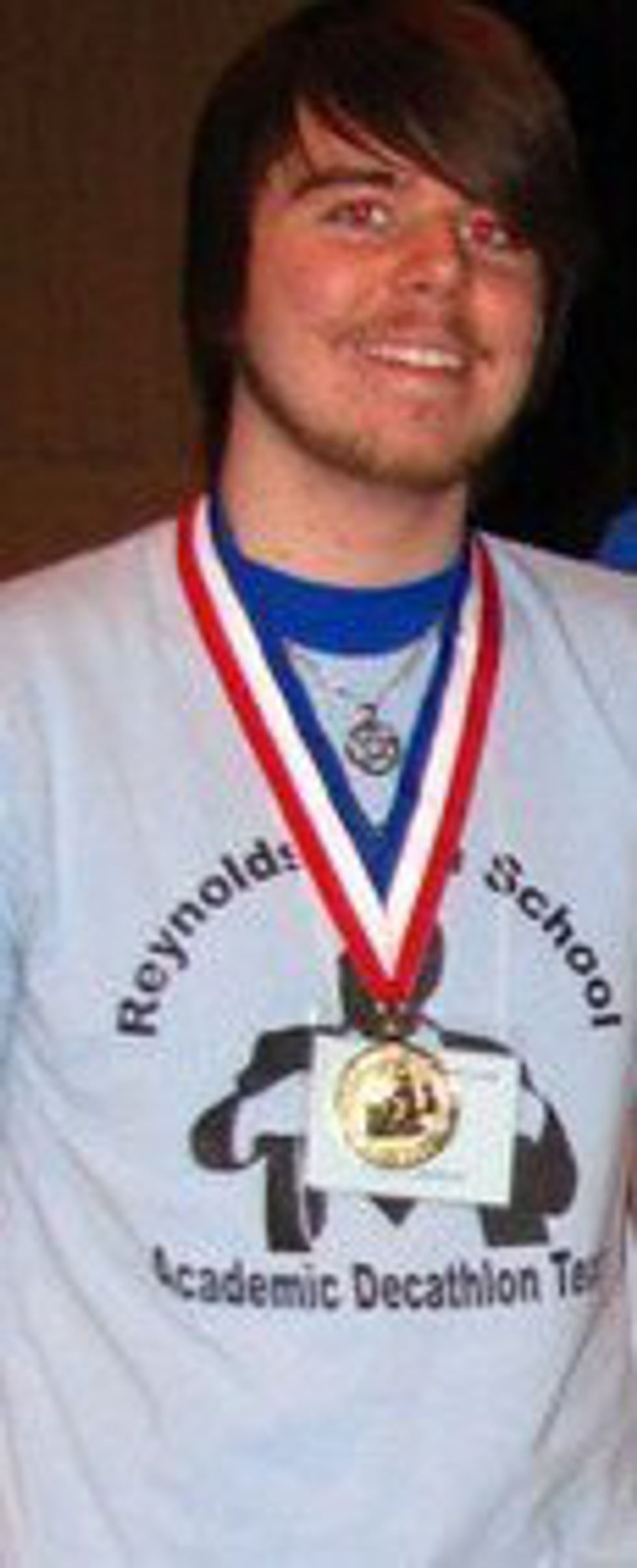
The most I can say for ASL is that I honestly believe that I’d never have gone to college without it. In fact, I feel that most of my collegiate classes are lacking compared to my former studies for ASL. I’m almost disappointed that the greatest academic experience of my life occurred so early, but I’m beyond grateful that it did. It not only shaped my life and the way I prioritize my goals in it, but also who I am as a student and a person. For me, Academic Decathlon is long over, but its influence is with me in everything I do, lessons drawn from the books and from my coach and teammates that help me every single day. Hopefully some student reading this can get involved in it while they’ve still got the chance to, or (aspiring) teachers will be aspired to coach at their school. I doubt my coach or teammates will ever read this, but in the chance that they do, thanks a ton. I wouldn’t be me without you.