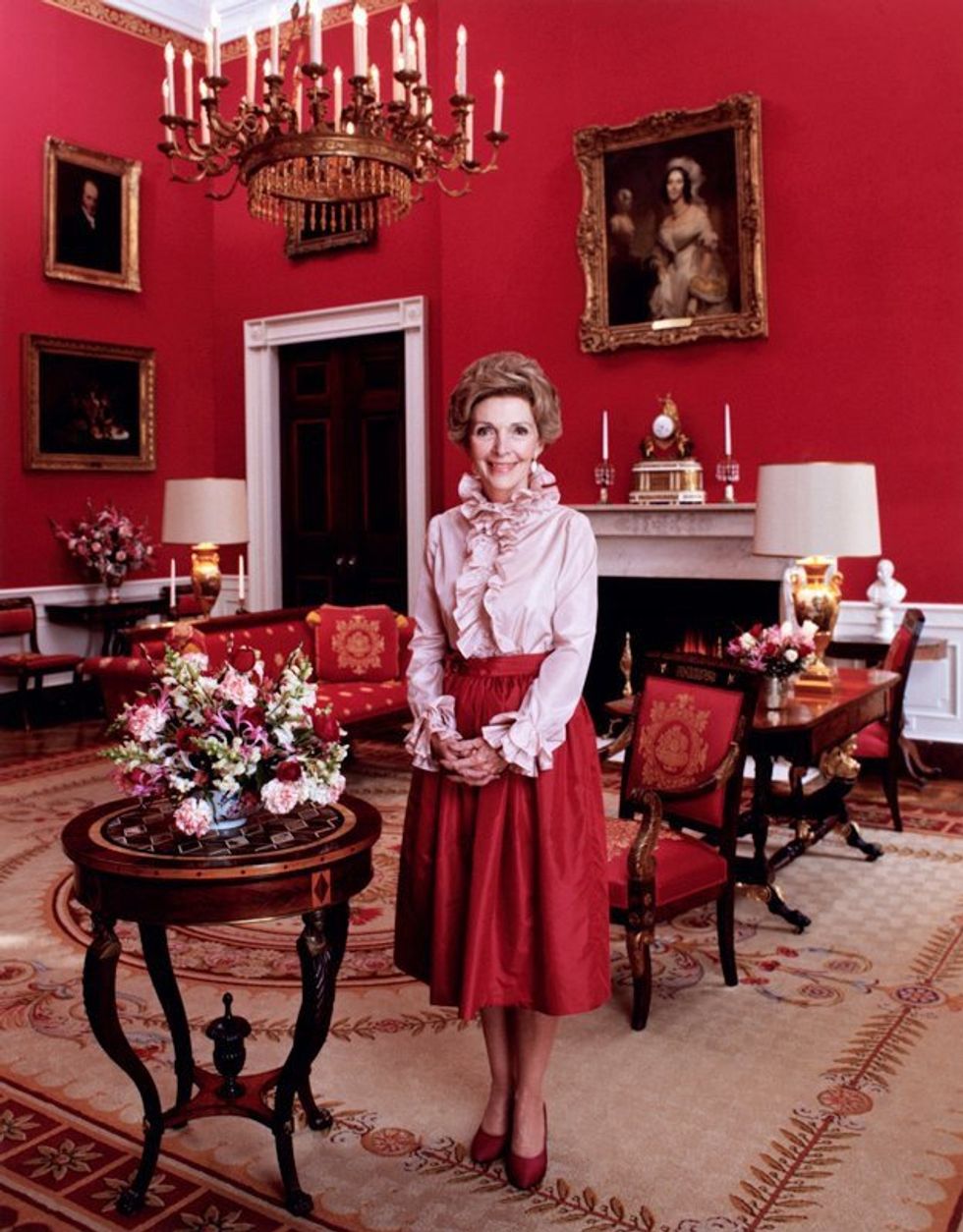
At the age of 94, Nancy Reagan, former first lady, died in her Los Angeles home from congestive heart failure. Not many millennials may remember who she was, as she was first lady from 1981 through 1989, but she did many extraordinary things in and out of the spotlight. Anne Frances Robbins was born on July 6, 1921. She was most commonly known as Nancy after birth, and after her parents divorced and her mother got remarried, was known as Nancy Davis. After graduating from Smith College and earning a degree in English and Drama, she went on to sign a contract with MGM Studios, stating “[it] how was like walking into a dream world." During her film career, she met Ronald Reagan, who would go on to become her husband, when he was the President of the Screen Actors Guild. After three years of dating, he proposed, and from then onwards, she was known as Nancy Reagan.

From 1967 through 1975, Nancy Reagan was the First Lady of California during her husband’s two terms as governor. During her time as the First Lady of California, she was appointed to the California Arts Commission and she was named as "California Times’" Woman of the Year. She was a “modern” first lady, executing glamour, style, and youthfulness. Reagan visited veterans, the elderly, and the handicapped, and worked with a number of charities. She became involved with the Foster Grandparents Program, and she expanded her work with the organization after arriving in Washington.

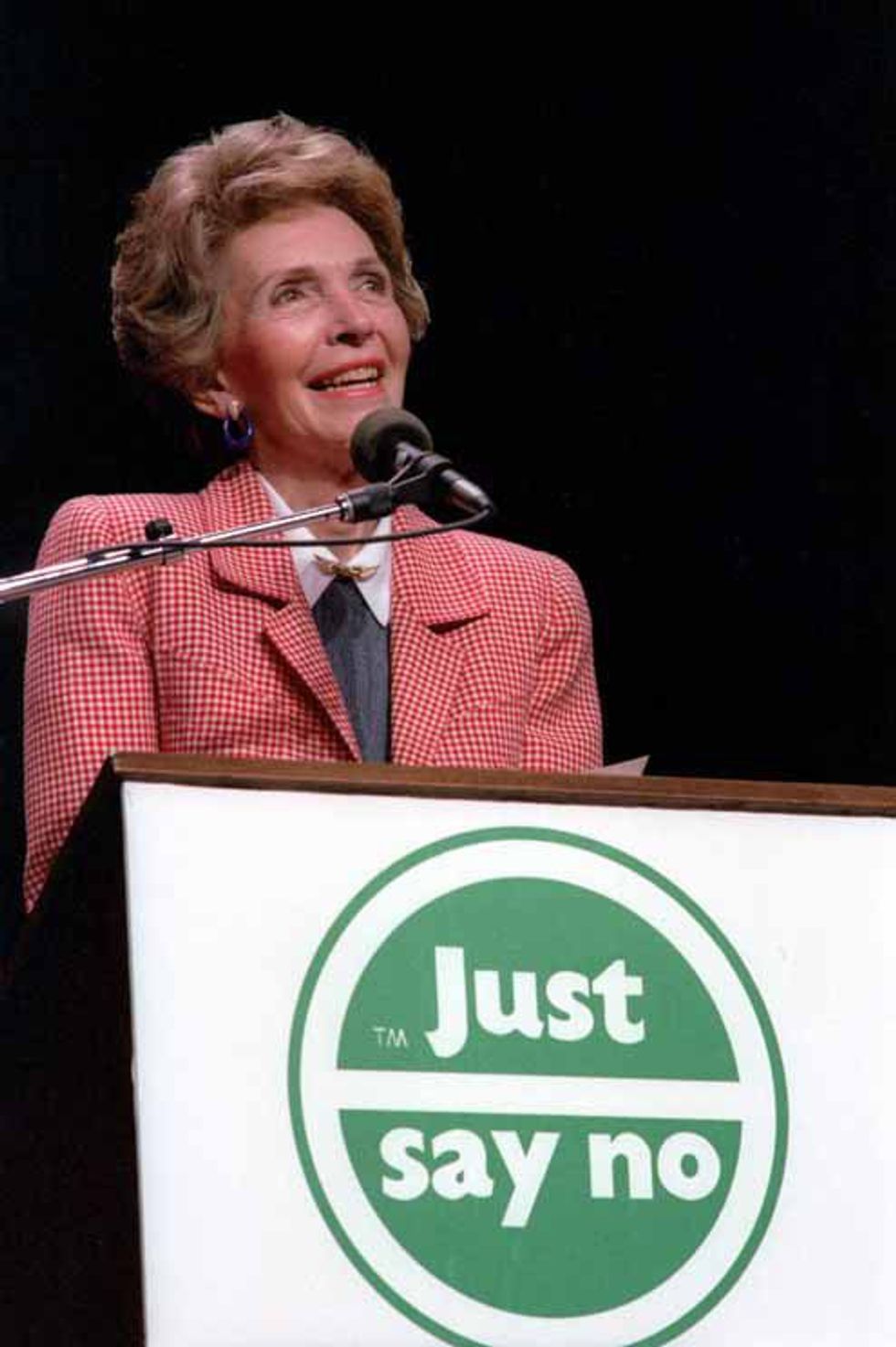
During her husband’s presidency, Nancy Reagan's greatest accomplishment was the launch of the “Just Say No” drug awareness campaign in 1982. The First Lady became aware of the need to educate young people about drugs during a 1980 campaign stop in Daytop Village, New York. She remarked in 1981 that "Understanding what drugs can do to your children, understanding peer pressure and understanding why they turn to drugs is ... the first step in solving the problem." Her campaign focused on drug education and informing the youth of the danger of drug abuse. When asked by a young girl what to do when offered drugs, Nancy responded “Just say no.” This phrase settled into the popular culture of the 1980s and went on to become the name of club organizations and school anti-drug programs. In 1985, the campaign went onto a more international level, as Nancy Reagan invited First Ladies from nations all around the world to participate in the campaign. On October 27, 1986, President Reagan signed a drug enforcement bill into law, which granted $1.7 billion in funding to fight the crisis and ensured a mandatory minimum penalty for drug offenses. Two years later, she became the first First Lady invited to address the United Nations General Assembly, where she spoke on international drug interdiction and trafficking laws. Even though her campaign was often questioned and critiqued, the “Just Say No” clubs and organizations remain operating to this day, and aim to raise awareness and educate people about the the effects of drugs.
After Ronald Reagan’s death in 2004, Nancy Reagan continued raising awareness about the dangers of drugs, as well as remained active in political affairs, particularly those having to do with stem cell research in order to find a cure for Alzheimer's. As the United States loses another bright First Lady, Nancy Reagan will always be remembered as a devoted, passionate, and powerful figure in and out of the White House.

“You learn something out of everything, and you come to realize more than ever that we're all here for a certain space of time, and, and then it's going to be over, and you better make this count.” -Nancy Reagan