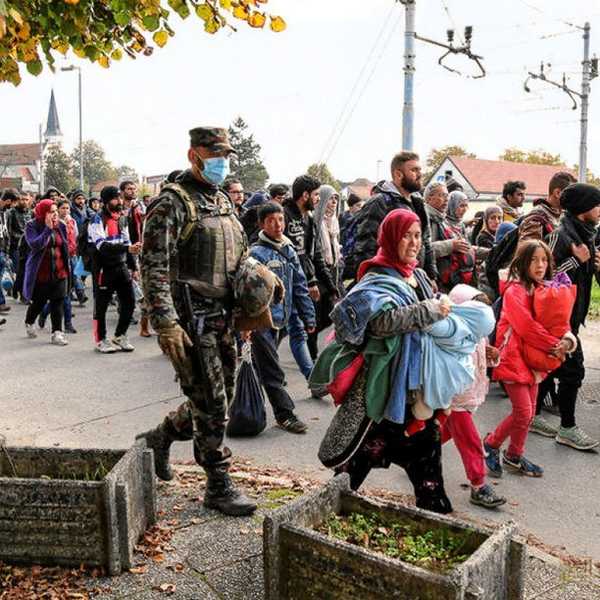

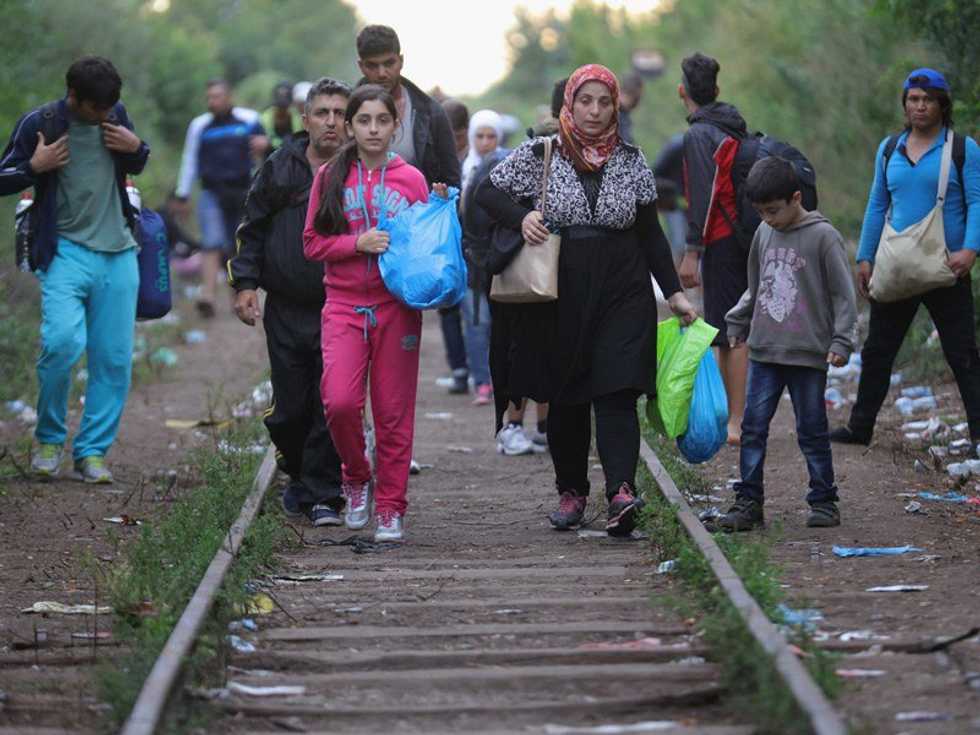
While us Americans enjoy the comforts and security of everyday life in our hometowns, halfway around the world, the people of Syria are fleeing the brutal and hellish conditions of the war stricken country. Roughly half of the of the 23 million population are displaced and everyday more Syrians are fleeing the country and becoming refugees. To put it in perspective, imagine the entire population of the state of Ohio having to leave their homes due to an internal conflict. With the increasing number of Syrian refugees, neighboring countries in the Middle East and countries in Europe are facing difficulties whether to accept or refuse these refugees. It is important that everyone is informed on this issue, so here is some background information on the refugee crisis.
What started the conflict
To understand the crisis better, it important to know how the conflict started. In March, 2011, during the Arab Spring, pro-democracy protests began after news spread of the arrest and torture of teenagers who had painted revolutionary slogans on a school wall. Security forces opened fire on the protesters, killing some, which prompted more protesters and a fierce surge in calling for the resignation of dictator President Assad. After more forceful measures to put an end to protesters only strengthened the protesters’ resolve, by July 2011, hundreds of thousands were taking to the streets, and many were arming themselves for personal protection.
Eventually violence escalated and rebel brigades were formed to battle government forces for control of cities and towns. As the rebellion evolved and the civil war grew in complexity, ISIS joined in the conflict, creating a war within a war. The frequency of fighting has caused millions of native Syrians to leave the country in the hopes of making it to safety in neighboring countries and refugee locations.
Where are the refugees going?
Many of the refugees are fleeing to countries that share a border with Syria, which include Turkey, Lebanon, Jordan and Iraq. Turkey hold the most amount of refugees, approximately 1.9 million. The number is so large that Turkey was simply not prepared for the large influx; roughly 14%, or 266,000 refugees live in refugee camps. Lebanon, a country with a population of 4.4 million before the crisis, has received 1.1 million Syrian refugees, increasing the population of the country by 25%. Jordan has taken in roughly 629,000 refugees, but with resources beginning to be stretched thin, public opinion may change in regards to how many more refugees they allow in. Iraq has accounted for 250,000 refugees, but ironically enough, it has also received many more former Iraqi’s that fled to Syria because of the doings of ISIS in Iraq. Almost 38% of refugees live in refugee camps in Iraq.
While many refugees are currently in neighboring countries, many seek for asylum, or the protection by a nation to someone with refugee status, in European countries. Germany has received the most asylum requests, at nearly 100,000 requests so far. However, German officials expect that number to escalate considerably, as officials estimate to over 800,000 by this year’s end. Sweden has received the next highest number of asylum requests at approximately 65,000 requests so far. While other European countries like France and the U.K. have had relatively lower amounts of refugees enter their country, the number will likely increase, as both nations have announced plans to increase those numbers, with France willing to take in 24,000 refugees over the next two years and the U.K. taking in 20,000 over the next five years. However, while some nations are willing to take in these refugees, some countries are trying to close their borders. Hungary, with security forces placed at border protection zones, has built barbed wires along its border and forced many to stay in holding areas, sometimes for days, where conditions are said to be poor.
Why should you care?
Perhaps what makes this story so important is the journey that many of these refugees have to make. The conditions of the journey are quite simply deadly, and there has been no shortage of images and videos on the news recently that illustrate just how harsh it is. Many refugees take the trip from the western border of Turkey and others from the tip of Libya in Africa across the Mediterranean Sea trying to reach Greece. However, it has been estimated that 2700 migrants and refugees have died while traveling across the Mediterranean. Just last week, 71 refugee bodies were found decomposing in an abandoned truck along an Austrian highway. At the border of Hungary, security guards have been photographed clubbing and beating refugees trying to pass the border. There are countless challenges that these refugees have had to face, and even if they succeed in making it to Europe, they still face discrimination and uncertainty in a new nation.
This is an issue that will only continue to grow and continue making headlines in the future. It is our responsibility as educating individuals to educate ourselves on such world issues in order to make informed decisions on how to deal with them. How we choose to help or ignore these refugees will demonstrate how far our society has grown in coming to the aid of every individual.