


The sound of a whirling fan, crackling of a plastic bag full of candy, and popcorn popping out of the pan. A lazy Saturday evening in the middle of a sweltering hot summer. My fiancé and I sprawl out on his uneven futon, he begins to scroll through Netflix’s reading the titles that catch his eye aloud. I type into Google a multitude of searches until I come up with some movie suggestions for us to watch. First we decided on a movie titled, “The One I Love,” which was an indie film about a couple that goes on a retreat. My description sounds boring, but I don’t want to ruin anything, because, trust me, this is a wonderful movie. The credits roll and the movie ends.
It's about 10pm at this point, and I suggest we watch another movie. We pick “The Mask You Live In,” and both of us know that we probably will fall asleep before this movie is over. Thirty minutes in, both of our eyes wide with fascination, the credits roll, and we are both still wide awake. We both sit in the silence of the cool summer night, and then begin to talk, talk for hours about what we just saw.
“The Mask You Live In” is a documentary that sheds light on how the concept of “Be a Man” has affected our society in such a negative way. Me, a feminist, and my fiancé, a man, both felt like this documentary opened the doors to a topic we might not have thought about.
 One sunny spring day, the heat radiating from the concrete, four young boys are playing on the playground. Chasing each other around, sliding the down the slides, and talking about class, giggling at the girls. These young boys seem genuinely happy, after school the young boy arrives home off of his bus, his mom asks him how school went, he excitedly answers with details about his day, and then stays in the kitchen to eat a snack and work on homework. Later in the evening his father and him are outside playing catch. The boy gets hit with the ball hard, so he falls over and begins to cry. His dad immediately runs over, of course reassuring the boy that it’s okay so the boys' mom won’t be mad, but then whispers in the boys ear, “Stand up, stop crying, crying is for girls, you need to be a man, son.”
The boy looks at the stern look in his father’s eyes and stands up and stops crying. His father pats him on the back and says, “That’s my boy!” The mom sees this happen from inside the house and just says, “Boys will be boys.”
Nobody realizes what a pivotal moment this was in this young boy’s life. This was the first time he was told to: “Be a man.” This young boy will be told this many more times in his life, maybe not those exact words, but phrases like, “Man up,” “Stop being a pussy,” “You're acting like a girl,” “Men don’t do that,” are all tied into this notion of being a man.
Masculinity in our modern culture has been so twisted into this sick notion that men must have their guard up at all times, men must hide the pain, get the women, be fit, have friends but not like them too much because that’s “gay”, lose his virginity, fight all opponents, be good at sports, drink, do drugs, and the list goes on.
This shift is causing some shocking statistics to form. “The Mask You Live In” highlights these statics, such as: “Three or more boys commit suicide every day, suicide is the third leading cause of death for boys;” “Boys are two times more likely to flunk out or drop out of school than girls, boys are two times more likely to be put in special education, and four times more likely to be expelled;” “93% of boys are exposed to internet pornography before the age of 18.”
How much longer is society going to allow the notion of “Boys being boys” to be acceptable? Clearly, our definition of masculinity needs to change. We need to reach out to boys and men and let them know that this isn’t how it has to be. Being a man doesn’t have to be sex, drugs, video games, and pornography. They can redefine what it means. They can stand behind what they think is right. They just need a voice. They need someone to tell them that it’s okay.
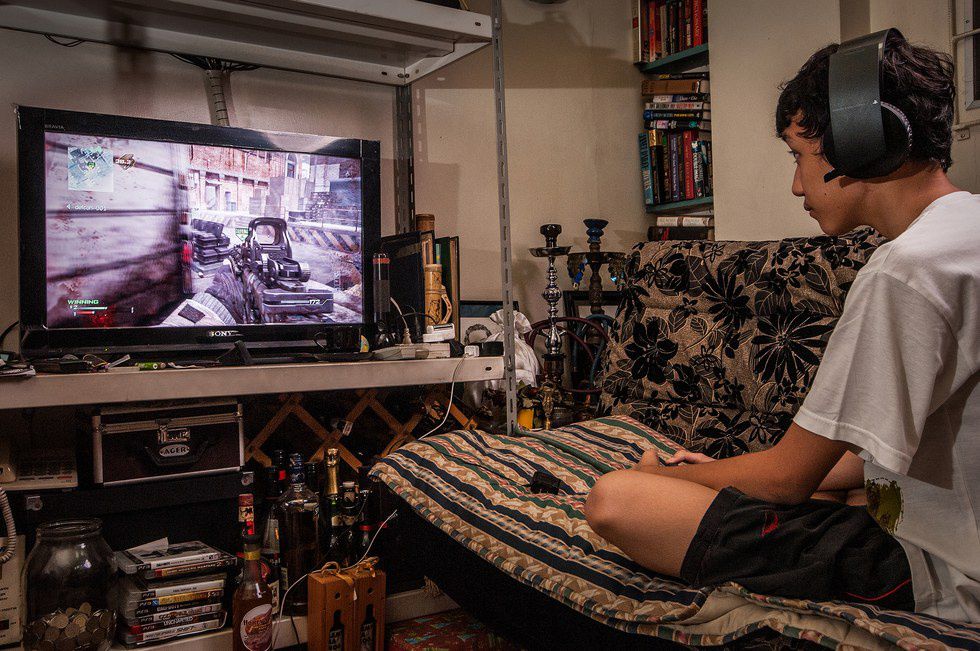 Fast forward a few years, this young boy is now 12 years old. Ge has stopped participating in school. He rarely does his homework, constantly talks back to his teachers, and spends hours in detention. The school bell rings one final time at the end of a long day, and this boy is leaving his class when one of his buddies comes up to him and says, “Hey don’t take the bus home and meet us outside by the dumpster in ten minutes to smoke.” This boy decides to go, nervous because he’s never smoked weed before, yet elated that his friends think he’s man enough to smoke with them.
He walks out into the brisk fall air, wanders behind the dumpster, checking behind himself to make sure no one follows him. His friends are all standing there, ready to light the blunt. His best friend takes the first hit, and the boy gets passed the blunt. Nervously, he takes a hit and begins coughing. He feels like he can’t breathe, and his friends start to laugh. His face turns bright red and his friend says, “Dude man up, you're acting like you’ve never done this before.”
The boy laughs and tries to play it off, and passes the blunt. The boys stand there chatting about video games and girls, and soon the boy begins to feel high for the first time, overcome with the emotion of his families issues, he begins to cry. His friend punches him in the arm and says, “Dude what’s wrong with you? Men don’t cry, stop crying dude.” The boy realizes he’s embarrassing himself and stops. As he starts to walk home his friend yells, “Are you sure you don’t want another hit pussy?” The boy just laughs and walks away, too embarrassed to say anything.
The boy quickly walks home in the cold fall air, realizing he forgot his coat at school, knowing that his mom would be home waiting to question him on why he didn’t take the bus. Stumbling in the door, his mother says with a worried look on her face, “Where were you?” He replies, “Studying.” She believes him and says, “Okay, how was school?” He says “Fine.” He runs up to his room with snacks in hand, ready to drown all his thoughts out with the noise of simulated machine guns of a video game. He spends hours watching images of violence and sexual assault towards women. He gets angry every time he loses the game. His mom calls him down for dinner, and he dashes into the kitchen, grabs his dinner, and back upstairs he goes. His mom just sighs and says, “Boys will be boys,” as she eats dinner alone for the first time since her divorce.
People are realizing that something changes within boys as they age. Their engagement with their friends goes from happy and friendly to wearing a mask to seem like a cool man. This mask boys feel the need to wear is a result of many aspects, such as culture, media, friends, and family.
Media tells boys to treat women like objects, get a girl for a night then never see her again. Media also tells boys to be tough, just like their favorite sports stars. They never cry when they get hurt. They man up and fight the pain, and they put themselves in danger to prove they are a man.
Culture tells boys to stay away from all things feminine dolls, makeup, the color pink, crying, being sensitive, and talking about your emotions. Yet if boys are never allowed to talk about their emotions, then how to they cope? Through videos games, shooting computerized beings, and gaining points from it, drugs and alcohol, self-harm, suicide. I know that parents want their kids to succeed but telling kids to mask their emotions is only going to turn them into angry or depressed lashing out adults. Causing kids to shoot up schools, end up in prison for drugs or murder, killing themselves because they feel that that is the only way out, or becoming an addict.
Even teachers in school assume that a boy's outrage is normal behavior, that them getting angry at students and teachers is just a part of growing up. Although, what if it’s a cry for help? What if that boy who hit that boy just wants someone to talk to? What if that boy who yelled at that teacher about his class he’s failing just had his parent die? Maybe instead of telling boys to man up, we need to tell boys that it’s okay to show emotion. It’s okay to vent about your problem. You are not defined by your gender, and you are a human being with human problems that needs someone to listen.
 This need for males to express emotion becomes very real in the movie, “The Mask You Live In,” when a man named Ashanti Branch speaks about his role in the local high school he grew up. This man graduated from Freemont High School, where he went on to become an engineer. He says he never wanted to be a teacher, but realized his community was hurting. So, he came back to Freemont, the high school he himself graduated from, to mentor young boys. He says in the movie, “You go two blocks away, there is prostitution… I see it as a war out there, these kids have to wake up every morning and prepare their masks” (“The Mask You Live In”). He goes on to say, “You have to put on a very tough mask out there so no one can see my variabilities, but hopefully once you get here (to school) you can take off that mask and focus on learning” (“That Mask You Live In”).
Unfortunately, he had noticed that a lot of the boys feel that they need to wear that mask inside of school to hide their true selves from their friends and peers. This is where Ashanti steps in to mentor these boys and help them realize why they wear the mask that they wear. He also helps them all agree that the mask isn’t necessary to wear, that you can be yourself in school, you can cry, you can laugh, and you don’t have to wear that mask.
Later on in the documentary, Ashanti is sitting around with a group of young boys, and he’s passing out a piece of paper. He tells the boys to write on one side what is the mask you walk into school with every day, which is basically what you want people to know about you. Then, on the other side, write what you don’t want people to know about you. The boys write on the paper, then Ashanti tells them to ball it up and throw it at someone across the room. Each boy grabs a ball of paper and unfolds it.
They go around the circle first reading the mask side which all say, “Happy, outgoing, smiley, funny, entertaining.” Then, they read the back which most say, “Anger, sadness, and fear.” As they go around the circle one boy begins to read the one he got, the mask side said, “Funny, outgoing, happy.” The other side said, “Sadness, anger, tears, and miss my dad.” You see a boy across the room get nervous. Soon he breaks down and starts crying. His friend comforts him, telling him it’s okay.
This was such a touching moment. Not only did these boys realize that everyone in that room was wearing the same mask, but they also realize that everyone felt the same on the inside.
This exercise can be so beneficial for any age of boys, teaching them that wearing the mask isn’t the only answer is truly needed in our culture. I, being a women with a dad, grandpa, brother, and fiancé have witness first-hand the struggle for people even within my inner circle to open up about their emotions.
I urge you to watch this film. I urge you to rethink what you define as, “Being a man.” This conversation will hit home with so many men in your life. Just ask them their definition, ask them who told them first how to be a man, who told them to man up, and to stop crying. Hear them out, tell them it’s okay, and let them know that being a man can be redefined. I encourage my fiancé every day to talk to me about anything that makes him emotional. He believes along with me that the notion of being a man is ignorant and needs to be redefined.

















