
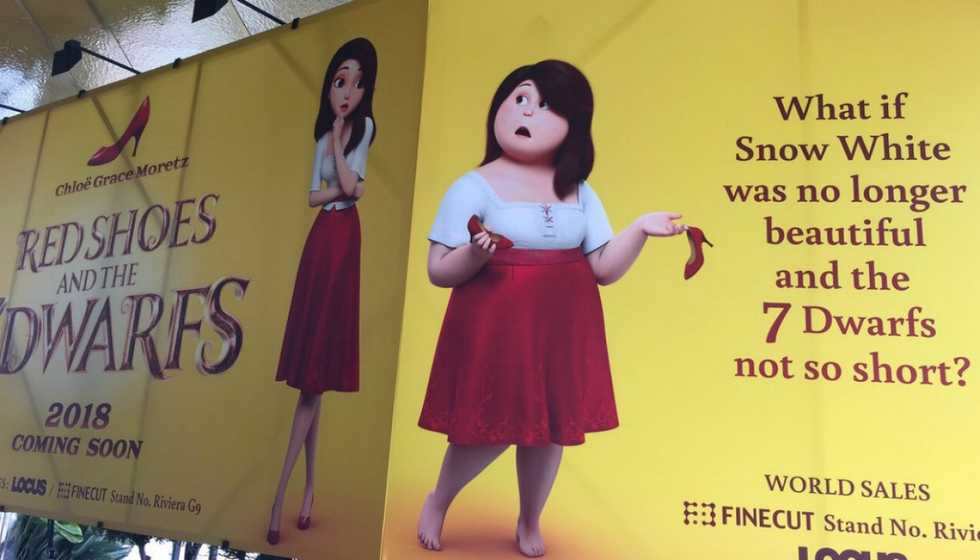
Body-shaming has been a touchy and controversial topic in the U.S. and many countries all over the world. We encounter and hear about it endlessly, especially on social media. On May 30th, plus-size model Tess Holliday put this South Korean family-oriented comedy on blast after seeing the movie poster.

Tagging the voice-actor star of the film Chloe Grace Moretz, Tess tweeted:
“How did this get approved by an entire marketing team? Why is it okay to tell young kids being fat = ugly?”
"What if Snow White was no longer beautiful and the 7 dwarfs not so short?"
Was the first thought that went through your head... okay, so short and fat means ugly? That was my impression as well. Immediate offense. Yikes.
Another question came to mind. Is this poor marketing or is it part of Lucas Creative Studio’s attempt to get people talking about this controversy?
The trailer wasn’t any better. It showed two of the dwarfs watching Snow White getting undressed while they got all googly-eyed with their mouths dropping. Then they were shocked as she took her red shoes off which turned her back to her true “non-beautiful” self, understandably so given the storyline, yet still quite uncomfortable to watch. The other trailer showed one of the dwarfs violently trying to remove Snow White’s red shoes while she was asleep. He tied her up in chains, used a chainsaw and literally held her by her foot and slammed her unconscious body back and forth on the ground. Wow, even for comedy’s sake… that’s—no, just no.
Chloe responded.
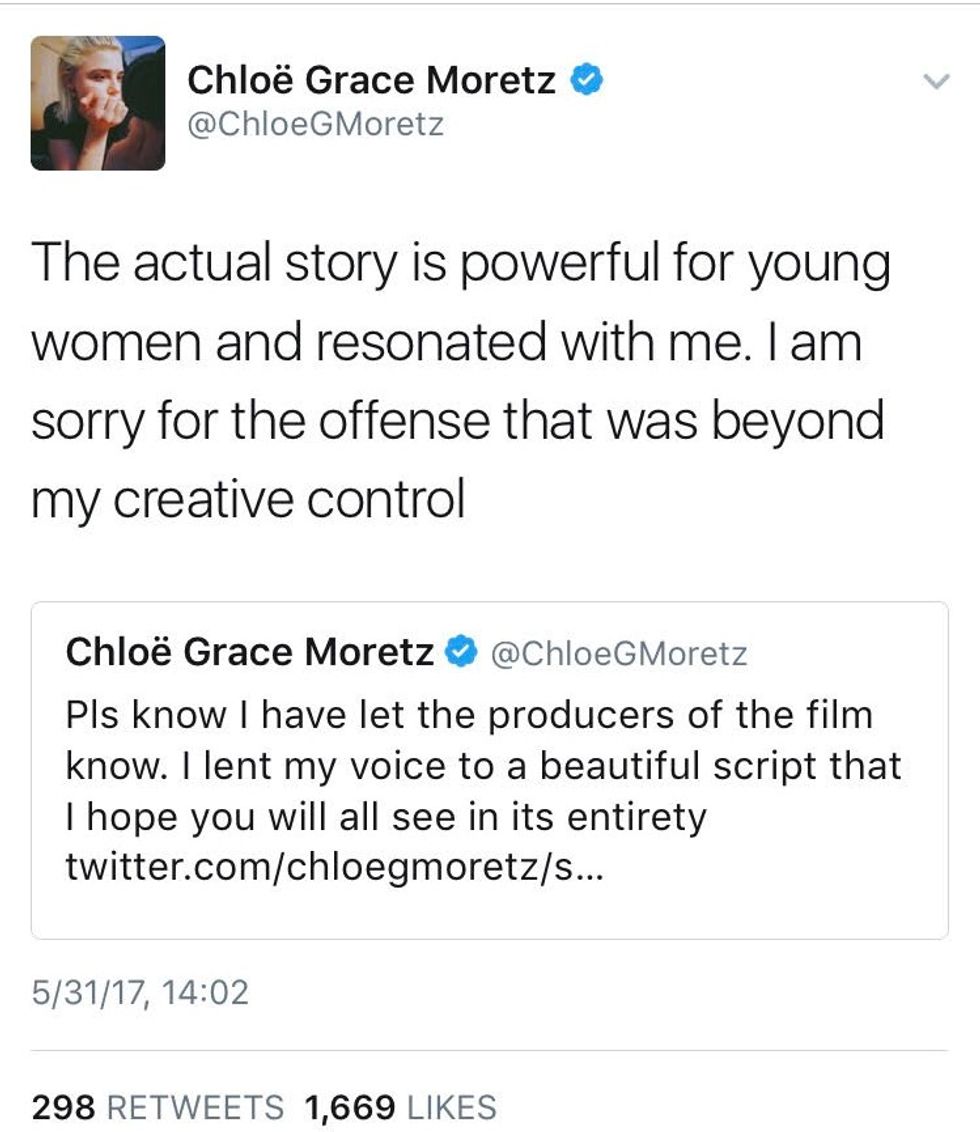
Before I read the filmmakers’ response, I gave this fairy tale parody the benefit of the doubt.
Given Chloe Grace Moretz’s reassurance, I know it won’t be as terrible as its advertisement lead out to be. She’s an advocate for body positivity so I stand by her when she claimed she was appalled and angry about the movie ads.
Maybe the main character is pressured by the ideals of beauty in her environment and feels like she needs the magical spell-bound shoes to remain "beautiful"—much like the true-love's-kiss-spell to free Princess Fiona ("Shrek") from being an ogre; and like the flower/Rapunzel's hair that contained healing powers that kept Mother Gothel ("Tangled") young. This film could have the potential to remind children and adults to be less shallow and self-absorbed. It could remind people to embrace inner and outer beauty. Acceptance and love for yourself are important after all.
The message of the film isn’t what it seems. Here’s the actual premise:
A normal girl born into extraordinary circumstances, she’s a princess who doesn’t fit into the celebrity world of princesses—or their dress size. She wants to stay true to herself, but Fairy Tale Island is all about looks, so it makes it hard not to want to be like the others. In her quest to find her lost father, she learns not only to accept herself but celebrate who she is inside and out. And to let the beauty within—the beauty that Prince Merlin falls in love with shine brighter than anything else in the land.
Not to mention, the 7 princes are inconsiderate and self-centered which results to them turning into green dwarfs. There is certainly a lesson to be taught.
You definitely wouldn’t have gotten this premise if you just saw the movie poster or the trailers for that matter. And movie-goers and social media fiends are way too quick to start bashing anything remotely disputable.
Directer Sung-ho Hong and producer Sujin Hwang released this statement:
As the producer of the theatrical animated film Red Shoes and the 7 Dwarfs, now in production, Locus Corporation wishes to apologize regarding the first elements of our marketing campaign (in the form of a Cannes billboard and a trailer) which we realize has had the opposite effect from that which was intended. That advertising campaign is being terminated.
Our film, a family comedy, carries a message designed to challenge social prejudices related to standards of physical beauty in society by emphasizing the importance of inner beauty. We appreciate and are grateful for the constructive criticism of those who brought this to our attention. We sincerely regret any embarrassment or dissatisfaction this mistaken advertising has caused to any of the individual artists or companies involved with the production or future distribution of our film, none of whom had any involvement with creating or approving the now discontinued advertising campaign.
So, here’s the conclusion I’ve settled with. I think that what the filmmakers are trying to say is yes, Snow White is fat. She is the way she looks and that should be perfectly acceptable. I don’t think they are saying that fat = ugly. They are portraying the harsh reality that society really does contribute to the notion of fat as being ugly. I think their intention was to open minds about this issue and change attitudes for the better. Hopefully they'll be more careful with their next movie promotion.
Let’s try to remain calm until the film releases and come back to this after having seen it.

















