

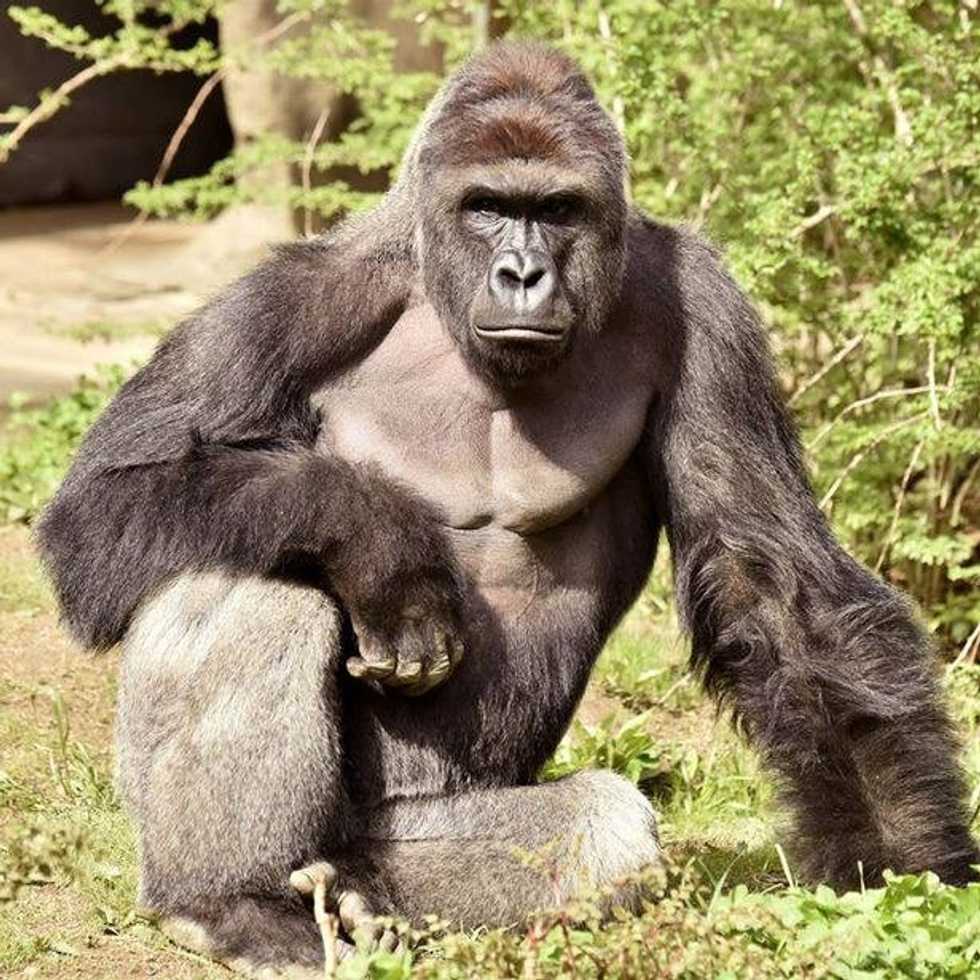
If you have been keeping up on the news this last week, you have seen and read more articles about a particular zoo than you have in your entire lifetime. The story has taken the internet by storm and the reactions have been all over the place, as the internet often has a tendency to be a place for this to happen. This article is not going to be like the ones you may have already read. I do not want to blame any individual or group, or try to justify the actions which have taken place, rather, I want to use this incident as a talking point of a concept which I have been struggling with ethically: zoos.
If by some small chance you may not know what I am talking about, a weekend ago a 3-year-old boy fell into a gorilla enclosure at the Cincinnati Zoo. Harambe, a 17-year-old silverback gorilla, quickly approached the boy. During a period which lasted about 10 minutes, the boy was grabbed by Harambe and dragged through water, while Harambe also stood over the boy, shielding it from the crowd. The Zoo decided the best action for the boy's safety was to kill Harambe, shooting the gorilla in the head. The event was gruesome and tragic, and many want to blame certain people involved with the incident. I would caution against this as things like this are complicated and ethics unclear.
I am not a parent, but I know from my own experiences as a child that kids are impossible to keep track of every single second. I also know that it is very important to try to keep track of them to the best of one's ability. I do not know the details on how the child actually fell into the enclosure, and I do not wish to debate whether or not the child's mother is directly responsible. I feel such discussions are very unproductive.
From what I know about gorillas, they are one of the most gentle mammals, far more than chimpanzees or us, but their strength is incredible. If any harm would've been done to the boy, it would've been an accident by Harambe's sheer force. I am not sure how quickly tranquilizers work, but according to the articles surrounding the incident, a 450-pound gorilla would've taken a great deal of time to sedate.
It also seems harsh to say a crowd of panicking onlookers did anything but do what anyone would’ve done in the circumstances: panic.
Maybe Harambe could've been tranquilized, maybe the boy could've been killed, it's impossible to say. What strikes me as surprising is the lack of dialogue around the larger question which entered my mind after learning of this tragedy.
What the hell is a gorilla doing in Cincinnati, Ohio?
This is a question which is very difficult for me to ask of the world and myself. Since I was a child, I always loved zoos. Some my fondest early memories were spent at zoos with my family. I loved animals, especially gorillas. I found their strength and their similarity to us to be brilliantly fascinating; I wanted to be like Jane Goodall and study their intelligence, to build a kind of relationship and wonder which was only possible with an animal so like myself.
But, could I say that my ability to see them at all, in a place like a zoo, to be ethically justifiable at all? How could an enclosure ever measure up to the Congo in terms of space and freedom?
It is clear that animals, especially gorillas, have an experience and this is an experience which we should consider in terms of their ability to suffer. I could go into much greater detail, but for the sake of your patience – animals have the ability to suffer. When we cause unnecessary suffering, we are doing something which is unethical. Zoos cause animals suffering. They limit their freedom, causing depression and anxiety, and, at their worst, are places where animals are neglected or abused.
Now, there likely are situations where captivity could be justified. Rescue operations may be a good example, but often these are set-up because of a previous enclosure which caused the animal great suffering and rendered it unable to cope with life outside of captivity, or is an effort to stabilize an endangered population of animals in hopes of reintroducing them into the wild. The point is that taking animals from the wild and into captivity is ethically questionable at best, and likely a serious human problem which should be reconsidered.
In the brief moments leading to the killing of Harambe, the zoo had to make a decision between the possible harm and life of a three-year-old child or the life of a gentle, beautiful, and endangered animal. This situation was tragic. Why this decision had to be made at all is something which troubles me. Harambe simply did not belong in Cincinnati.
It seems to me that this tragedy highlights a deeper, semitic issue with animal rights which may have been weighing on our conscience but we failed to give it the attention it deserved. This tragedy may be an opportunity to reconsider a societal norm which people like myself have been enjoying for too many years.