
When you’re growing up, sometimes the most immersive type of entertainment can be found in movies. Usually the first movies that a child sees and enjoys are Disney animated films (The Lion King, The Little Mermaid, and Beauty and the Beast are just a few of my personal favorites); however, as we grow up, many develop a liking to more complex and thematically darker films, especially in the fantasy genre. For me, that was Peter Jackson's The Lord of the Rings trilogy. With the winning combination of their release dates being at the time of my movie maturity developing and that they are to date one of the best cinematic trilogies of all time, my growing years were filled with trips to Middle Earth to watch the characters that inhabited it (the Hobbit films are another post in itself).
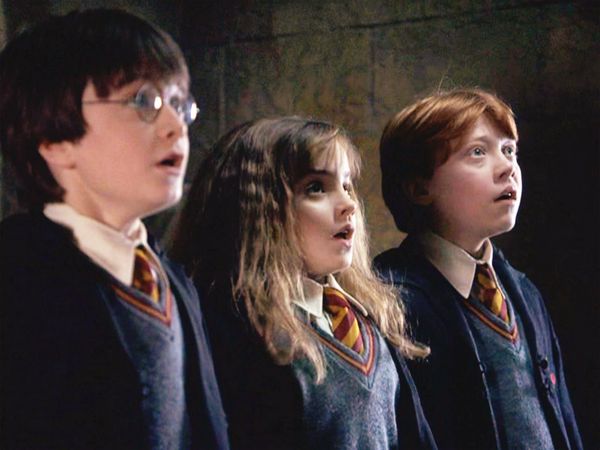
Another such franchise that took the imaginations of children across the globe for a ride is the stories of Harry Potter, though I have only recently seen them in their entirety. You might be saying, "How has a film fanatic like you never seen any of the Harry Potter movies until now?” Much like some other people I have talked to, I wasn’t allowed to watch them because of the “magic” element in them, which could be linked to witchcraft, and as a Christian household my parents wanted to avoid exposing me to this until I was older. This idea, coupled with the hefty amount of time it would take to watch the eight movies (19 hours and 39 minutes for anyone who does the math), has led me to just now seeing them over my summer break.
So how does Harry Potter, whose books could be labeled as the modern equivalent to Lord of the Rings, measure up to the legendary Tolkien works? Here’s what I think!
Thematic Quality
Both Lord of the Rings and Harry Potter bring very true and classic themes to the screen. There is a very evident “good vs. evil” battle going on throughout the entirety of Lord of the Rings, whereas the intensity and darkness of Harry’s pending confrontation with Voldemort is gradually deepened with each film. In Sorcerer’s Stone, we get to see the introduction to the wizarding world as the characters are just children, and we don’t get into anything incredibly mature. Throughout the course of the films we have a looming presence of Voldemort in the plot, and then we finally get to see his plan of attack in the final films. The Lord of the Rings begins with an epic battle for Middle Earth, takes us on a journey with the Sauron’s white hand in play throughout, and we finish with a battle and a resolution as the infamous Ring is destroyed. I think in the case of Harry Potter we get to truly grow up with Harry, Ron, and Hermione as they grow into the people necessary to defeat Voldemort, and that’s what keeps us engaged as children. On the side of Lord of the Rings, the grand scale and depth of it all is so unrivaled and it is incredibly tough to not get involved. I feel like there is more layers to The Lord of the Rings with all of the different storylines and history of Middle Earth, whereas Harry Potter keeps our titular hero in the foreground and keeps us focused there as we learn to love and respect him. If you prefer a story with more depth and a grander scale, The Lord of the Rings is what you're looking for.
Cinematography and Score
Now we’re more into the more technical areas of filmmaking. A score and the look of a film can completely alter the away that audiences experience it, and both of these films do a great job of it. The orchestral scores for the Harry Potter films were composed by 4 different people over the course of the timeline: John Williams (yes, that John Williams), James Shearman, Nicholas Hooper, and Alexandre Desplat. I think this mixed approach might have hurt them a little bit, and yet they all combined to make a great score and the first two films were nominated for Best Original Score. For The Lord of the Rings, composer Howard Shore (another very successful film composer) created one of my personal favorite film scores of all time with his work in these films. With his presence in all of the films we get a continuity and a completeness that connects the stories and emotions across the three films, and Shore won three Oscars for his work (two for Score and one for Original Song in Return of the King). If you have the time or you need the inspiration to get you working and be creative, both of these films could do the trick, but I prefer The Lord of the Rings in this case. The cinematography in these films is even in my opinion. Great movement, angles, and aesthetics in all of the films, and it all comes down to personal preference here.
Acting
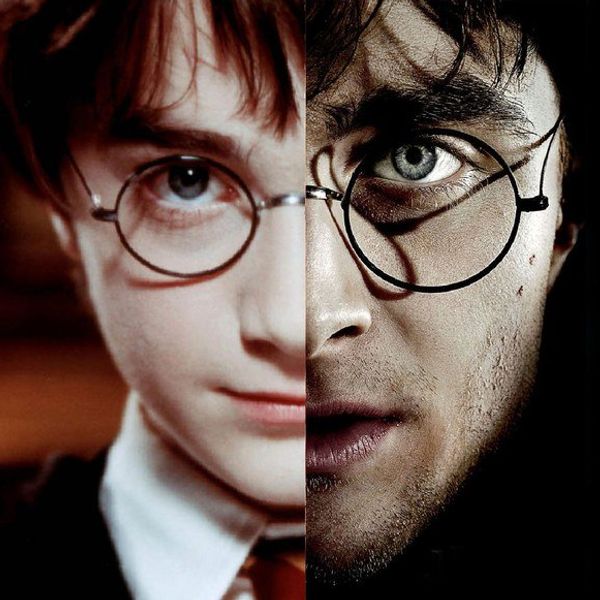
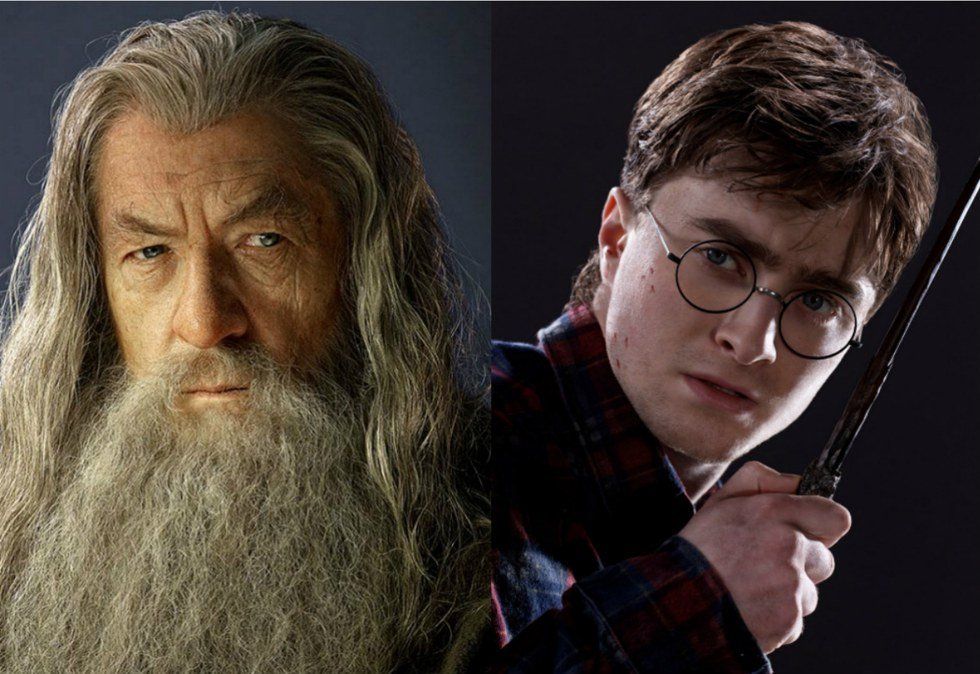
In these two franchises, we get some of the most well-known and loved literary characters brought to the screen, Harry Potter and Gandalf, and in both cases we get exactly what we wanted. Daniel Radcliffe was given the heavy burden of carrying the imaginations and childhoods in a sense of the people who read the books, and he did it all beginning at age 11. Through the course of the 8 installments and 10 years of filming, I was never let down and never saw Radcliffe miss a step. Some more avid and “native” Harry Potter readers may disagree, but to my knowledge the actor brought the beloved child wizard to audiences exactly how they wanted it. The task given to Sir Ian McKellen is similar in that he had to bear the imaginations of the generations of readers who enjoyed Tolkien’s novels, and he accomplished this and more. McKellen brought heart, a genuine emotion, and a powerful presence to every scene he’s in, and he was actually nominated for the Best Supporting Actor Oscar for his first portrayal of the famed wizard in The Fellowship of the Ring. Whereas McKellen is a seasoned veteran of the screen and stage, Radcliffe came into acting with this franchise and has since grown into a promising talent. As for the supporting characters, we could talk about that for hours as both franchises are stuffed with rich characters.
Conclusion
As a lover of both the fantasy genre and filmmaking as a whole, Harry Potter and The Lord of the Rings simply cannot be beaten. Where one succeeds, the other is right on its tail. Is one of these franchises better than the other? It’s tough to say, as personal opinions and the films’ effects on our childhood make it difficult to give an unbiased answer. If I had to choose, be it because of a dose of Veritaserum or by some other fantastical means, I would choose The Lord of the Rings, but I have the utmost respect for Harry Potter and look forward to the new film that comes out this fall!
Bonus Facts
- Daniel Radcliffe and Elijah Wood, who plays Frodo in the Lord of the Rings films, are often mistaken for each other by people walking by on the street.
- Ian McKellen was offered the chance to play another famed elderly wizard by the name of Albus Percival Wulfric Brian Dumbledore. After the previous actor, Richard Harris, died from a battle with Hodgkin's lymphoma, the role was offered to McKellen but turned it down for two reasons: he didn’t want to have to try and bring such a treasured fantasy figure to the screen (again), and Richard Harris had been noted as calling McKellen a “dreadful actor.” Oh, what things could have been.

















