
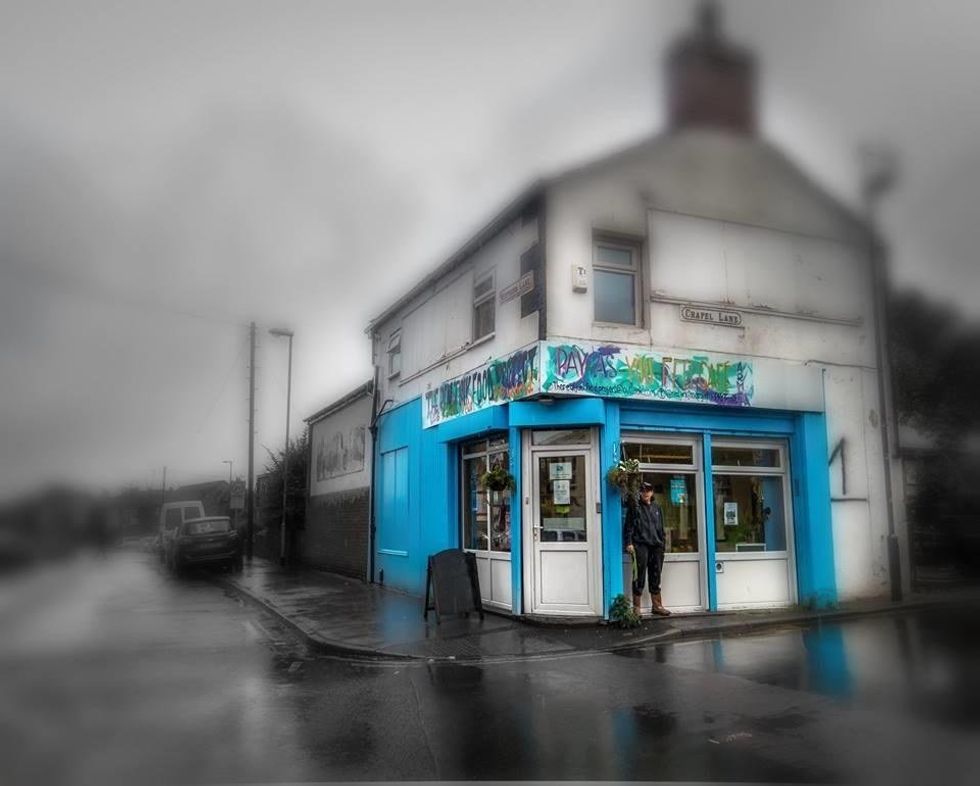
The Real Junk Food Project, founded by Adam Smith, has inspired over 100 cafes that turn food waste into affordable, healthy meals. The organic network’s “pay as you will” policy allows customers to pay what they feel they can; if that is nothing, they help with washing up. This policy is made possible by the project’s green nature—The Real Junk Food Project intercepts food that is about to become waste and serves it at the café. The network has saved 107,000 tons of food from waste so far, feeding over 90,000 meals to 60,000 people.
Smith began the project in Armley, Leeds. The café retrieves its food from unorthodox sources, often saving food from the trash bins of supermarkets, independent grocers, and food banks. Smith argues that “over 90% of the goods are perfectly fine.” Smith is not concerned with being prosecuted for serving unsafe food, saying, “Environmental Health came to inspect us and gave us three out of five stars. Everyone is completely aware of what we are doing. We want the law changed on best before dates to get better regulation – we have fed 10,000 with this food and not one has got ill."
Ultimately, Smith wants the law in the United Kingdom to be changed to prevent supermarkets from throwing away so much food and for supermarkets to be compelled to work with organizations like his.
Along with serving food, The Real Junk Food Project aims to educate customers about the importance of tackling food waste, as well as debunking the stereotypes about the people who use food banks. Above all, Smith says the project is about “bringing people from different demographics together that doesn't involve money. People are opening Junk Food Projects because they have had enough of what is going on in society and care about what is happening to other human beings. It is a revolution."
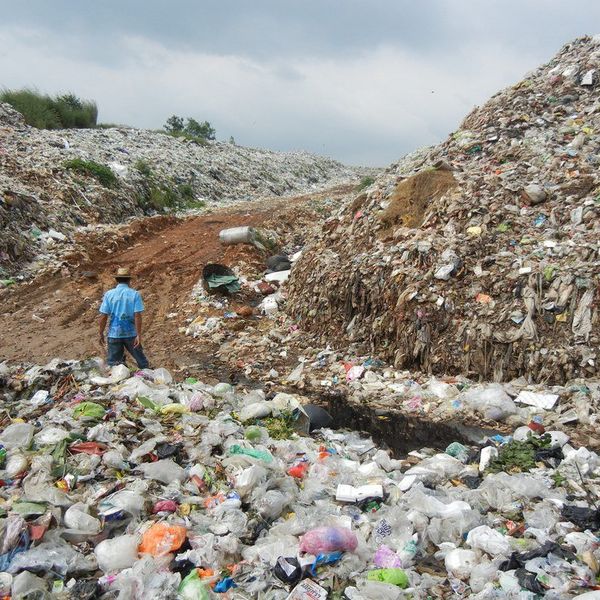
Unfortunately, we need a revolution. Worldwide, one third of food produced is sent to a landfill. In 2012, Americans threw out roughly 35 million tons of food, according to the Environmental Protection Agency. That’s 50 perfect more than in 1990. And food waste is up from 10 percent of total waste in 1980 to comprising over a fifth of the country’s garbage. Americans throw out more food than plastic, paper, metal, or glass. Food waste is especially prevalent in developed countries where food is considered expendable. The Natural Resources Defense Council estimated in 2012 that as much as 40 percent of America’s food supply ends up in a dumpster.
And there is another problem with food waste; that is, the threat to the environment. Landfills full of decomposing food release methane, which is 20 times more lethal a greenhouse gas than carbon dioxide. Along with the release of methane, an estimated one third of global carbon emissions come from agriculture. So not only are we releasing emissions to produce food, we are then throwing away that food, causing another environmental hazard.
This level of food waste suggests that ending hunger won’t be solved by producing more food, but rather will the preservation and distribution of food already produced. Junk Food Projects won’t solve the problem overnight, but they may, as Adam Smith said, be the start of a revolution.