Social media has allowed our generation to convey opinions in a way that is totally different than those before us by making posts in real time. This process should be seen as a mechanism to promote ourselves from a positive stance, portraying our lives to our friends, family and peers. We now have the ability to easily stay in touch and use media to share the things we are most passionate about.
“Likes” have been a consistent way of furthering connection on social media platforms. The term "like" could be a considered a positive term, regarding something in a favorable way. On Facebook, Instagram or Twitter, we "like" things to show agreement, appreciation or validation to the one who posted. It is a way to easily convey feelings about a certain subject to others. When receiving likes, we feel validated, successful and appreciated. Many believe our generation suffers from a fixation with likes.
We tend to put content onto our social media that shows us in a “perfect” atmosphere. Our mentality is no longer to show the world our accomplishments, but to prove that we are good enough. With this desire for more likes, our posts have become incredibly processed, replacing true emotion with filtered content that seems more like a glamorized advertisement of our lives than our true reality. Our standards have been set; we desire gaining likes and enjoy being validated.
Maybe, in reality, we are in a society that fears dislikes.
We have started to use the like button too much causing it to become overused. Nowadays, it is more shocking when someone doesn’t like a picture than when they actually do. People have begun to take notice when specific people don’t like their photos, force their friends to like posts so they can build their own popularity, taking part in the #likeforlike lifestyle. When we look at notifications showing how many likes we have earned, very rarely are we satisfied with the current number. Rather, we are concerned about who didn’t like our photo or why not enough people have commented or even why did it not receive more of a positive reaction.
For many, social media has become almost emotionless, simply a way to prove one’s worth. We fear being rejected, so we post things we know will get likes rather than things that truly make us feel. How do we put the emotion back into social media?
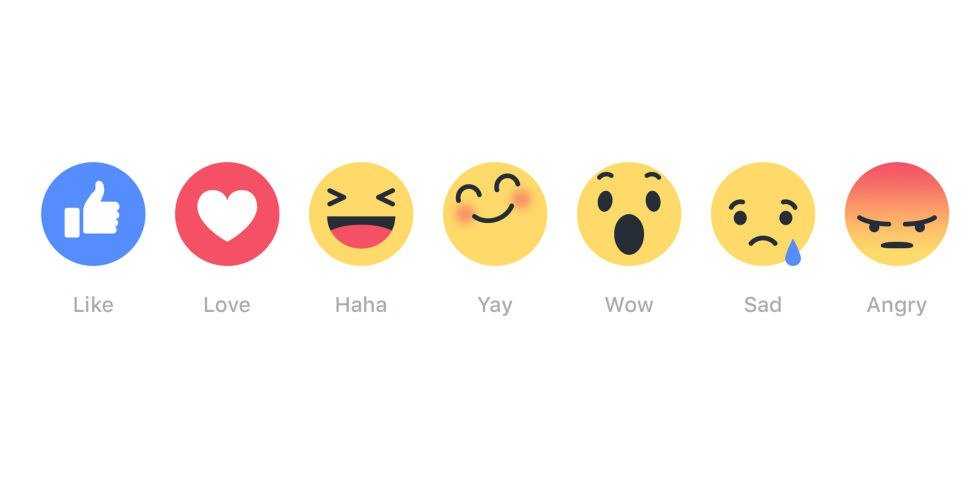
Facebook believes they have a way. This past week, Facebook introduced their new set of “reactions,” that lets users post on its platform with different expressions. Not only now can users, “Like,” but now they can “Love,” “Haha,” “Wow,” “Sad” and “Angry” posts as well.
These buttons allow people to express their opinions in more than just a simple agree or disagree. Although there isn’t a direct dislike button, these buttons attempt to demonstrate emotions that you couldn’t put on the Internet before. This change could potentially alter the way media is presented.
There is a possibility that these new emojis will promote discussion on social media platforms. Rather than just absent-mindedly clicking the like button, users must choose an emotion, consciously making a decision to feel a specific way about the post. Users may enjoy the ability to actually respond to the content of others, making social media a more life-like atmosphere. At the same time, these new buttons could cause social media to become even more processed. By providing people with the opportunity to negatively comment on a post, Facebook may have accidentally filtered media even more. People may fear negative comments or responses and avoid posting their true opinions online, almost silencing an entire part of the internet community.
We cannot predict the outcomes of these new Facebook buttons, but as we embrace the change they bring, we need to realize just how important it is to maintain a realistic perspective. Although the approval of our peers does feel incredibly satisfying, we all have unique individuality we need to share. We cannot conform to those around us solely to avoid being rejected or unliked. Rather, by ignoring our fear of dislikes and by posting things that bring us joy, we begin to change social media as a whole. So maybe it’s time to go out there and push some buttons.