

Contrary to popular belief, there’s no agreed upon definition of race. In fact, according to Steven A. Holmes of the NY Times, “In a 1985 survey of physical and cultural anthropologists, 50 percent agreed that there is such a thing as race, biologically speaking, and 41 percent disagreed.” Those that believe in race as a biological concept are referred to as racial realists and, in the past, have been responsible for bringing racist policies into fruition, and justifying the exploitation of those deemed lesser than Whites. Stuart Hall warns against such beliefs claiming that, “The moment the signifier ‘black’ is torn from its historical, cultural, and political embedding and lodged in a biologically constituted racial category, we valorize, by inversion, the very ground of the racism we are trying to deconstruct.”
In other words, it’s as if blackness has been given a life and substance of its own outside of cultural or societal context which has potentially stifling effects. Black essentialism has historically been used to viciously stereotype and homogenize a diverse group of people in the same manner by which animals are categorized and studied. Furthermore, this designation underscores the prominence of different ethnic identities subsumed in the black category which is a result of European ignorance concerning ethnic and tribal lines during the slave trade.
Thus in Ferris & Stein's, "The Real World: An Introduction to Sociology," race is defined as “a socially defined category based on real and perceived biological differences between groups of people.” Owing to its status as a social construct there are a variety of different perspectives on the function of race in society. The first one I'll touch upon is conflict theory. Conflict theory posits that, “Racial and ethnic differences create intergroup conflict -- minority and majority groups have different interests and may find themselves at odds as they attempt to secure and protect their interests.”
This particular view has an expansive intellectual tradition among black theorists from C.L.R. James to Frantz Fanon and Huey P. Newton. I agree with Marx’s view of the inevitable rise of group conflict between stratified classes in a social hierarchy. However, conflict theory’s lack of focus on race strikes me as economic reductionist, and lacking the necessary sociopolitical insight for the purposes of this article which focuses on my Black identity.
Structural functionalists hold that, “Racial and ethnic differences are a necessary part of society. Even racial inequality has functions that help maintain social order.” Perhaps this view is the one most abided by in regards to American institutions which seem to maintain a White supremacist system rooted in racial inequality. Racial inequality is so pervasive in fact that, according to Charles W. Mills, “In the United States, we naturally think of whiteness as being associated with the experience of racial privilege and of blackness as being associated with the experience of racial oppression."
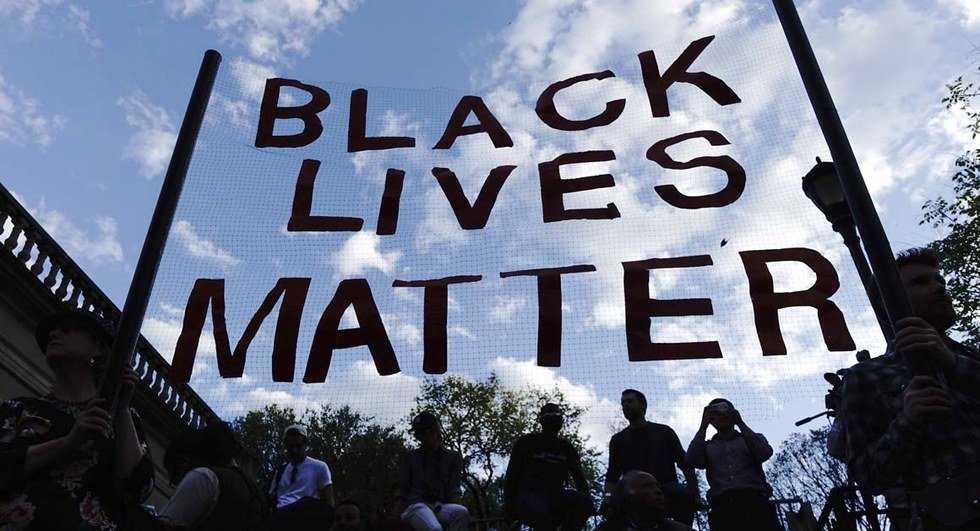
Sadly, in other words, my blackness doesn’t exist without racial oppression. This is an obvious fact made even more visible by the recent shootings of Philando Castile and Alton Sterling.