What comes to mind when you think of October? Maybe football, Halloween, boots, breast cancer awareness, and pumpkin spice everything. It is a month full of
fall fun, cozy clothes, and trick or treating. People don't tend to think about it, but it is also domestic violence awareness month. People don't think about it because we hardly talk about it, and that needs to change.
Breast cancer awareness always overshadows domestic
violence awareness. Anyone could tell you the color that represents breast cancer
awareness because October is painted pink with football accessories, 5K runs,
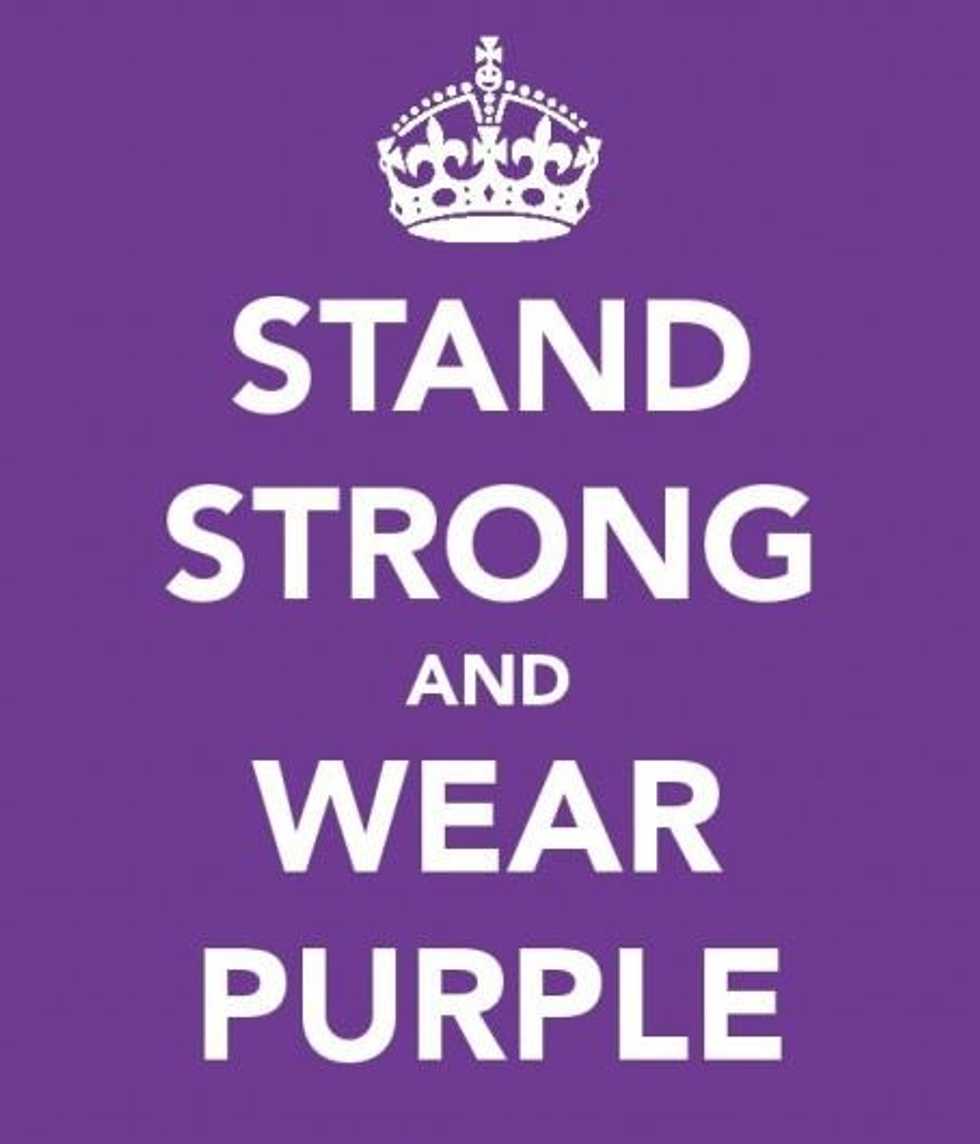
and pink ribbons. But how many people know that purple represents domestic
violence? How many people, or football teams, are sporting purple in honor of
domestic violence awareness?
While both causes are charitable and worthy of attention, domestic
violence does not get the extensive exposure that breast cancer does. Domestic
violence is difficult to talk about, and there is a silence that needs to be
broken. If there has been any positive aspect of the Ray Rice situation, it is
that people are actually talking about domestic violence. It is a difficult, and sometimes
confusing topic, but it deserves to be publicized and discussed. Sweeping it under
the rug should be a thing of the past. Awareness is the first
step to ending the problem.
Every year, 220,000 women in the U.S. are diagnosed with breast cancer, but 1.3 million women are victims of physical assault by
their intimate partners. It does not discriminate; it can happen among
same-sex couples, any age, ethnic background, or economic levels. Domestic violence is the
leading cause of injury to women between the ages of 15 and 44, more than car
accidents, muggings, and rapes combined.
Domestic violence, or abuse, can happen to anyone, yet the
problem is often overlooked, excused, or even denied. Verbal, physical, and
emotional abuse are never acceptable. Whether it is you, a friend, or a complete,
stranger if you ever notice signs of domestic violence or abuse, report it.
Help spread the word and be an advocate for healthy relationships.
When you see the color purple, remember the lives effected by domestic violence, remember not to joke about it, and remember to be an activist for raising awareness and spreading the word to end domestic violence.