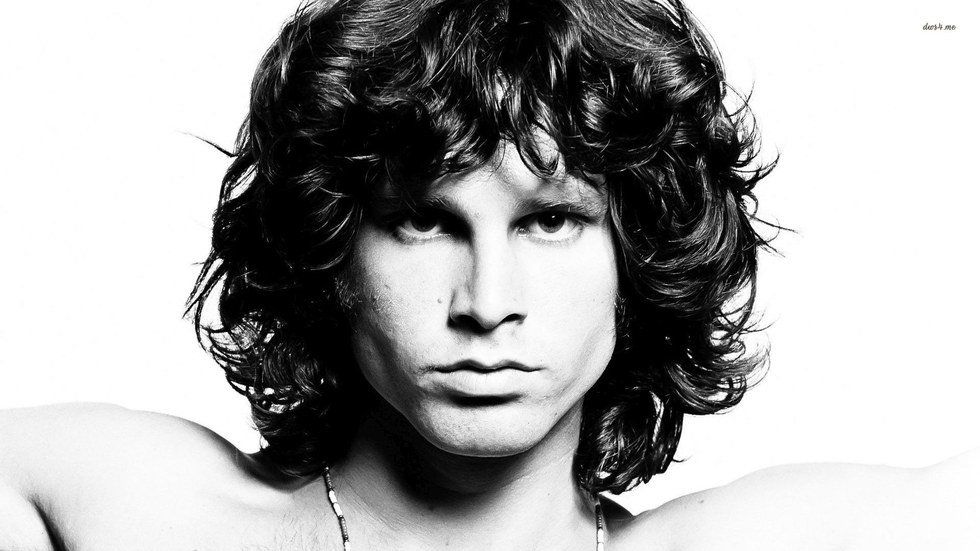
For the uninitiated, JIm Morrison is more myth than man, one who started with a cult following in the 60's that grew and transformed him into a front page rock-star in the 80's. The only problem with his later success is that he sadly was not around to see it. On July 3rd, 1971, Jim Morrison passed away in his Paris hotel room of an alleged overdose. That was 10 years before him and his band saw their major commercial success come to fruition. Why did he remain in the spotlight decades after his untimely death? Well, being innovative, raunchy, and incredibly prolific in his short run certainly did not hurt.
In the summer of 1965, Jim Morrison and his UCLA classmate Ray Manzarek came together to try something new. After finding John Desmore and Robert Krieger, a new, edgy, psychedelic rock band called The Doors came to life. Inspired by jazz, blues, and even some Eastern music, Morrison and company wrote piece after piece of original, inspired rock and roll. Morrison took the helm as the front-man, singer, and lyricist, acting as both the face and voice of the band.
Initially The Doors were not much of a commercial hit. They made their money and fame by gathering a cult following, with Morrison's eclectic style and writing captivating listeners, and his wild, drunken antics exciting crowd after crowd. The Doors always seemed to have something new for their fans; in their short run with Morrison from 1967 to 1971, they wrote and produced 6 studio albums. For a band whose lead struggled with alcoholism and drug addiction, that is certainly an impressive feat by any standards.
In fact, Jim Morrison’s antics nearly derailed The Doors in 1969. During a concert, Morrison became intoxicated on stage, which was incredibly regular by this point, and asked the audience’s opinion on whether or not he should pull out little Jim, the fifth member of The Doors. Interpreting their cheering as a yes, he dropped his drawers and exposed little Jim to the crowd. Some concert-goers were not so pleased by this, and Morrison was subsequently arrested. He was charged with a felony for lewd and lascivious behavior, as well as three misdemeanors for public drunkenness. The case was actually handled by the FBI, who quickly found him guilty of indecent exposure and, because 70’s America was not a very accepting America, he was also found guilty of “open profanity.”
During this whole debacle, Jim Morrison managed to keep it together and carried on making music with The Doors, putting out both Morrison Hotel and L.A. Woman. Morrison soon found that he was facing jail time for his stunt, so, naturally, he appealed his case. Thankfully, he won the appeal and was out on bond, soon finding himself in Paris. Sadly, that was when disaster struck. On July 3rd, 1971, Jim Morrison was pronounced dead in his hotel room; an alleged overdose on heroin caused his heart to beat slower and slower until he died of a heart attack. He died at 27 with a white Bic lighter in his pocket, heroin in his heart, and a legacy left for generations to come.
Jim Morrison’s untimely death came as a shock to the world, and, coupled with a few other unfortunate deaths at the time, sparked the urban legend that became known as the “27 Club”: a list of influential musicians who met their demise at age 27. All “club members” were at the height of their career when they passed, and out of the first four founding members (Brian Jones, Janis Joplin, Jimi Hendrix, and of course Jim Morrison), who died between 1969 and 1971, everyone but Brian had a white Bic lighter on their body when they died as well as being left-handed. This may sound like a strange coincidence, and that is because it is.
No evidence has shown that musicians are more or less likely to die at this age, and there is no evidence pointing to white lighters being unlucky. However, when Kurt Cobain’s passing in April of 1994, the idea of the "27 Club" resurfaced, as he too had a white Bic lighter on him, was left-handed, and died at age 27. This fed the flames of "27 Club" myth, and helped to spread the idea that white lighters are somehow inherently unlucky.
When Jim Morrison died, so too did The Doors. The remaining members did briefly try to continue without him, even resurfacing for another tour, but virtually all of their popularity stemmed either from Morrison himself, or the albums he helped create. In fact, after he passed they did not see any commercial success again until the 80's, when there was a massive spike in interest in their work after one of their songs, The End, was featured in the movie Apocalypse Now.
With this resurgence in popularity, a new wave of fans were born, and their old albums continue to sell as people heard about the eccentric Jim Morrison and wanted to emulate him. This success carried into the 90’s as well, with a movie starring Val Kilmer as Jim Morrison generating more and more public interest.
This renewal of interest may have been the catalyst for what came next for Jim Morrison. In December of 2010, a little over 40 years after the indecency incident, Morrison was officially pardoned for his alleged crimes. It did not take a pardon to change his impact though; countless musicians have and will continue to cite Morrison as an inspiration for what they can someday hope to achieve. Jim Morrison will always hold a spot as one of the most influential rock musicians of all time.