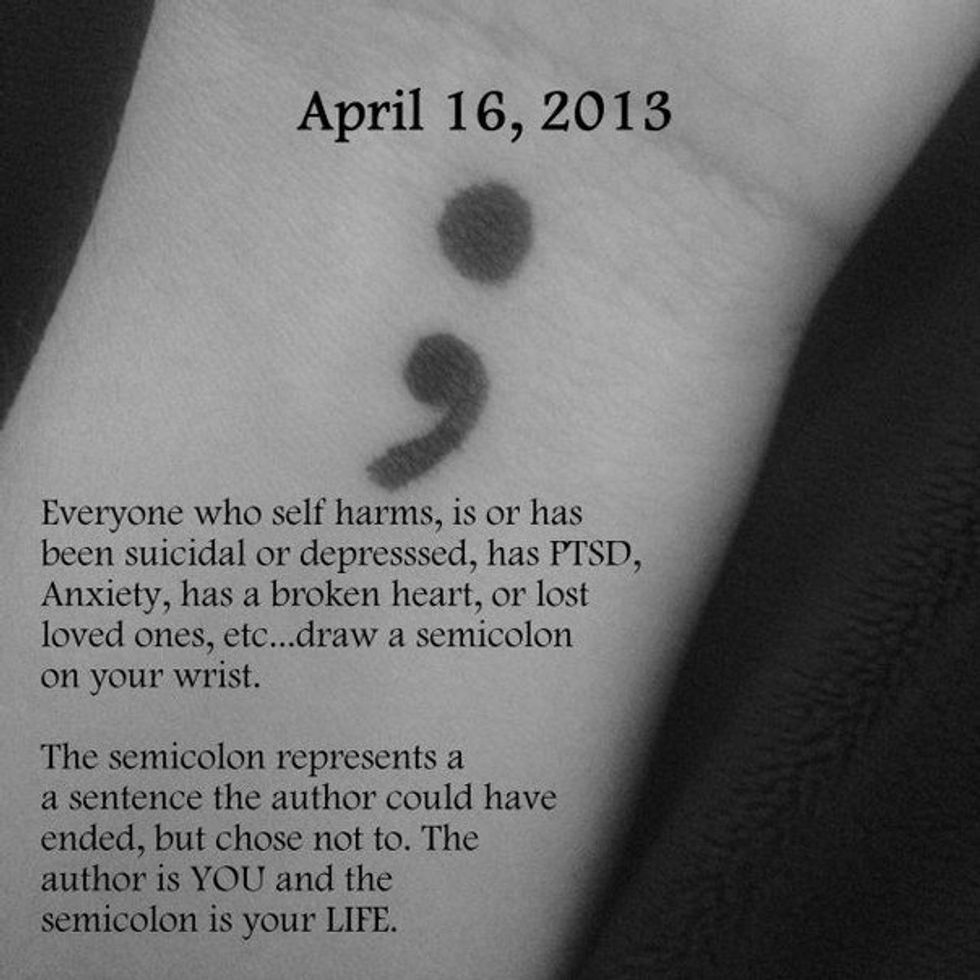
"The semicolon is used when a sentence could have ended, but didn't" - the explanation behind the symbol for Project Semicolon, "a faith-based non-profit movement dedicated to presenting love and hope to those who are struggling with depression, suicide, addiction, and self-injury."
It began as a way for Amy Bleuel, the organization's founder, to honor and remember her late father, as he took his own life. Very quickly, however, the semicolon grew much larger than just one man. As the project gained notoriety, countless individuals shared their own stories with the organization, and the semicolon, tattooed across one's wrist, became a symbol of solidarity, perseverance, and hope among those who struggle with such issues.
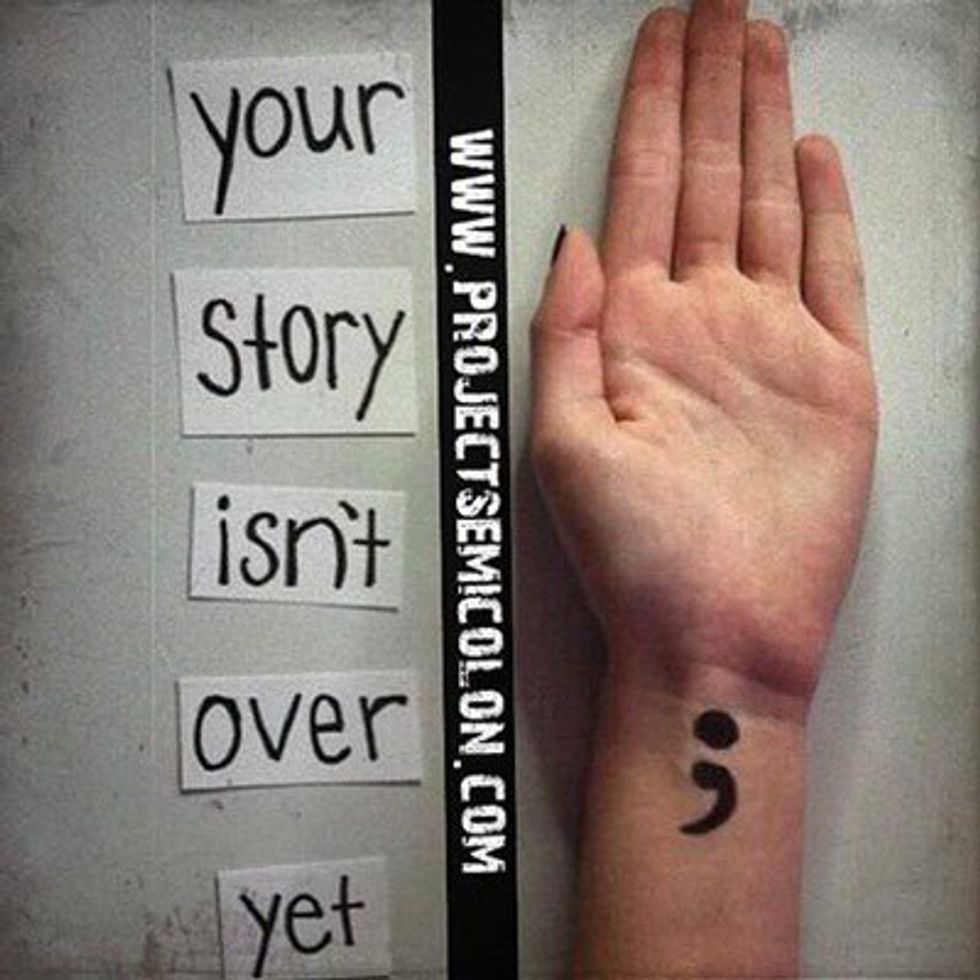
Still, countless others struggle on.
Millions of Americans experience depression at some point in their lives; it's the common cold of mental illness. It can be either temporary, such as the depression brought on by a serious break-up or the loss of a job or loved one, or clinical - a diagnosable disorder that doesn't really fade the way a temporary depression does.
Either way, the struggle is the same. It's hard to find the energy to get out of bed and face the world. It's hard to feel happy, to enjoy life. It can be painful or numbing, and it ultimately drives many to seek alternatives.
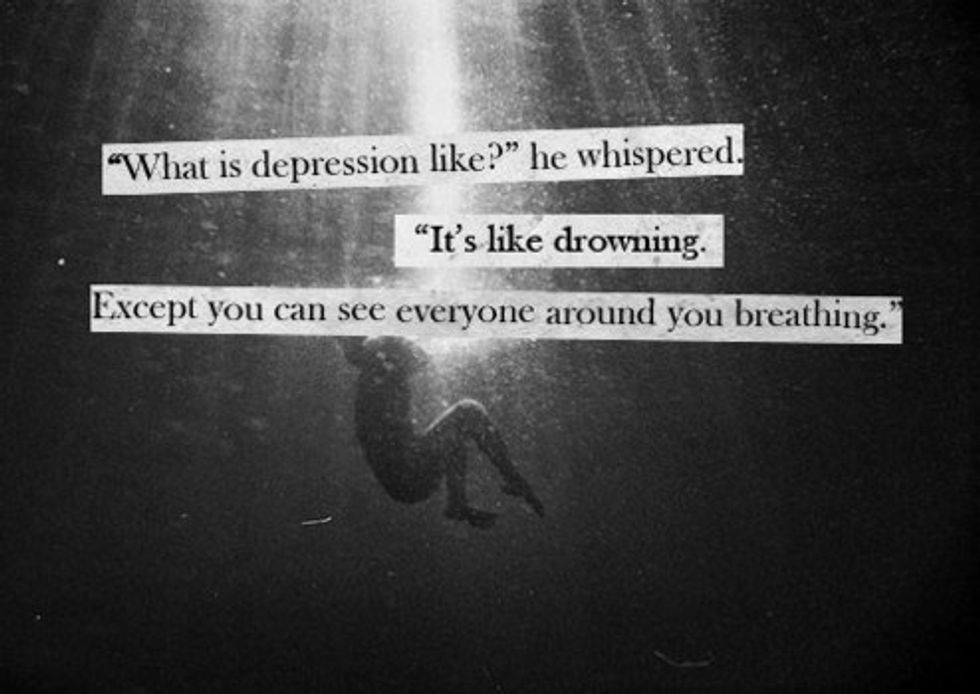
Some try and drown their problems in alcohol or drugs, seeking a way to cope. Why go through such bleak misery sober? Others self-harm through cutting or burning themselves, either as a desperate cry for help or a way to break the numbness of life and feel something, even if it's pain. And plenty decide they can't carry on.
Imagine how completely crushing it is to go through day after melancholy day feeling only sadness. What must it be like to feel as though there is nothing to look forward to, nothing left to try for - nothing left worth living for? Can you really blame someone who feels that way for contemplating death?
Don't tell someone to change their outlook, because they can't. Don't tell someone to just be happy, to try and enjoy life; it isn't that simple. That's not how depression works - that's not how suicide works. For the suicidal, life just isn't worth it anymore. Death would be less difficult than another day alive. They don't want to keep writing, because their sentences have been so sad and painful, so numbing for so long.
But here's the thing, what Project Semicolon has been trying to share with the world: it gets better. Even for those with diagnosed depression. It always gets better. Project Semicolon grew and spread its message through people who had struggled with depression and suicide, with self-harm or addiction, people who wanted to share their story with those still struggling. The survivors wanted to give those in the midst of battle the greatest shield and weapon against depression: hope. Really, that's what a semicolon is: a knowledge - a hope - that the sentence isn't over yet. As long as you have hope, you can keep going. You can get through it, you just have to keep on trying, living. Take it a day at a time, a breath at a time, just keep living. Keep writing your sentence, because it shouldn't end early.
Don't stop until you've written your happy ending, even if you need a semicolon to get there.