


From 1920 to 1933, the United States implemented a constitutional ban on the production, importation, transportation, and sale of alcoholic beverages. The movement now well known as prohibition was established to decrease the amount of drinking in the American public. Without going into too much detail, the lawmakers believed that by stripping alcohol producers and distributors of their licenses, it would curb the amount of drinking done and eventually lead much of the population to give it up entirely (prohibition.osu.edu). Prohibition did, in fact, derail the total amount of alcohol consumption during its time. However, the fact remains that organized crime became more powerful, people died from drinking bootlegged alcohol, thousands of jobs were lost at breweries, and there a unanimous disrespect for the law enforcement system. If everybody breaks the law, nobody does (law.jrank.org).
As of 1992, today’s prohibition has taken place in the world of sports betting. Ever since the passing of PASPA (Professional and Amateur Sports Protection Act) in ’92, sports betting has become illegal in all but four grandfathered states; Nevada, Oregon, Delaware, and Montana. PASPA was passed with the intention of “curbing sports betting throughout the United States.” (Darren A. Heitner, "How to Play the Game," ch. 5).
Proponents of PASPA argue strongly that their intentions are in keeping the integrity of these sports alive. Those in favor believe that legalizing sports betting will make it possible to create sports betting rings by officials, teams, colleges, players, and anyone else that has a direct impact on the result of the game. Furthermore, they love to argue that legalizing sports betting will turn their beloved leagues and games into advertisements for gambling rather than entertainment regarding the game itself.
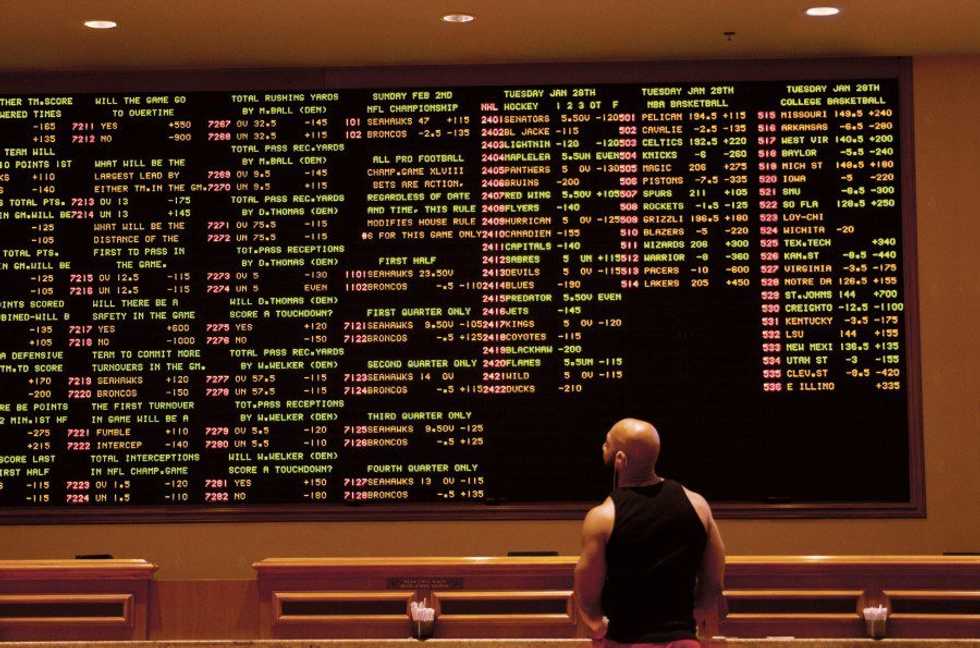
Their efforts are admirable and undoubtedly of the right mentality, however this closed minded view of “whatever is put into law will automatically happen” is very flawed and largely not true. A.G. Burnett, chairman of the Nevada Gaming Control Board, went on record to say that “the game-fixing scandals have happened in other states where gambling is illegal” (Heitner). Not only is Burnett a reputable source, but it is true! Nevada has never had any issues with fixing games, and because they have legalized sports betting, they have proper channels to discover when their system is being abused. Per an article written by Will Hobson for The Washington Post, the casinos in Las Vegas have actually caught attempted game fixing scandals. They noticed an influx of one million dollars bet on an Arizona State basketball game that “normally generated about $50,000 in gambling activity” (Hobson). Their bookmakers informed the proper authorities, in this case the FBI, and an underground point shaving ring was uncovered involving “Arizona State players, a campus bookie, and gamblers from Chicago” (Hobson). If states are not given the choice to decide if they want to make sports betting legal or not, they will never be able to spend the funds on the proper protections and deterrents against these scandals that tear down the integrity that PASPA promoters are so worried about. In fact, similar to prohibition, which helped establish one of the largest and wealthiest criminal networks of its time (law.jrank.org), black market gambling far surpasses legal gambling in Nevada. Per Hobson’s article, an estimated $4 billion is spent legally gambling in Nevada, while an astronomical $80,380 billion is “wagered illegally through a shadow industry of offshore online betting houses, office pools and neighborhood bookmakers.” With this amount of money circulating without any federal or state regulation, it is hard to sit back and assume that just because the $4 billion legal dollars are monitored that everyone is following the rules. Allowing states the right to choose would not only decrease the margin that exists between legal and illegal gambling but also give states the opportunity to ensure that they have ample protection against illegal sports betting.
Not only this, but eloquently stated in Hobson’s article, “it’s the rare issue in which the United States has more in common with Russia and China than it does with Britain and much of continental Europe.” Across the Atlantic, betting on games is encouraged and frequently advertised. Whereas here in America, it can oftentimes be hard to even look up the betting lines on important games. By making it nationally legal, as a British spokesman for the gaming company Ladbrokes explains, “we’ve built a very strong national business that is very highly regulated and works closely with government.” Britain has never had a scandal similar to any of the ones that have happened here in America. They haven’t had a Black Sox scandal (the fixing of World Series games in 1919) or a Tim Donaghy scandal (the ex-NBA referee that would referee games in order to meet a certain point spread). Maybe if they had had a scandal of similar magnitude, the national feelings would change. However, since the 1960s, when Britain legalized sports gambling, they have had far more success in regulating it than we have here in America.
Prohibition is looked back on with sour faces and sore eyes. People wonder what the hell America was thinking, and even though it took 13 years to figure it out, eventually we realized that making something everyone was doing illegal was not going to stop it, but rather make it more dangerous. We are in the middle of the same situation with sports gambling. Implementing legal sports gambling gradually, with proper legislation, protections, coverage, and moderation, would be a boom for not only the economy of states, but also cut down on the amount of illegal gambling that currently takes place. During just one month of gambling, Nevada State Sports Books brought in more than $250 million in revenue. In the words of Adam Silver, NBA commissioner, “None of the systems we had in place had captured any betting by Donaghy.” Tim Donaghy was able to get away with what he did because the proper channels were not set up to guard the integrity of our sports. It has been 34 years since we made gambling illegal, in these times of immense internet and social media coverage, illegal gambling is everywhere, unmonitored, unprotected, and unable to be repaired unless we make a change. The prohibition on gambling needs to end sooner rather than later.
















