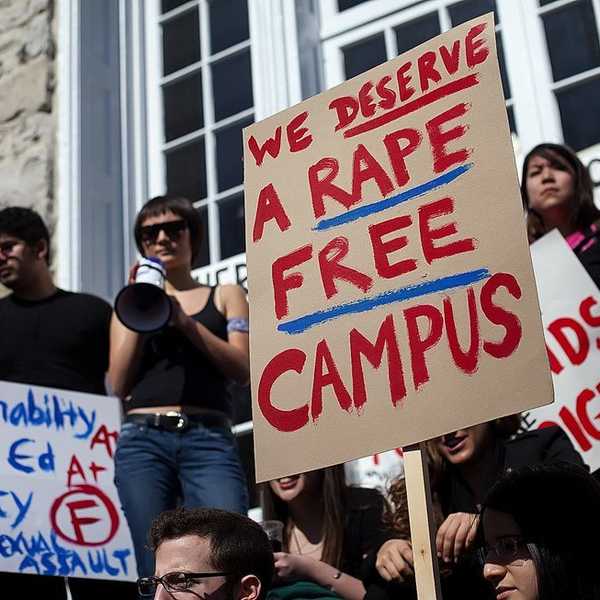
Last year before the Class of 2019 joined the student body, the University pressed for students to participate in a survey, titled “We Speak.” Fifty-two percent of the student body took the survey, and the findings reported, alarmingly, that 25 percent of undergraduate students experienced inappropriate sexual contact. For graduate students, 1 out of 9 students reported the same. For girls, the statistic was higher, with approximately 34 percent of all girls experiencing inappropriate sexual contact. Students also reported that drugs and alcohol were definitely a factor that lead to sexual assault, and many students indicated that they had heard sexist jokes towards women and inappropriate comments toward their own, or someone else’s, body.
Sexual assaults on college campuses are a real and scary occurrence. When I first moved onto Princeton’s campus, I believed that I was free from these kinds of realities because of the elevated status that Ivy League campuses seem to have from the outside looking in.
Being on campus for over two months, the façade has disappeared. It is apparent to me that amidst all the privilege and safety this campus offers students, there are still those who make bad decisions that affect the student body as a whole. I am not the only student that has noticed this, and administration followed suit.
Approximately 55 percent of women, and 62 percent of men indicated that they had reported their encounters with inappropriate sexual conduct, according to a survey conducted by We Speak.
In an effort to respond to these numbers, Princeton’s administration has been making major changes, such as to reinforce the resources available to students. Students have a wide array of resources on campus, such as, but definitely not limited to, SHARE (Sexual Harassment/Assault Advising, Resources and Education), Counseling and Psychological Services, and doctors and nurses at the university’s medical clinic. Students can also report sexual assault by way of Title IX, and information has been publicly posted in common spaces shared by students.
Another large way by which Princeton has sought to improve sexual assault and harassment is by launching UMatter, a way that students, as the website proclaims, can “actively car[e for themselves] and others.” The program has goals to transform students into effective bystanders by teaching them to make healthy choices and care for others. Just recently, the program launched the “UMatter bus,” which picks students up from eating clubs (where many students go to party and relax after a long week) and drops them off at their residential college. Students are ecstatic for this, however it’s also very apparent that more can be done.
The Odyssey at Princeton conducted a survey as well, reaching 158 students in the student body. It’s important to note that a large portion of respondents were freshmen, and may not be able to effectively gauge the administration’s efforts to reduce sexual harassment/assault. However, a sufficient amount of sophomores and juniors also took the survey, so I believe that although these results may not be indicative of the entire student body, it’s also interesting to note that freshmen and sophomores are the future of this school -- and their opinions on this matter, matter.
I would like for readers to note of three important points, as illustrated in the infographic.
We asked students on the Princeton campus a total of eight questions, with four of them being simple identity questions and four of them pertaining to sexual assault and harassment on campus, and the university’s efforts to address these issues.
First: almost 60 percent of respondents identified female. While men are also affected, 1 in 3 female students experience sexual assault.
Second: 40 percent of respondents were not surprised by the We Speak survey results on sexual assault.
Third: 93 of the 158 respondents felt that Princeton had not made significant change to sexual assault on campus.
While it’s important to remember that progress comes with time, it’s also easy to see that students, faculty, and staff alike need to make an effort to fully make an impact for the safety and sake of all students. From developing a safer space for students to unwind after a long week of classes and club meetings to allowing students to more freely express how they feel and to openly talk about their experiences, we need to all band together. It is not simply the university’s responsibility, but perhaps more efforts from them, and from everyone else, will help remedy this blight on our campus. I can’t say that I have all the answers, but it is important to discuss and share ideas.