
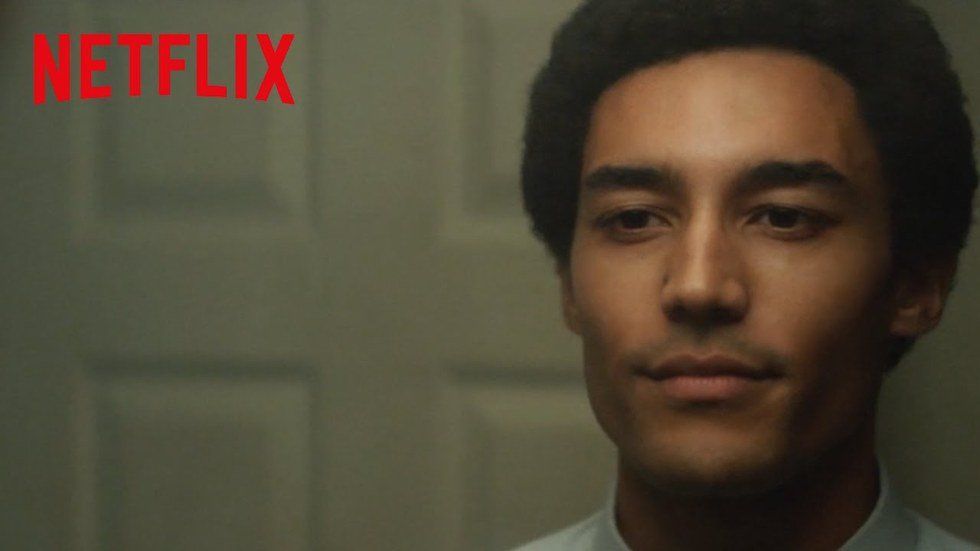
Netflix’s latest original film, Barry, chronicles President Barack “Barry” Obama played by Devon Terrell through his college years as one of the few black at Columbia University in the early 1980s. Barry arrives in New York as a junior after transferring from Occidental College in California. He only has one friend when coming to New York, Saleem, a bartender in the city who is not a student but well connected to the university and provides the film with its comic relief. Director Vikram Ghandi focuses his biopic on the then, future president’s maneuvering through various social communities trying to form a strong self identity. All of Barry’s companions, conversations and experiences blend to spark an individual journey of identification and purpose.
In his search of finding his “crowd”, Barry attends a fraternity party with his white friend Will where he runs into Charlotte, a wealthy white girl from his political science class. The two immediately hit it off as Barry wittingly explains his geographical history and a naturally relationship begins to form. Barry’s relationship with Charlotte gives light to Obama’s sensitive side of his character as a young adult hoping to find where he belongs and with whom he belongs with. Charlotte represents one half of Barry’s mixed racial identity. Born to a white mother and black father, Barry experiences instances of racial profiling such as being questioned by a police officer for actually being a student at Columbia and handed a $5 from a white man in the bathroom of the Yale Club who assumes Barry is a restroom attendant, yet is still skeptical of his belonging in the African American community. Charlotte’s character is not a true companion of Obama’s actual life but a blend of his multiple girlfriends he had while in his 20s, many of which were white. Charlotte seems entirely comfortable with Barry’s quiet demeanor as well as his living situation in the heavily black populated neighborhood of Harlem, NY.
Devon Terrell’s character also forges a search for an identity within the black community. While playing basketball at a local court near his apartment, Barry befriends another black Columbia student, PJ, a New York native and business student. One night, PJ brings Barry to the projects in Harlem for a party. At first Barry is intrigued by what he sees but soon feels uncomfortable in the black scene in Harlem. Yet again Obama struggles to find the right place for him. Much of the film centers around Barry’s contradicting conjunction of questioning his racial identity. Is he black or white? Or, is he black and white? Obama’s highly diverse background of black, white, Kenyan, Indonesian and Hawaiian all amount to the growing complexity and intrigue of Obama’s situation. He understands where he comes from but does not understand who he actually is. It is not until he is introduced to political activists James and Grace Lee at Charlotte’s sister’s wedding where he contemplates the idea of identifying as simply and singularly American. And at that moment, a confused young man of many different backgrounds experiences a sense of clarity. Vikram Ghandi’s film opens the American public to a period of Barack Obama’s life that is not routinely publicized as we bid farewell to our current president. Ghandi’s film is aesthetically pleasing, smart and perceptive. “Barry” portrayals a president in the making. A young man whose various backgrounds and mixed racial statuses makes looking into a mirror confusing finally discovers an identity that he does not have to question. Barack “Barry” Obama is an American.