The Merriam-Webster dictionary describes political correctness as “conforming to a belief that language and practices which could offend political sensibilities (as in matters of sex or race) should be eliminated.” Wikipedia describes political correctness as “a term which, in modern usage, is used to describe language, policies, or measures which are intended not to offend or disadvantage any particular group of people in society.”
The idea of marginalizing language that stereotypes or disadvantages particular communities has generated controversy. Our first amendment right allows us freedom of speech, freedom of the press, the free establishment of religion, and the right to peaceful protest. The conflict that has arisen between protecting the rights of the people and the marginalization of divisive rhetoric has no clear answer and has prompted people to pick a side on the political correctness (PC) debate, often to both extremes. There are certain considerations to keep in mind when discussing PC use that should become more commonplace. These considerations may seem tip from one side to the other, but they all should be considered equally to develop an appropriate balance between valuing your rights and the rights of others.
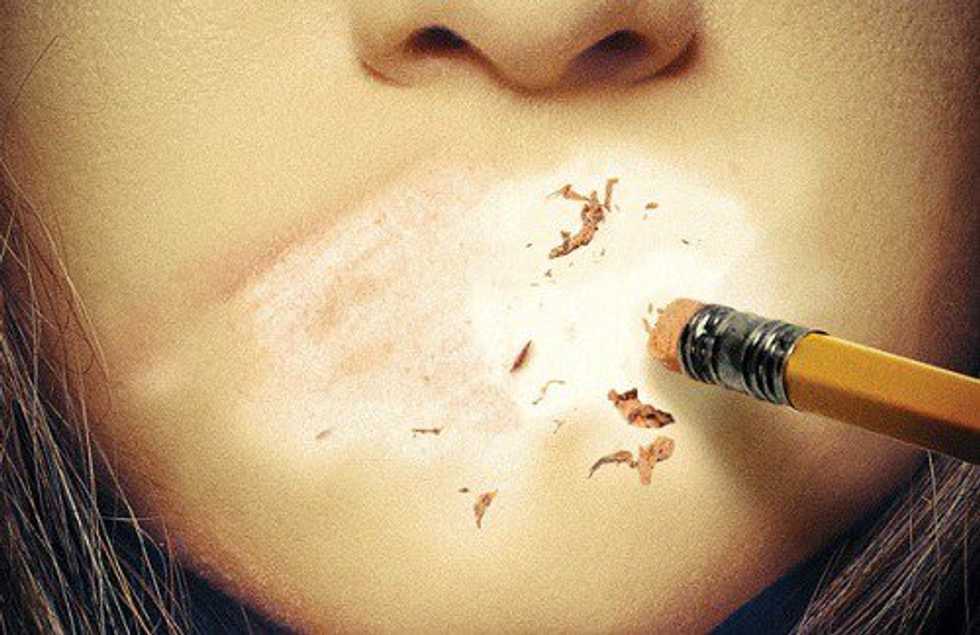
You cannot censor what you do not want to hear or see.
People are entitled to their own opinions. Opinions drive the formation of ideas. Diversity in preliminary ideas allows novel ideas to arise. For example, certain modern day progressive ideas, such as diversity and inclusion, exist on the basis that other non-progressive ideas have and continue to exist; in this case, adversity or exclusion. People like Donald Trump, members of the KKK, or members of the Westboro Baptist Church are permitted to assemble and speak on what they believe in. None of them have ever really expressed progressive language or ideas. We can reliably say that these people are not PC users. However, it is their rhetoric that allows us to understand how we should not create policies that could disadvantage certain communities. The logic here is simple. Non-progressive and regressive ideas exist so that progressive ideas can be created to benefit people. Now it is not always as simple as I have stated because you will have those who believe in non-progressive or regressive ideas and will attempt to make them into policy. However, this is where the power of conversation should come into play. We discuss these ideas to determine what is best for the people. But that requires real conversation. Not censorship of ideas.
There is nothing wrong with being mindful of your language
It is a humbling characteristic to be mindful of the thoughts and sentiments of other people. People have their own buzzwords that trigger very painful responses within them. Others have certain words that that are more tongue-and-cheek (i.e. words that they preferably could go without hearing, but will roll with the punches because they do not feel like saying anything). Avoiding their use and replacing it with words with a matching intended meaning (for example, saying “stupid” instead the words “gay” or “retarded”) fosters a sense of respect for one’s identity. That one’s identity will not be used poorly or will not be improperly associated with negative stereotypes or ideas. Some would argue that it is too sensitive of an approach and that it doesn’t permit people to experience real adversity in the real world. Considering political correctness is a relatively newer idea, one could counter-argue that most people experience adversity and callousness more often than they would experience someone respecting and being kind towards their identity. Being that one person out of many who is mindful of one’s experiences should not be mocked. Being that kind of person should be encouraged.
It is not an easy balance between the two previous points
With both points I have discussed, you can recognize that a compromise between the two does not seem all that clear. You reserve the right to say what you want, but the relations you build with different people and communities is equally important. Where one chooses to tip the scale can be particularly evident depending on who you talk to (not to stereotype at all). Achieving real balance can be seen in someone who uses PC correctly and with sophistication. They know how to phrase their language yet still communicate their intended ideas. It comes with practice and recognizing and developing an awareness for your own rhetoric. “Am I too critical?”, “Am I not critical enough?”, “Am I put off by ideas that are different from my own?”, “Why do I phrase things this way?”, “Am I too harsh with my language?”, “Do I speak in a way that gets people to listen?”, or “am I too unauthentic?” These can all be questions that you can ask yourself when you begin to analyze your own rhetoric and diction.
Like all rights, you are entitled to have them, but you are also held to a standard to respect the rights of others. Lambasting at certain communities on the basis of your ability to do so often contains inaccurate and impulsive claims which can provoke violence. Softening your language so much to the point where you also become null to certain ideas limits any real intellectual conversation to take place. Both extremes are being witnessed in this political election season and are also evident of our polarization in politics. Real PC is about finding a balance between your right to speak and respecting the rights of others. We cannot be omniscient of every potential scenario where we may offend someone. In fact, we are going to do it at some point. But the goal is to first try to establish a balance in PC usage. Practice makes perfect. Find the balance for yourself and observe how well your language and your openness to ideas changes.