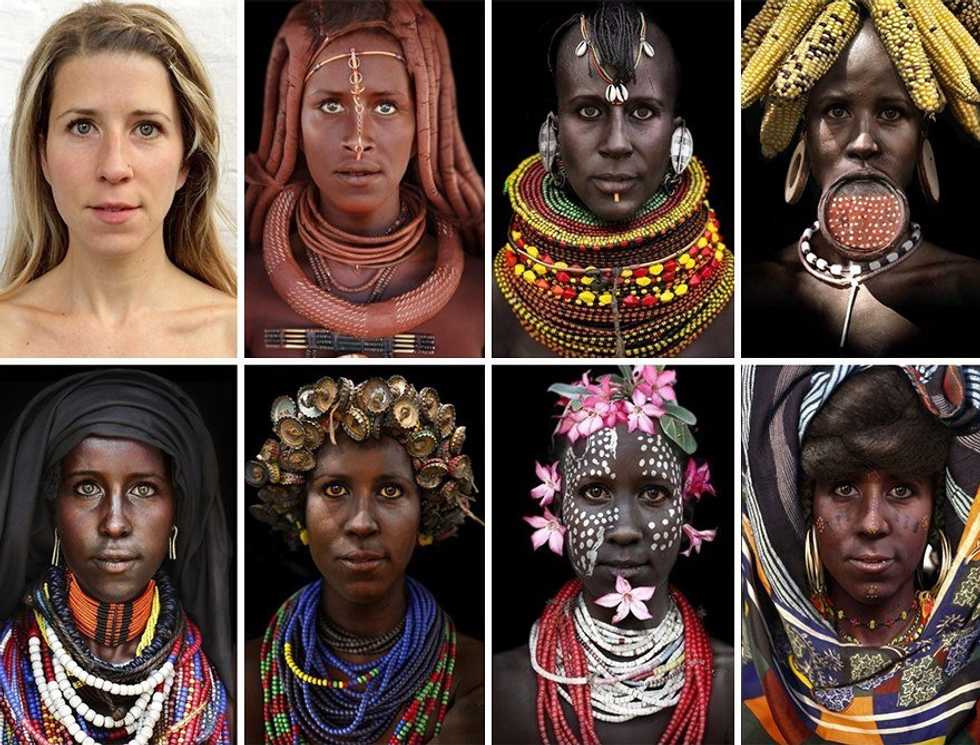
Hungarian journalist Boglarka Balogh received harsh criticism after posting seven portraits of herself as the representation of different African American tribes. She claimed she wanted to bring awareness to those countries and didn't think of the outrage it would cause.
Ultimately, the journalist decided it was best to delete her post and wrote "My intention was 100 percent pure with this tribal art. Being a human right lawyer and journalist who knows pretty much about racism and similar issue, I have never imagined that my work will annoy so many people and that I will have to explain myself. And sure, I will not do that. Keep calm and love every human." There were a number of people who found her portraits extremely disrespectful and downright racist, but there were others who claimed that it was art; and that she should not be judged so severely for something that was meant to bring cultural awareness. Although the post was taken down, I think the question remains about whether or not her action was indeed racist and inconsiderate or whether the portraits should be looked at as an effort to seek awareness?
In my view, I could understand how her portraits could be seen from the perspective of their artistic nature. Art is a form of expression that is meant to make us reflect upon the a subject at hand and is often connected to controversial topics. Like literature, art is a form meant to generate a discussion or at least to ignite some form of emotion to the perceptive audience. Her intentions could have been completely harmless and her actions ways of wanting to connect with a culture. However, even if her intentions were not meant to be racist, I would have to say that the portraits were a highly inappropriate way to bring awareness to a culturally oppressed race.
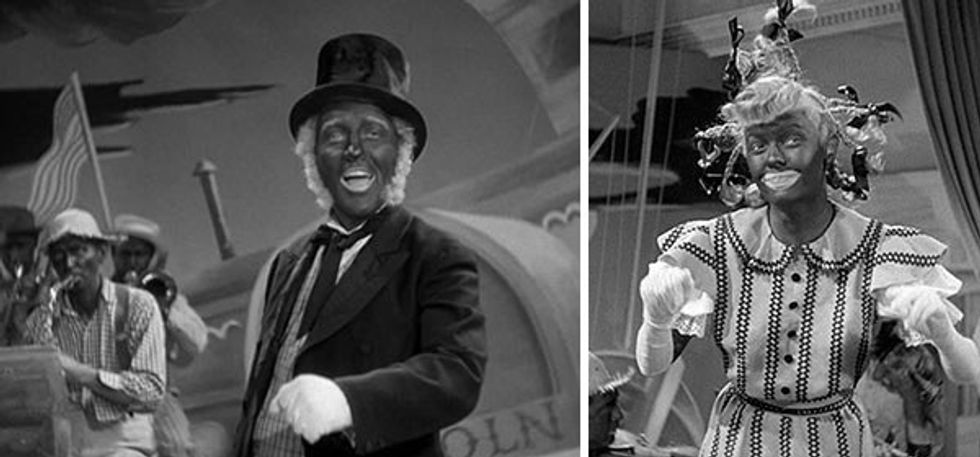
Looking back at the history of how blackface was used to poorly represent African Americans after the Civil War, it is disrespectful to repeat a part of history that was never supposed happen in the first place. Around the 1830's, when the Minstrel Shows were a shameful form of entertainment, white performers would use burnt cork or greasepaint to darken their faces, and act out stereotypes that mocked the African American culture. This mockery continued for several years until African Americans were allowed to play their own culture in the media, and even then were given stereotypical or side roles.
The blackface was a way to represent a culture from a biased one-sided perspective without including the people who are actually a part of that culture. A blackface is the ultimate maker of supremacy, because it not only reinforces negative assumptions, but it omits a race from telling their own story. The story is being told from an outsider's perspective, and often it misinterprets the aesthetics of its culture. This was also done to Latinos in the twentieth-century films, were their only roles were of bandits, buffoons or Latin Lovers. The problem of the blackface is not just a person coloring their skin; it's the systemically oppressive system it symbolizes.
I can understand Boglarka Balogh's intent to bring awareness to a different culture, but that was not the appropriate way to approach the aesthetics of a culture. If anything, the portraits should have been from actual African women sharing their own culture. As a human rights lawyer, I hope she understands that this doesn't mean she is hated for her attempt, but the idea of what the blackface represented and still represents is. Until all humans are treated respectfully and equally, symbols of past and present oppression will not be taken lightly.