


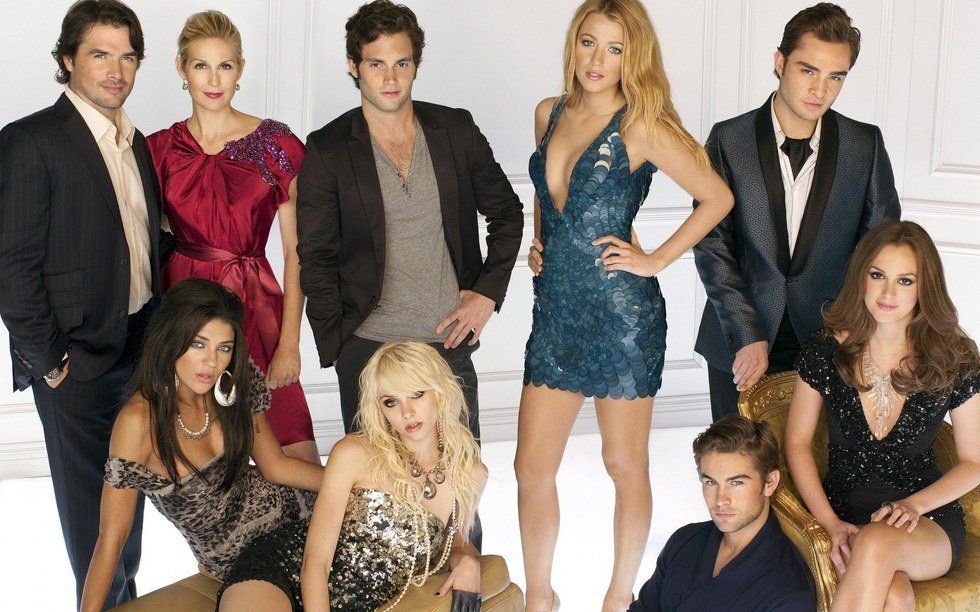
I recently read an article, Why Popularity Is Not Real by Peyton Spataj. This article, although justified, did not sit well with me. My reason is because if we do not like the way that something works, we have to take action to try to change it ourselves, not ignore it. For example, bullying is unfair, unjust, and no one agrees with it. We don't pretend that bullying doesn't exist. Schools, teachers, and parents are actively trying to put an end to it. My second reason is because Peyton states that popularity doesn't exist because everyone is equal. Instead of acknowledging the dominance that popularity has over generation after generation and trying to raise awareness of the discriminatory qualities that popularity entails, Peyton chose to simply ignore it, bury it, and pretend that "popularity is not real," because "nobody is better than anybody else." I am not going to try to propose ideas on how to end popularity because, to be honest, I don't know where to begin, or if it is even possible. I am simply trying to prove that popularity is as real as ever and will always be until we stop complaining and work together to change things.
Popular (adj)- regarded with favor, approval, or affection by people in general.
Successful (adj)- having achieved popularity, profit, or distinction. Accomplishing an aim or purpose.
To say that popularity is not a phenomenon or that popularity does not exist is the same as saying that Obama is not the current president of the Untied States, or that there are not 365 days in a year. Popularity exists, and that is a fact. There is no denying it, even if it is more comfortable for us to choose to not acknowledge the distinct social differences that exist in human nature. Starting from a young age, certain kids are deemed the "popular" ones. Is it fair that at the age of five there are already the "cool" kids and the not-so-cool kids? No, it's not. But just because we don't agree with the way that something works, doesn't mean that we can just pretend it isn't happening.
I was never one of the popular kids at any point in my life, so do not think that I am in anyway biased to the term. The popular kids in my school were either attractive, athletic, wealthy, smart, or a combination of all of these qualities. Some were well liked by their classmates, while others were downright mean. Yet for some reason, they received the approval of their peers.
Popularity matters most in middle school when everyone wants to fit in. Everyone wants to be the best, or at least viewed that way. Then in high school, popularity is still extremely evident, but it matters less because people care a little less about fitting in. Instead, there is more value attached to being unique and emphasis on being yourself. In college popularity is still a thing. No one really cares or acknowledges it, but it's there. When you sit in your lecture halls you know who the "popular" kids are and who they aren't just by looking at people (which, once again, I do not agree with). However foolish and subjective the unwritten rules of popularity may seem on paper, they are very real and continue on even past college. When you're forty years old, popularity still exists. It isn't the typical superficial type of popularity that exists in high school, but it is still there. How is a term that is so petty and superficial defining generation after generation?
Popularity is based on success. Looking at the working world, who is viewed as successful? The people who make the most money, and, therefore, can afford the nicest things. The people who make the most money so they can support their families without worry. If that successful person all of sudden goes bankrupt, no one would strive to be like them. We have all been taught to strive for the American Dream. A big house, a family, a dog, a nice car, a high-paying job. If we are taught that the American Dream is what success looks like, then the most successful people who have achieved the "American Dream" will become who we will strive to be.
Similar to the successful person going bankrupt, if the most popular girl in school starts doing drugs and failing her classes, no one will want to be like her anymore because she is no longer projecting the image of success. All people want in life is to be successful. Most people didn't like the popular kids in high school because they were mean, but paradoxically, they wanted to be like them because they were successful in some way. They either got good grades, were attractive (which is society's idea of success, which is a topic for another day), excelled in sports, or were wealthy--these are all attributes that define success.
If someone lives in a mansion, drives a Range Rover at age sixteen, and wears Vineyard Vines that doesn't make them fake. That is the lifestyle that they live. To say that you are real because you don't own any mainstream items and people who do are fake is an insult to about ninety percent of society, and it is completely and utterly untrue. You can't say that everyone is equal. That is a fallacy, and a lie people tell themselves to feel better and fall asleep at night. In reality, there are champions in sports because they are better than everyone else who they competed against. No, George W. Bush, not everyone deserves a trophy, and some kids, unfortunately, do get left behind. If we were all equal, we would live in a non-progressive, boring world.
Popularity is real and will always be real because it is based on the idea of success. It is not fair, it's not just, but it is the way that the world works. We can't pretend that popularity does not consume our society because it does just that. Popularity is superficial, yet it is in our human nature. If you believe that "nobody is better than anybody else," then you are stripping each individual of their unique qualities that make them who they are. Turning a blind eye, and ignoring its existence will not make it go away. Until the world views everyone as equals, popularity will exist. But until that day comes, we will strive to be the best in whatever we do.

















