“What is this, a third world country?”
This is the question I’ve asked myself ever increasingly in recent years, and especially in recent months. Every time I look at the national news I see death, misery and destruction. I can only guess what the other developed countries of the world think of the United States of America at this moment.
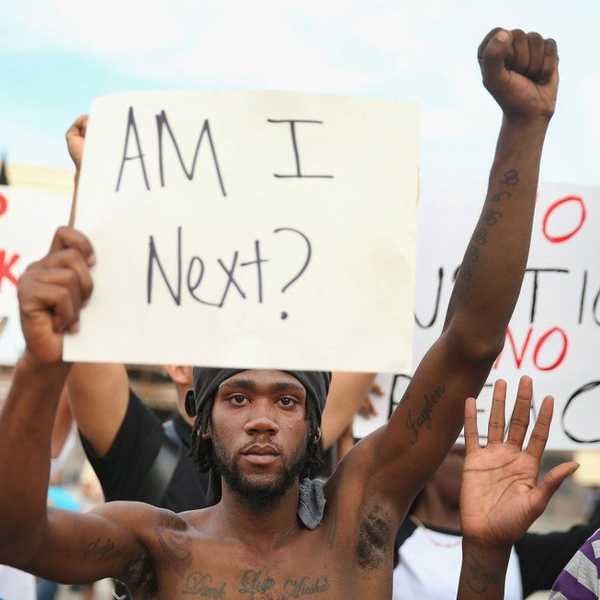
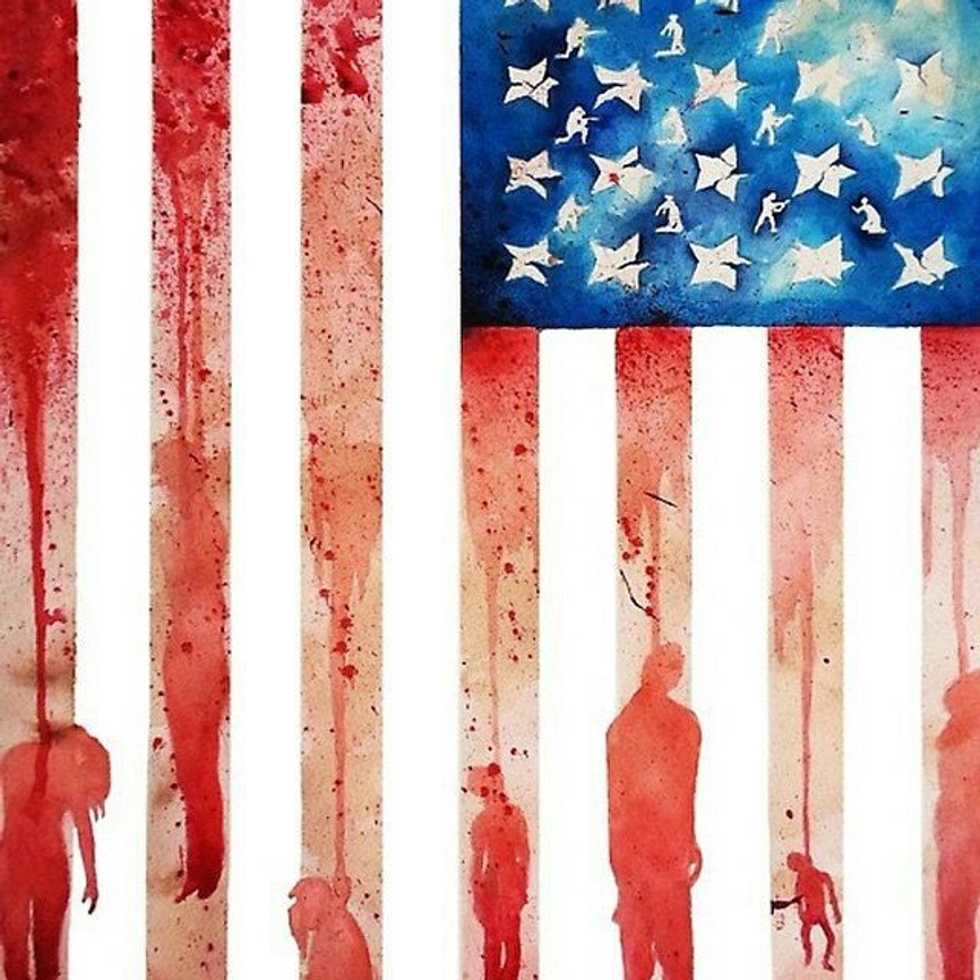
Philando Castille was murdered by police in Minnesota on Wednesday. A day before that, Alton Sterling was shot to death by police in Louisiana. These are unfortunately only the two most recent cases of what appears to be an epidemic of police methodically executing black Americans. Oh, and usually getting away with it.
My Facebook timeline since the killings had been crammed with friends’ opinions about what happened to Castille and Sterling, as well as the Dallas sniper attack that left five police officers dead. I’m proud to say that most of the posts I’ve seen have been in solidarity with Castille, Sterling, and the rest of the often-nameless black men and women that are regularly murdered by police in our country. Some friends’ posts though, have taken a different tone. One person claimed the Black Lives Matter movement (yes, the whole movement, his argument made no sense) was somehow responsible for planning the sniper attack. On the other end of the spectrum, a different friend of mine posted:
“I hate Police. I really do. I felt no compassion for the innocent cops that got killed in New York because blue lives don’t matter to me. I felt no compassion for the cop killed in New Orleans because I felt that was a drop in the bucket compared to the black ocean of bodies left behind by police.”
Another friend reposted a tweet from Eric Benét reading, “If you mourn the death of Alton Sterling and Philando Castille but you celebrate the death of cops, you’ve just become the thing that you hate.”
In the age of social media, it’s easy to log on and see everyone’s opinions about everything, and I'm pretty sure my Facebook friends’ musings ran the whole spectrum. But personally, all I can feel is a burning sensation in my stomach somewhere between outrage and expressionless detachment.
Is Eric Benét right? Has my friend really become the exact type of person he’s angry at for feeling the way he does about police? I don’t know the answer to that question, but I do know that I understand wholeheartedly why my friend and other black Americans might feel that way. On Friday, Attorney General Loretta Lynch told Americans that in the wake of this most violent week, “ . . . the answer must not be violence. The answer is never violence.” That’s a nice sentiment, Ms. Lynch, but why did it take you until civilians began murdering police to say it? Why couldn’t you have made that statement to America’s police after Mike Brown was killed? What about Tamir Rice? Freddie Gray? Oscar Grant? Why must it be us as civilians of this country that are told to eschew violence while Loretta Lynch and public officials like her never thought to tell the same to the police that have been terrorizing black and brown communities for generations?
America’s current situation concerning police violence against nonwhite bodies reminds me of the philosophy of Frantz Fanon, a black West Indian psychiatrist who was a staunch supporter of the Algerian War of Independence that was fought against French colonialists. In his work “The Wretched of the Earth” Fanon stated that:
Fanon believed, in other words, that it was fundamentally flawed for the world to expect peacefulness from the oppressed when the oppressor was utilizing violence. Why must the victim be expected to play nice when the aggressor refuses to do so?
It is the part of me that sympathizes with Fanon that refuses to mourn the death of the police officers in Dallas until police across the country come forward to publicly mourn the deaths of the people their brothers and sisters in blue are murdering. “Most cops aren’t bad” is the mantra most people, even people willing to condemn unjust police shootings, repeat again and again when the topic of police brutality is brought up. It’s more important than anything else, it seems, to make sure we all understand that a majority of police are good people. This understanding is placed far above the goal of putting an end to, or even addressing, murders committed by police officers. I think it’s time we as Americans reexamined our priorities.
I say this because the Blue Curtain (the police code of silence similar to the Mafia's Omertà, except for the fact that it's practiced by law enforcement instead of gangsters) prevents most officers from willingly speaking about their colleagues' wrongdoing, and the ones that do say something are poorly protected from reprisal. This means of course, that the reason some police officers have not come forward to condemn the extrajudicial killing of (mostly black and brown) civilians by their fellow law enforcement officials is fear of reprisal rather than cold indifference. Staying silent because of the fear of losing one's job or one's personal safety is something I can understand, but staying silent because one is loyal to other cops before justice and the American people is something I cannot.
Some cops have come forward, and we should all commend them for that. Officer Nakia Jones of the Warrensville Heights Police Department in Ohio is a good, if tragically rare, example of this. Jones (the bravest public servant I’ve ever heard of) called the deaths of Castille and Sterling “murder” in a video she posted to Facebook. “ . . . sometimes our peers need to hold us accountable,” she expressed in her plea for justice. News on the topic has been contradictory, but Jones may or may not have been suspended from police duty due to the positions she chose to express.
I understand that speaking up is easier said than done (just ask Nakia Jones) and I understand that I myself do not have to face making such a difficult, potentially dangerous decision. Is asking America's police to take this step unfair then? It may or may not be, but I would be remiss If I didn't speak up for what I see as the right thing to do. We really have no way of knowing which police officers keep silent for which reasons, but at the end of the day, I really don’t think it matters much to the parents of Tamir Rice or Michael Brown. Their children were murdered by police officers, and very few, if any, police officers have spoken up for the victims’ families. So keep on saying “most cops are good cops.” I’ll believe you when more of these good cops stand by the families of the unjustly slain.
I wrote above that I can understand why some people may feel that the murder of police officers is a form of justice in a day and age when it is common for police to murder civilians without fear of legal repercussion. This does not mean I necessarily agree with those people. I do not celebrate the deaths of the five officers in Dallas. I do not see their murders as justice, but I do see them as inevitable. Can any of us really say that with day after day of watching killer cops murder people and walk free, cleared of all charges, that we never saw the possibility of people choosing to take the situation into their own hands? When America refuses to provide justice, it would be naïve to think there would be any other possible outcome. The police officers that are complicit in the recent murders of civilians with their silence and our prejudiced justice system that is just as complicit with its decision to let the murderers return to society without punishment have the blood of the assassinated officers in Dallas on their hands. So law enforcement officers of America, I ask you, if not for the black bodies left in the street filled with police bullets then for the safety of yourself and your fellow officers, will you not do the right thing? Will you not come forward and stand with the people you’ve sworn to protect? Will you not say enough is enough?