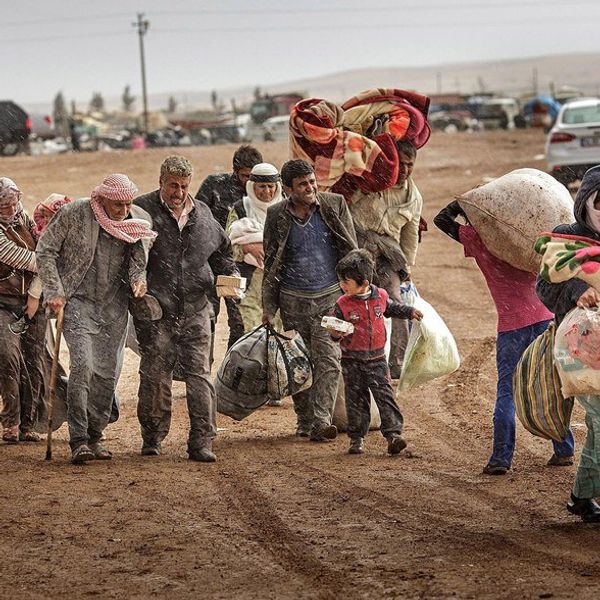
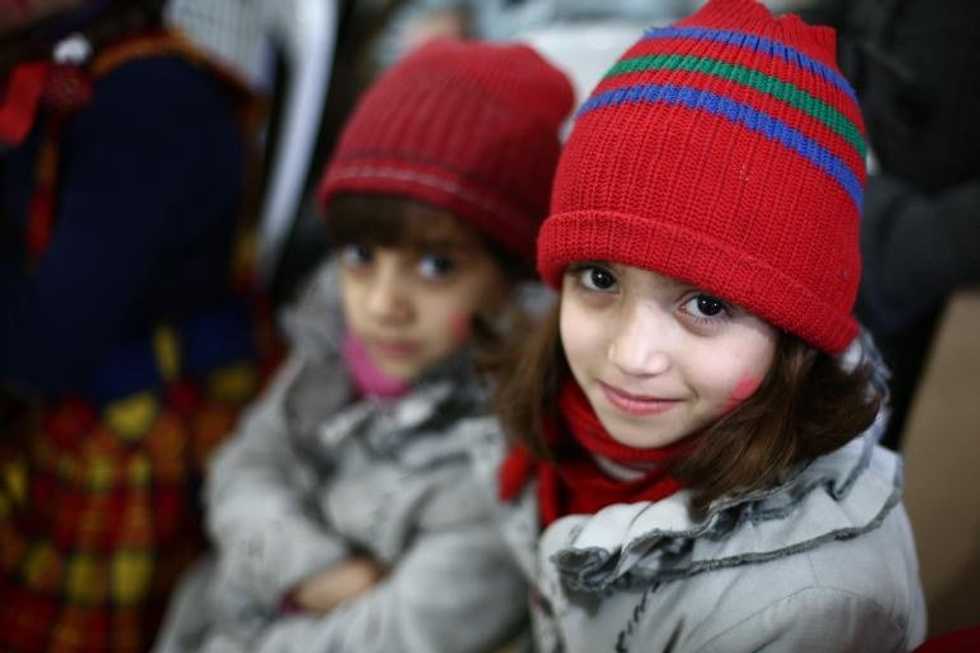
I’m sure I wasn’t the only person who I cried during Finding Dory, specifically in the beginning when baby Dory was learning from her parents, searching for them, eventually forgetting what she was searching for. I wondered why I had so much empathy for this character. Was it just because the people at Pixar are artistic geniuses? Mostly. But mainly, this story reminded me of an all too real problem: the refugee crisis. I started imagining actual children around the world and in the Middle East, separated from their families or losing parents to violence. As you can imagine, the tears flowed easily after that image.
I’m assuming I was in the minority, reminded of refugees while watching a movie about fish, but the refugee situation is on my mind a lot. I’m constantly looking for a way to help these 600,000 Syrian orphans.
So what is the US’ policy for refugees? Thirty one state governors, more than half, do not allow refugees in their state. Ultimately, the federal government overrides their decision and refugees can settle wherever they choose, but the state’s cooperation would make the task much less arduous.
President Obama announced in September that 10,000 refugees would be allowed into the country while only 1,500 refugees have been admitted into the country since 2011. Interestingly, this number pales in comparison to Germany’s one million refugees, equalling 1% of their population.
Angela Merkel, Germany’s Chancellor, created an “open door asylum plan” regarding Syrian refugees. Much of that support comes from organizations such as Doctors Without Borders, Save the Children, and churches across the country. According to Jim Willis, a veteran news reporter and professor at Azusa Pacific University, Germany’s open door policy embodies the Statue of Liberty’s “give me your tired, your poor, your huddled masses yearning to break free, the wretched refuse of your teeming shore.” Ironic that Germany represents that American phrase better than thirty one governors and the Republican presidential nominee himself, who states that “we all have heart and we all want people taken care of, but with the problems our country has, to take in 250,000 -- some of whom are going to have problems, big problems -- is just insane” (Donald Trump).
Even more shocking to me was the attitude towards orphan refugees, reminiscent of little Dory. New Jersey governor Chris Christie strongly favors banning all Syrian refugees, including orphans under the age of 5. His words: “I don't think orphans under five are being, you know, should be admitted into the United States at this point. But you know, they have no family here. How are we going to care for these folks?”
Now, I understand the fear. It’s the same fear the rest of the world is battling; everyone wants to prevent further attacks. But then I compare the US to Germany’s hospitality and France’s pledge earlier this year to take in 30,000 refugees, surprising after the terrorist attacks on Paris in November. We are all battling empathy and fear, but fear seems to be overwhelmingly winning in the US.
So what can we do to help these children, at the very least? The priority is giving help to the regions and communities affected. Here are some organizations that do that, if you wish to donate to them.
"The UN Refugee Agency: Its winter plans include distributing sleeping bags, thermal blankets, raincoats, socks, clothes and footwear to the most vulnerable refugees. "Harsh weather conditions are likely to exacerbate the suffering of the thousands of refugees and migrants landing in Greece and travelling through the Balkans," UNHCR spokesman William Spindler said.
Save the Children: Supplies food for Syrian kids and supports education in Syrian refugee camps.
Médecins Sans Frontières/Doctors Without Borders: MSF is operating two rescue ships in the Mediterranean Sea that can carry hundreds of people to land.
Unicef: "Another bitter winter is beginning," the organization warns. It delivers vaccines, winter clothes and food for children in Syria and neighboring countries."
At the very least, create conversation. Start talking about these people who deserve help, and don’t stop. I know there’s no easy solution, but we need to work together to find a solution. And as much as I would love to say all people entering the country can be trusted, I know one of the suspects of the Paris attacks pretended to be Syrian to gain access to the country. I know it’s difficult to screen these people and there are few background checks coming from Syria. But that doesn’t mean we can just turn our backs. I think about all those refugee orphans Chris Christie refuses to allow in, where do they go? If we push them off onto other countries, what happens when no one else can take them? We can’t actually expect children under the age of five to be able to take care of themselves, find a job, pay their own bills, do we? The US’ attitude towards refugees has always been painfully unaccepting. I think it’s time for that attitude to change.