
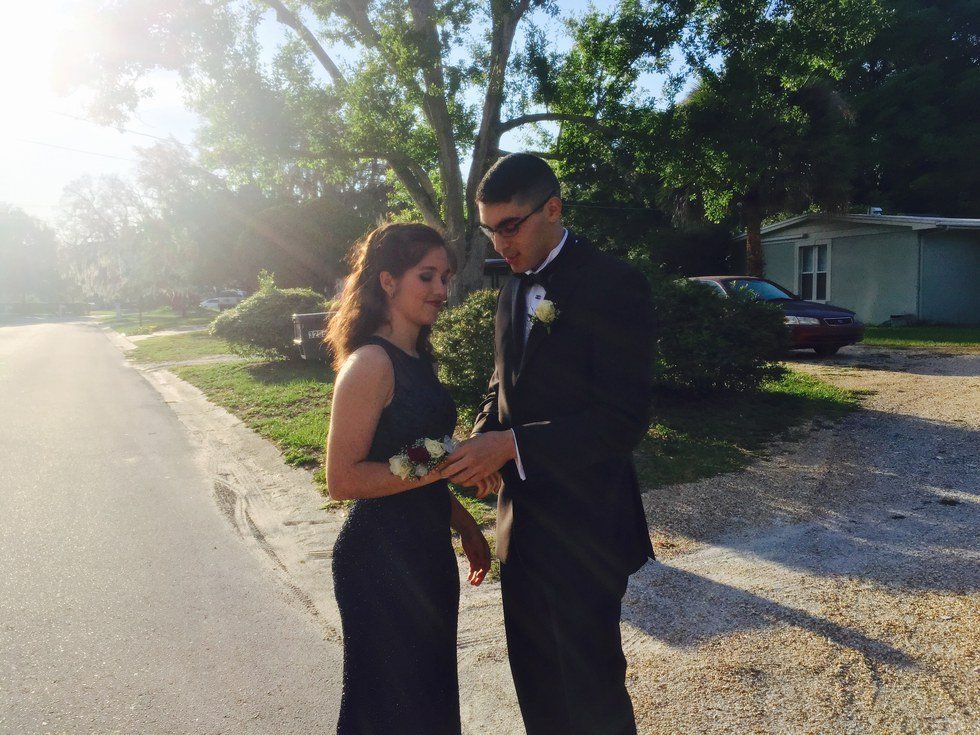
This week, I called up an old friend of mine. In the time since I’d last talked to this friend both our lives had changed radically. I finished high school and am preparing to start college this fall. He moved north and joined the army. This weekend we had a conversation about our relationships. He is dating a civilian boy from Philadelphia. I’m dating a Marine.
In many ways, to the bystander, the military relationship seems like one of romance, sacrifice and devotion. The doting girlfriend and her handsome man in uniform. My friends think it's adorable. The picture fairy tale story. Sometimes it feels like a fairy tale — he flies in for a weekend for the first time in seven months, and you find yourself in a three-day rush of dates and outings. More often than not, it’s hell. You're a sitting duck for seven months of relationship limbo. A three-hour time change is miserable for texting because 11 at night for him makes it 2 a.m. for you. Normal life events won't include him because he can't get leave, and some of us end up crying in the bathroom on our prom night because his senior prom didn't get screwed over, but yours did. Then there's the worry. You worry that he won't assimilate back into society when he leaves. You worry he will have wasted time and not started college. You worry about deployments or war, worry that he'll break his leg during some training maneuver or even during PT (physical training), and you worry for the future.
There's another side to this. Sujay, my army friend, talks about the level of disconnect there is between his work life and his relationship. He describes the military as a lifestyle, a description I agree with. Between training, haircuts, working out and the sheer fact that you’re eating and living in your workplace, the military can be all-consuming. The fear of deployment from the civilian side of the relationship becomes curiosity and excitement for those who would experience it. My own boyfriend has expressed a similar sentiment. For civilians, it can be difficult to remember that this isn't just a job. These people joined the military for an overwhelming variety of reasons and for many the military has given them a sense of direction and purpose they otherwise would not have had. This is besides the security of a steady job with great benefits.
There's a last part to the military relationship that needs to be stated. For the vast majority of people involved in these relationships, this isn't a casual thing. The stress of a long-distance relationship, compounded by the stresses of a time-consuming job and the lack of person-to-person contact means these are commitments. There doesn't have to be a ring or a promise to make those commitments in that sense. This is a relationship where both parties are agreeing to comfort each other and be the other’s rock even when they don't necessarily understand everything. It's a commitment to be patient. It's a commitment to communicate. Commitments to the relief of seeing someone for the first time in seven or 18 months, commitment to texting and Skyping, commitments to plan and hope and commitment to the future.