


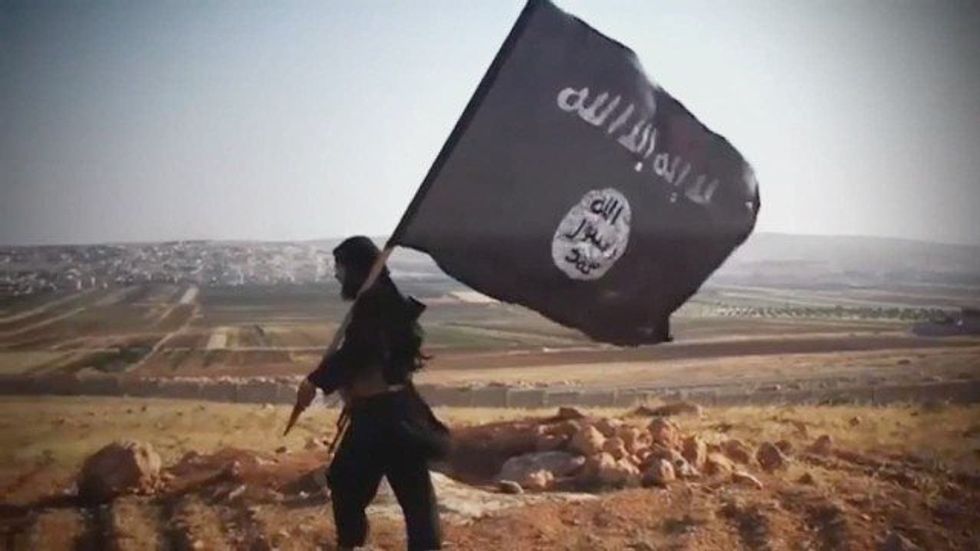
When they started making headlines in the summer of 2013, many Westerners had never heard of the Islamic State in Iraq and Syria, or ISIS. Many thought they would simply be a passing fad, cause mayhem for a few months, maybe a year, and then dissolve as many similar groups have done in the past in that region, either due to lack of funding or recruits, or being defeated by a rival group or state’s military. But here we are, three years later, and ISIS still rampages across Iraq and Syria, controlling huge swaths of territory in both countries. They have truly both shocked and captivated the world with their horribly brutal tactics combined with a strong Internet presence not seen before by similar groups. Even al-Qaeda, a group they were affiliated with before 2007, cut them off because of their harsh and gruesome methods. Their strong Internet presence, unusual when one thinks about jihadist groups, means they have never had a problem with recruitment.
Every day there seems to be a new story about Westerners going to the Middle East to join ISIS.
In-depth coverage of the fight against ISIS, however, has been difficult to accomplish for most news outlets. The ideal scenario in most people’s minds is that there are two sides in a conflict. Alliances are formed and these two sides grow, but the single battle line across the middle remains. This could not be further from the reality on the ground in Iraq and Syria.
A jigsaw puzzle of sides and factions would be a much better analogy, and the classic “enemy of my enemy is my friend” logic is completely useless here. The civil war in Syria further complicates things. Nonetheless, a breakdown of the sides in this fight looks something like this:
ISIS fights for complete control of Iraq and Syria to form a new state, a caliphate. In Iraq, they are opposed by the fledgling Iraqi armed forces as well as Shia militant groups backed by Iran. Iran has also backed Shia militant groups fighting ISIS in Syria (so Iran and the US are on the same side??)
In Syria, things get much more complicated. There, ISIS fights against the Assad regime’s forces as well as the secular Western-backed rebels led by the Free Syria Army (FSA) and the Islamist rebels led by al-Nusra Front. The FSA and al-Nusra Front, enemies in Syria’s civil war, now often find themselves fighting side by side against the Assad regime or even ISIS. One may question why al-Nusra Front and ISIS aren’t close allies, as they are both extremist Islamist groups. However there are some differences: whereas ISIS wishes to create a caliphate across the whole Levant, al-Nusra front wishes to create an Islamist government in the current mold of the state of Syria. Additionally, while al-Nusra is an al-Qaeda affiliate listed as a terrorist group by both the U.S. and the U.N., their views are certainly not as medieval and draconian as ISIS.
The problem for Western and Arab governments has been simply answering the question "Who do we back in this fight?" All governments want to oppose ISIS but must be wary about who they send support and arms to, lest they turn around after attacking ISIS and attack one of their allies. In Syria, for example, the U.S. has tried to find the perfect group to back that is secular, pro-Western, pro-democracy, and hasn’t fought alongside al-Nusra Front. After all these requirements, our perfect group simply cannot exist.
There is one group, however, that has proven to be the biggest challenge to ISIS by taking back huge areas of territory in Iraq and Syria and all without any support from Western or Arab governments.
The Kurds, the biggest stateless nation in the world, have shown their effectiveness against ISIS, scoring victory after victory to defend their homeland, even though you won’t see the name of their homeland, Kurdistan, on any map. The Kurds are secular, pro-democracy and feminist, as exemplified by their various all-female fighting units. Upon learning all this, one might wonder, well why on earth haven’t we been supporting them? Well the answer to that question is complicated but it mainly involves Turkey.
Turkey was one of the last NATO allies to join the anti-ISIS coalition. They were perfectly content to sit back and watch as the conflict grew but conveniently didn’t spill over into their borders. Of course, it benefited Turkey to have dysfunction in Syria. But then they suddenly had a change of heart and decided to join in the fight against ISIS? No, really it was the Kurds gaining momentum in northern Syria that prompted the Turkish response. In fact, in those very first strikes launched, Turkish planes targeted both ISIS and Kurdish strongholds.The Turkish government has had a long rivalry with the Kurds, millions of whom live in southeastern Turkey. So while the Turkish forces bomb both ISIS and the last effective force fighting them, the Kurds, why hasn’t the U.S. and its allies done more to support the Kurds? This goes down to politics.
As it just so happens, one of the biggest political parties leading the Kurds is the PKK, or Kurdistan Workers Party. This is a Marxist group that has advocated for Kurdish autonomy since the 1980’s. So due to their leftist politics and opposition by Turkey, the West has stubbornly refused to give any serious assistance to the Kurds. So it’s a simple choice for the West: allow ISIS to continue to destroy and kill unopposed or support a secular, pro-democracy, feminist, and, yes, Marxist group to stop them.

















