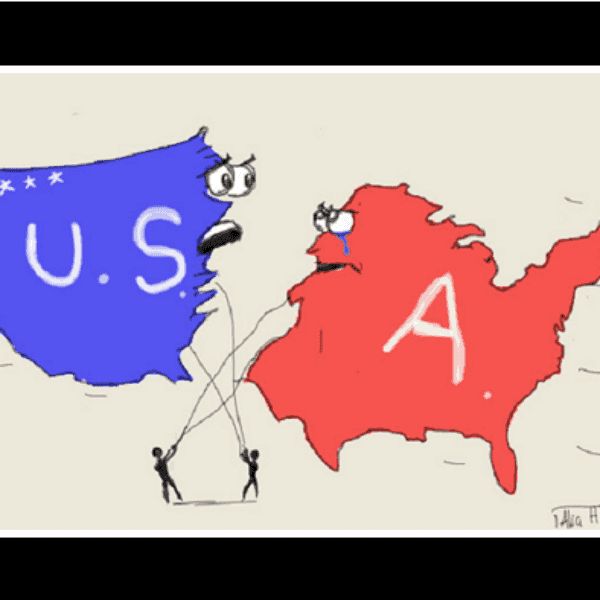

With the first primary debates upon us it's a perfect time as Americans to reflect on the political system. For everyone who doesn't know, we live in a federal constitutional republic here in the U.S. meaning we the people elect government officials to represent us, they make the laws, which are supposed to reflect the will of the people. Sounds simple enough, right?
But, it seems now more than ever that special interest groups and a polarized government have created a seemingly eternal state of gridlock in today's government operations.
One major reason for this: Democrats.
Another major reason: Republicans.
What's that? Both parties are responsible for this mess of a country we have now? It's not just one party's fault!?
Yep, that's right. Something pretty much no national news will tell you. Both parties are accountable for our constant gridlock.
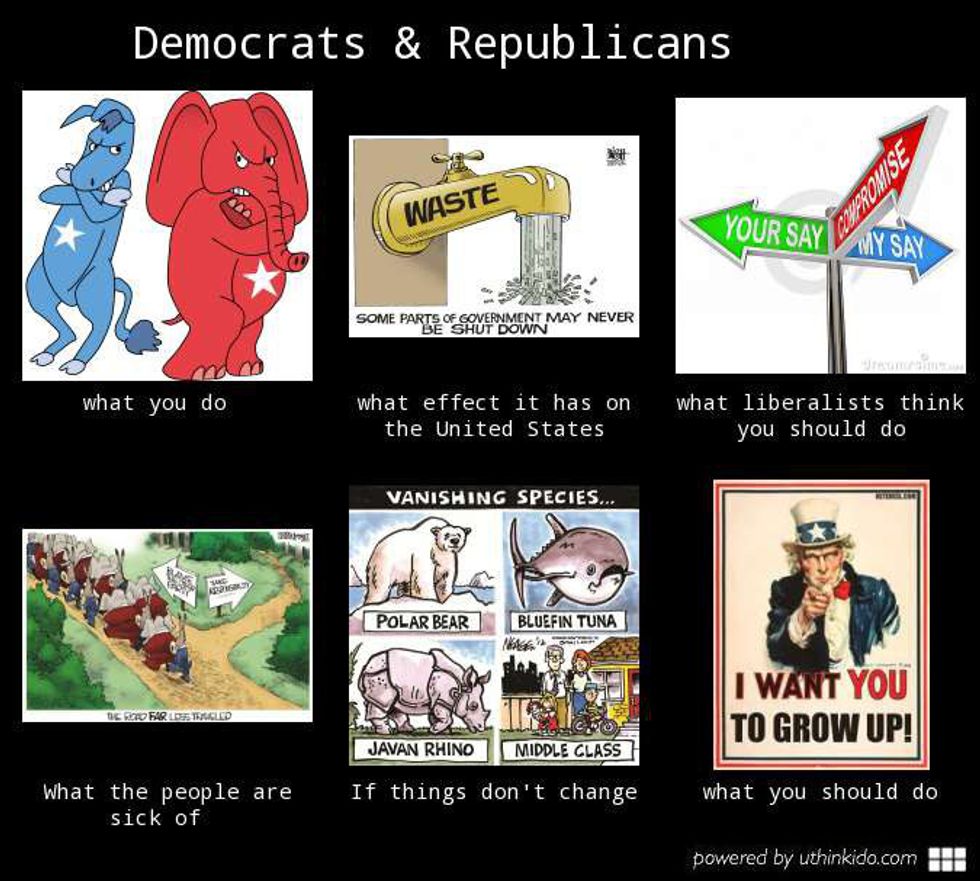
But, all the blame does not fall on the parties alone. The system is more to blame than anything. Our current nearly exclusive two-party system is quite possibly the least effective form of government in history.
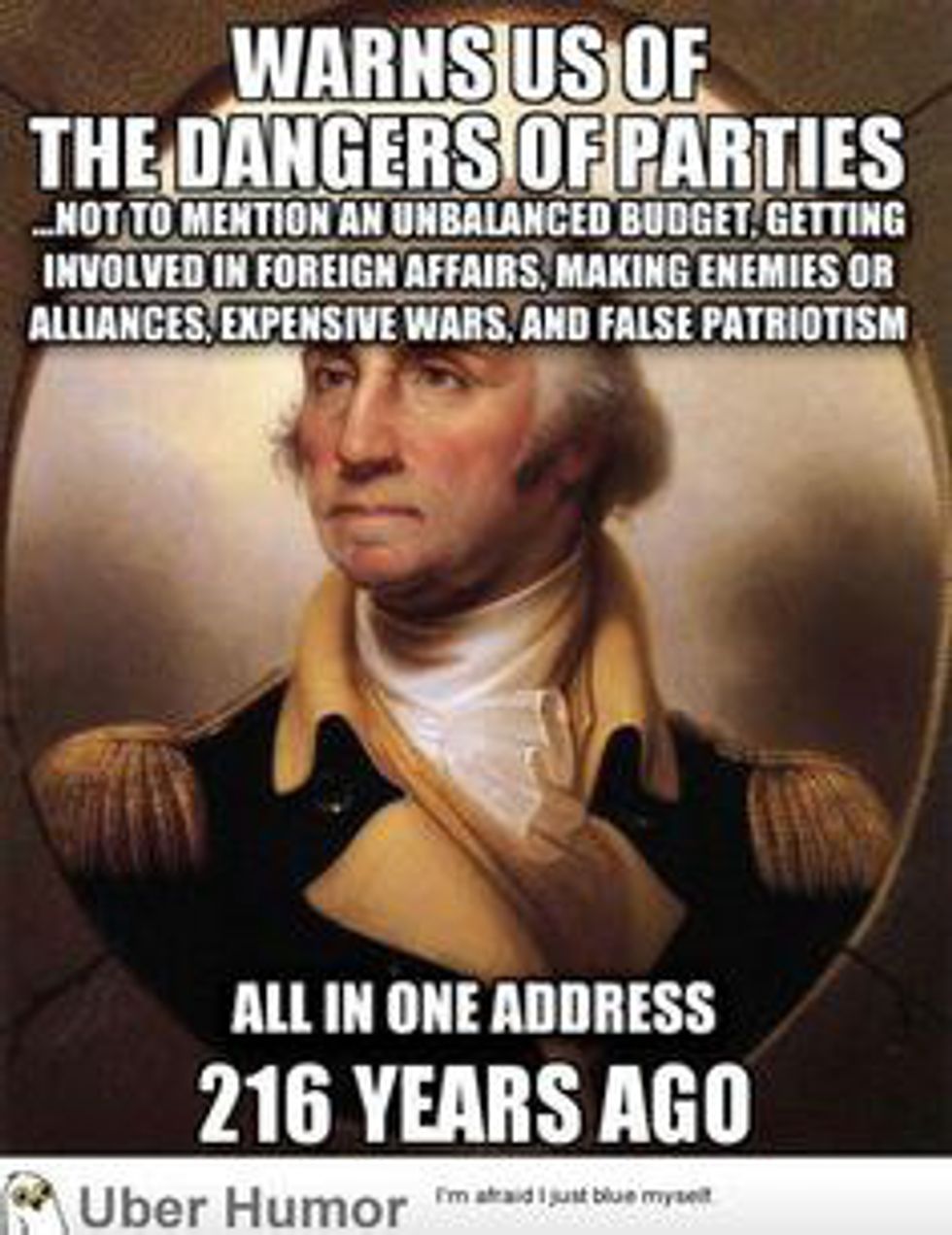
We should have known that this sort of problem would happen. I mean, for god's sake, men nearly 250 years ago knew it would happen. Many of our founding fathers warned us about the dangers of a two party system. Here's a quote from our second president of the U.S., one of the signers of the Declaration of Independence, and a member of the Constitutional Convention, John Adams:
"There is nothing which I dread so much as a division of the republic into two great parties each arranged under its leader, and concerting measures in opposition to each other. This, in my humble apprehension, is to be dreaded as the greatest political evil under our constitution."
Basically in today's terms, Adams is saying that, yes, it's perfectly legal for two opposing parties to dominate the political landscape under the constitution, but it would be completely insane and in his words "the greatest political evil".
I would tend to agree with Adams, and if our current political outlook is any indication, his prediction was spot on.
If you need any proof just pay attention to the annual debacle that is passing a federal budget plan. Congress moves just about as fast as traffic on the Schuylkill Expressway during this time of year, not that it's any different from any other part of the year. In the past 14 years, congress has been an average of 4 months late passing an annual budget. And, get this, since 1952 (63 years for those as mathematically challenged as myself) the budget has been passed by the deadline just four times. Yep, that's it.
Thankfully congress very conveniently gets paid through any delay in a budget passage. Because thank goodness the ones who can cut off spending to the rest of the nation because they're too stubborn, will still be paid through it all.
The main culprit in this pathetic performance by our nation's lawmakers? The two party system.
Compromise is not only key in personal relationships, but also imperative in government. So look at it this way. A right-wing, bible-thumping, abortion-hating, Mexican border-wall-building Republican probably wouldn't get along very well in a dating relationship with a liberal, atheist, pro-choice, peace-loving, blue-blooded Democrat. So why the hell do we think they can compromise enough to make the laws for 300 million plus U.S. citizens?
It's proven time and again that they can't, when major issues are pushed to the side to promote partisan agendas that benefit no one but lobbyists and the politicians.
So, where does our two-party system stand internationally? Well, it's pretty antiquated. The European Union has 13 recognized political parties, eight of which are represented in Parliament. The UK has s16, 11 of which have members in the House of Commons (basically the equivalent to the House of Representatives).
The U.S. also has an abundance of nationally recognized parties. Actually, 35 to be exact. So you're thinking, "That's great we're moving in the right direction, and you can finally stop complaing, Joe." Ha, not so fast.
Out of 535 positions in congress, a mere two are held by a member of one of the 33 "third parties". For those keeping score at home that's about .4 percent (and I'm rounding up). Now, for comparison in the UK there are 649 positions and 86 are held by members of a group other than the two major parties. That works out to a more respectable 13.25 percent. Obviously not enough for a majority or anything close to it, but it is enough to represent some of the nation's differing views, and to prevent a completely polarized congress.
To be fair there are plenty of elected officials who ascribe to a party's ideals other than what they're registered as. Take Republican primary candidate Rand Paul for example. Following in his father Ron's footsteps, Rand has consistently supported a libertarian agenda, while not playing into a Republican versus Democrat ideology. He often takes positions that waver from the typical Republican agenda, specifically foreign policy and national security. Even though Rand is a libertarian he knows his chances of election are slim to none as a third party candidate and thus considers himself a Republican come election time.
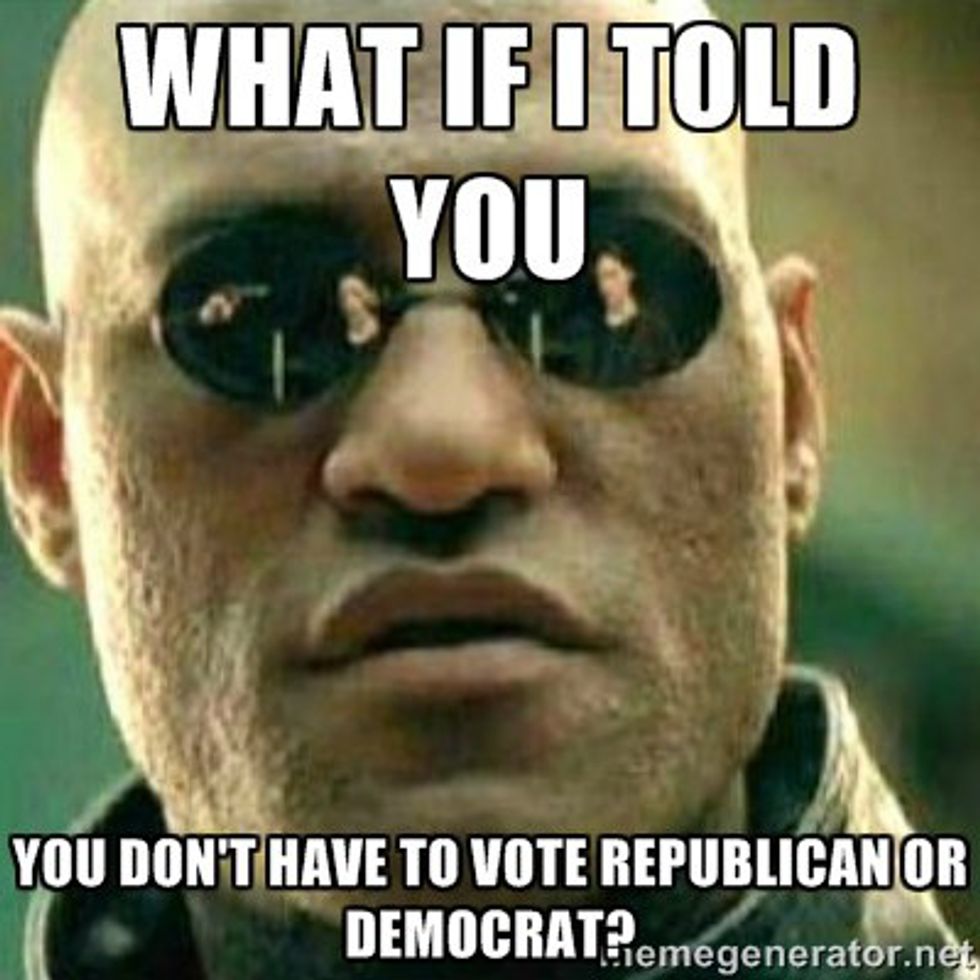
Even the term "third party" shows our nation's stubborn inclination toward a strictly two-party system. There are hundreds of third parties in the U.S. with specific and differing agendas, but they've all been grouped into an overarching category of "independent" or "third party."
So how can we change the system, and still improve our country?
There's no clear answer, but staying informed and voting for what you believe in is the first step. Don't think that voting for a third party is "throwing your vote away," if you believe in what they ascribe to then why wouldn't you give them your support? If enough like-minded people throw their vote away together then you might just make a difference.
Just ask the Bull Moose Party.