

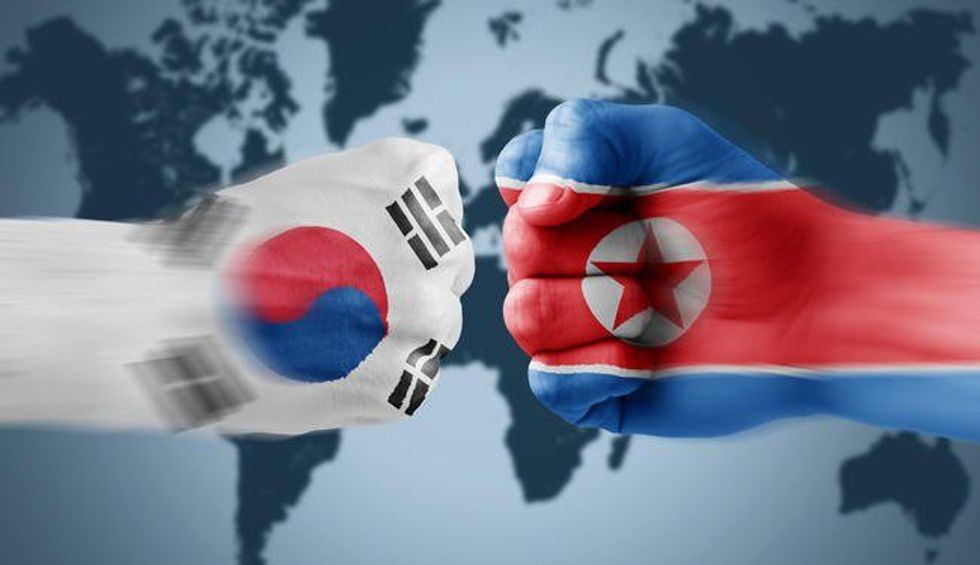
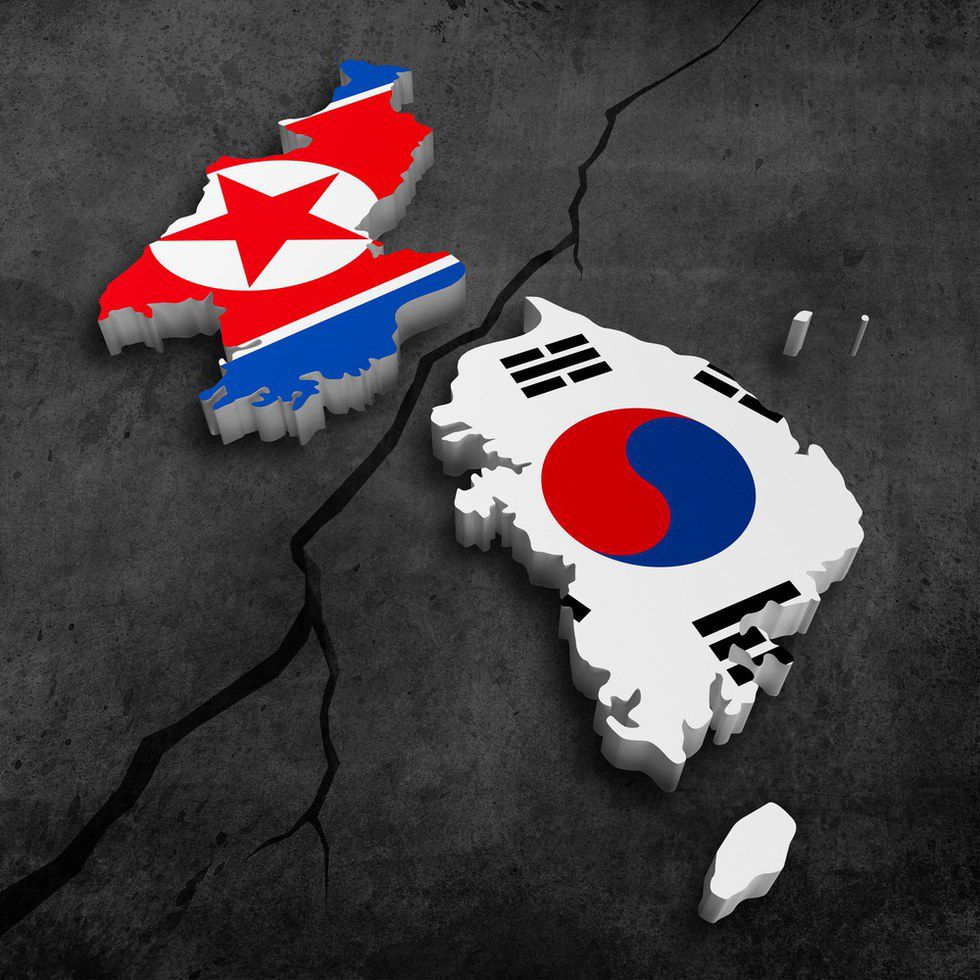
It's not breaking news that North and South Korea are at odds with one another. The two geographically inseparable but ideologically incompatible countries engaged in more conflict recently when they exchanged artillery fire this month. Currently, the North and the South are divided by a heavily armed demilitarized zone that acts as a barrier between the two opposing states. Unfortunately, this is not a peaceful understanding between the two countries, but instead an area of tension and political sensitivity. It appears that the fragile peace established between the two governments after the end of the Korean war in 1953 is easily disrupted, with serious and dangerous repercussions.
The violent exchange occurred when the South began to broadcast anti-Pyongyang propaganda after two South Korean soldiers stepped on a land mine that is believed to have been planted by the North Koreans in the 1960s. North Korea is extremely sensitive to any criticism from outside sources that could perhaps undermine their totalitarian doctrine, so it is no surprise that North Korea responded promptly and aggressively by firing a single round from an anti-aircraft gun, landing in a South Korean border town. Soon after, more artillery shells were dropped on the southern side of the border. The South Koreans then retaliated by shooting dozens of artillery rounds. The North Koreans did not respond physically, but they did declare that the loudspeakers the South Koreans were broadcasting from (which could be heard at the North Korean border) should be taken down or further, more violent action would ensue. North Korean leader Kim Jong Un went as far to state that soldiers would "enter a wartime state" and that "indiscriminate strikes" could be initiated against the South.
It is important to recognize the nature of the messages that South Korea sent from the loudspeakers; some content drew attention to the human rights abuses that occur in North Korea perpetually, while another announcement recognized the mistreatment of a South Korean worker who was detained illegally for four months in 2009. In sharp contrast to these provocative messages, other materials emitted from the speakers included South Korean pop music and pre-K pop sounds.
The severity of North Korea's response to these announcements (which ranged from harmless music to inflammatory historical truths) speaks volumes to the nature of North Korea's government. North Korea is a country where free speech is alien, indoctrination into a repressive ideology is omnipresent, and innovative and creative art is perceived as antagonistic and a threat to the oppressive system currently implemented. These repressive practices the North Korean government and Kim put in place are disturbing and upsetting, while simultaneously reminiscent of Orwell's "1984," where indoctrination is key to forming an obedient society and any threat, no matter how minor, must be extinguished.

The trouble brewing between the two Koreas is alarming but expected, given the historical clashes that often occur between democracies and dictatorships. North Korea's sinister and violent response toward South Korea's practice of free speech and creative music is a reminder of the subtle but malevolent tactics implemented by dictatorships and the threat they constitute for free thinking and democratic societies. As of now, it appears that the conflict between the two Koreas is ongoing as democracy and tyranny continuously clash in a bid for supremacy.















