
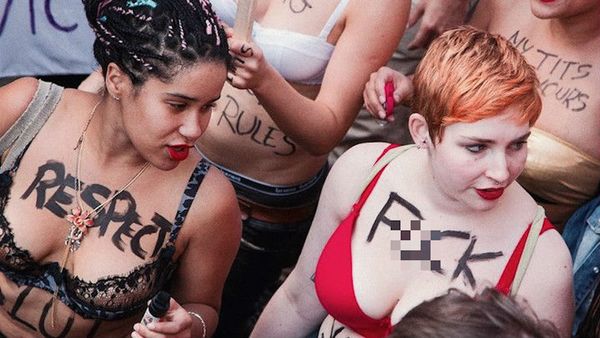

I stumbled upon an article recently tahat iscussed the widespread disparity which plagues the sets and silver screens of Hollywood. The information in this piece, which was published by the "New York Times," titled “Report Finds Wide Diversity Gap Among 2014’s Top-Grossing Films” truly amazed me. And not in a good way. The article pointed out some pretty disturbing facts about the hiring practices of Hollywood, which happened to really disappoint me. The author, Manohla Dargisaug, begins the article by immediately jumping into statistics, quoting a recent survey titled “Inequality in 700 Popular Films,” which was produced by the Media, Diversity & Social Change Initiative at the University of Southern California’s Annenberg School for Communication and Journalism. The article states that “from 2007 through 2014, women made up only 30.2 percent of all speaking or named characters in the 100 top-grossing fictional films released in the United States.” This information really jumped out to me. If you read the above quote again carefully, you will notice the words "speaking or named characters." So, we are not talking about 30.2 percent of main characters being women, we are simply talking about any character named or speaking being a woman. To put this into other words, Dargisaug reiterates by stating that “for every 2.3 male characters who say 'Dude,' there is just one woman saying, 'Hello?!’” Furthermore, according to the “Inequality” report, for 2014, “girls/women [made] up less than a third of all speaking characters on screen and less than a quarter of the leads/co-leads driving the story lines.” Again, these are some shocking statistics. Even though women make up a little more than half the world’s population, they are only allowed to be one third of the speaking roles and one fourth of the lead roles in the movies we watch.
Not only are women being misrepresented on screen, but this practice is being continued off the screen as well. The survey found that only 1.9 percent of 2014’s 100 top-grossing films were directed by women, leaving the remaining 98.1 percent of the movies to be directed by men. And, this is not a new issue that has just sprouted up, the lack of women in this industry has been a problem for decades. The Associated Press released an article similar to Dargisaug’s, on May 13 titled “Directors' guild blames studios, networks for gender bias” written by Sandy Cohen. In her article she writes that, “Fewer women are working as directors today than two decades ago, according to the American Civil Liberties Union. It cites research showing women represented only 7 percent of directors on the 250 top-grossing movies last year. That is 2 percentage points lower than in 1998.” So, not only has this been an ongoing issue, but it has also gotten worse in the last few decades. If this proves anything, it is that even though women make up about half of film-school students, and they are trying as hard as every man, they are still not getting the jobs, they are actually getting less of the jobs that they would have gotten a decade ago.

Although women are badly misrepresented on and off screen, they are not the only group getting discriminated against. It’s not only an issue of gender inequality Hollywood is dealing with, but disparity lies also in the realm of race/ethnicity and in terms of sexual orientation.
For example, the survey found that the most popular movies of 2014 where mainly white, with 73.1 percent of all the speaking or named characters in the top 100 movies being white, leaving less than 27 percent of characters to be a race other than. The report also states that 4.9 percent of all speaking or named characters in the 100 top-grossing movies of 2014 were "Hispanic/Latino." And Dargisaug gives some additional information stating that, “this low number is at odds with off-screen demographics: Latinos were 17.1 percent of the population in 2013. And in 2014, they were also 25 percent of what the industry calls frequent moviegoers.”
The survey also found that the movies were straight, with “only 19 total characters being lesbian, gay or bisexual—and none being transgender.”
And, the movies were young, with only 19.9 percent of female characters being between the ages of 40 and 64 years old.
Again, none of these statistics accurately mirror the demographics in this country/world. Fortunately, many people have come to this same realization. Although this information is not new, it has again become newsworthy. Within the last few months, this topic has been featured in articles published in "The New York Times," "The Los Angeles Times," "The Associated Press," "The Washington Post," as well as others. These articles, as well as recent events, and the multitude of studies being produced on this topic (such as those I was quoting above) have all helped in providing a growing body of evidence verifying that Hollywood needs to change their ways.
Dargisaug wrote something that I really thought summed up the issue as a whole. He writes in his article that “art may be a mirror of life, but it is often a badly distorted one in mainstream American cinema.” I agree with this, and I believe that the information I provided proves this. It is certainly time for Hollywood to enter this millennium in terms of casting and hiring. We need a more diverse set of characters in the movies we watch, and we need these people behind the scenes as well. We need more races and ethnicities being accurately represented. We need more LGBTQ characters and voices. We need more women writing, directing, editing, and acting.
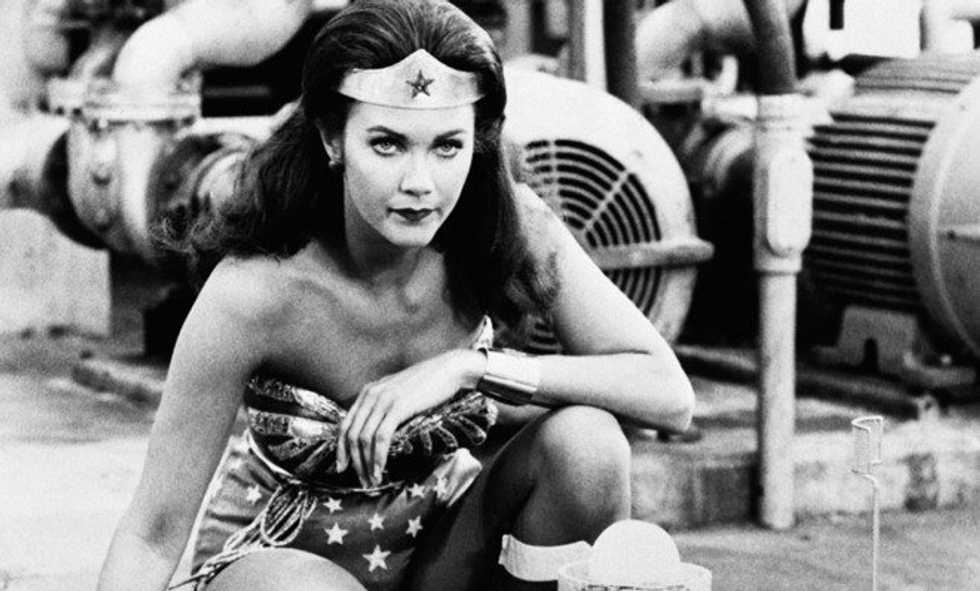
Melissa Silverstein, founder of Women and Hollywood, an organization which advocates for gender equality in entertainment says that: "When we don't see women reflected behind the scenes and on the screen, it basically tells us that we don't count. I want to live in a world where a little girl can dream of being a hero just as much as a little boy can because she sees multiple examples of heroic women...We need examples of heroic women making changes in our lives so boys and girls can see that it's not just a boy thing." And I think this mantra goes for every type of person. We need to see that it’s not just a boy thing, a white thing, a straight thing, or a young thing. We need to see reality, not what Hollywood has been showing us.
Sources: http://annenberg.usc.edu/pages/DrStacyLSmithMDSCI
http://bigstory.ap.org/article/8ff71e68009043389444f6a8379e8b46/hollywood-accused-gender-bias-hiring-women-directors

















