


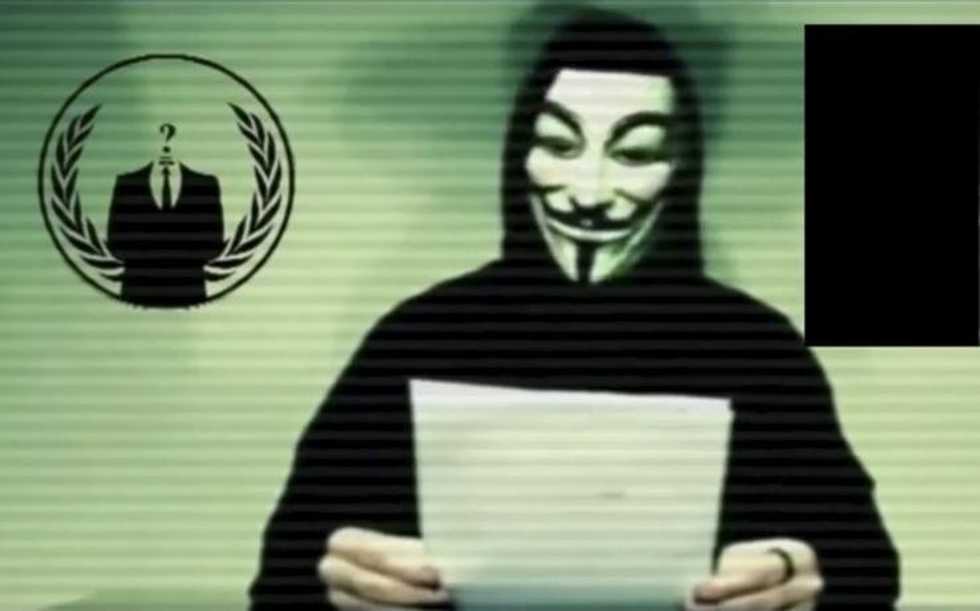
The recent ISIS attacks on Paris have resulted in the most violence to hit the city of Paris since World War II. Nations across the globe have stepped up, promising to continue fighting against ISIS before more attacks can take place. Apparently, however, some don’t think governments are capable or willing to truly do what needs to be done to stop ISIS. Following the attacks, the online hacker group known as “Anonymous” promised ISIS that it would avenge the attacks:
“These attacks cannot go unpunished, hence the reason why Anonymous from all over the world will hunt [ISIS] down as we did since the attacks of Charlie Hebdo … We will not give up, we do not forgive. Expect us.”
The message to ISIS was sent by a spokesman wearing a Guy Fawkes mask (Link to the video here). The message promised all-out cyber war against ISIS and the “biggest operation ever” launched by Anonymous. Since this announcement, #OpParis and #OpISIS have blown up on Twitter. Anonymous has also claimed to have taken down thousands of pro-ISIS social media accounts and websites.
In response, ISIS has called Anonymous “idiots” and started offering guidance to pro-ISIS supporters to protect against cyber attacks. If ISIS feels threatened by Anonymous’ attack, they certainly aren’t acting like it. In their response to the attacks, ISIS stated there was little Anonymous could do against the organization besides hacking Twitter accounts and emails.
The question everyone is asking of Anonymous is: What can the group actually do? They’ve taken over and hacked thousands of Twitter accounts and websites, effectively starting to shut down ISIS’ recruiting avenues. ISIS is very strictly limited to online communication when it comes to recruiting, so the Anonymous attack on their social media outlets could prove paralyzing. Anonymous is also looking to expose hypocrisy in ISIS leadership, finances, communications and logistics.
People are also asking if Anonymous is actually doing more harm than good. Concern has been raised over Anonymous hacking and shutting down ISIS-related social media and websites. In the past, the U.S. intelligence has requested that services and groups not remove ISIS - related accounts. They can use these accounts to find out what possible plans ISIS has, possible threats and locations for prime targets. The State Department has even gone head-to-head with ISIS accounts, using social media as a place to publicly engage with the group. Also, with ISIS starting to change its tactics in the face of the new cyberwar, it might become harder for government agencies to gather intelligence discreetly from ISIS accounts.
So is Anonymous’ war against ISIS a smart move that’ll actually make a difference? I think we’ll just have to wait and see. Obviously whatever government agencies claim to be doing hasn’t been working effectively enough. Something different needs to be happening. Only time will tell if Anonymous’ cyberwar will be successful. Personally, I’m inclined to think such an attack has the potential to seriously cripple ISIS’ online presence and therefore their recruiting outlets. If they were to take a more tactical approach, they could potentially do more damage than a forceful attack. With their hacking abilities, Anonymous could possibly collect more intelligence than any government agency has before. No matter the outcome, it appears as though Anonymous will never forget their crusade against ISIS. ISIS should expect them to come full force.















