


This interview was conducted via phone in the fall of 2015, but the questions and responses remain relevant, and will be so for the foreseeable future.
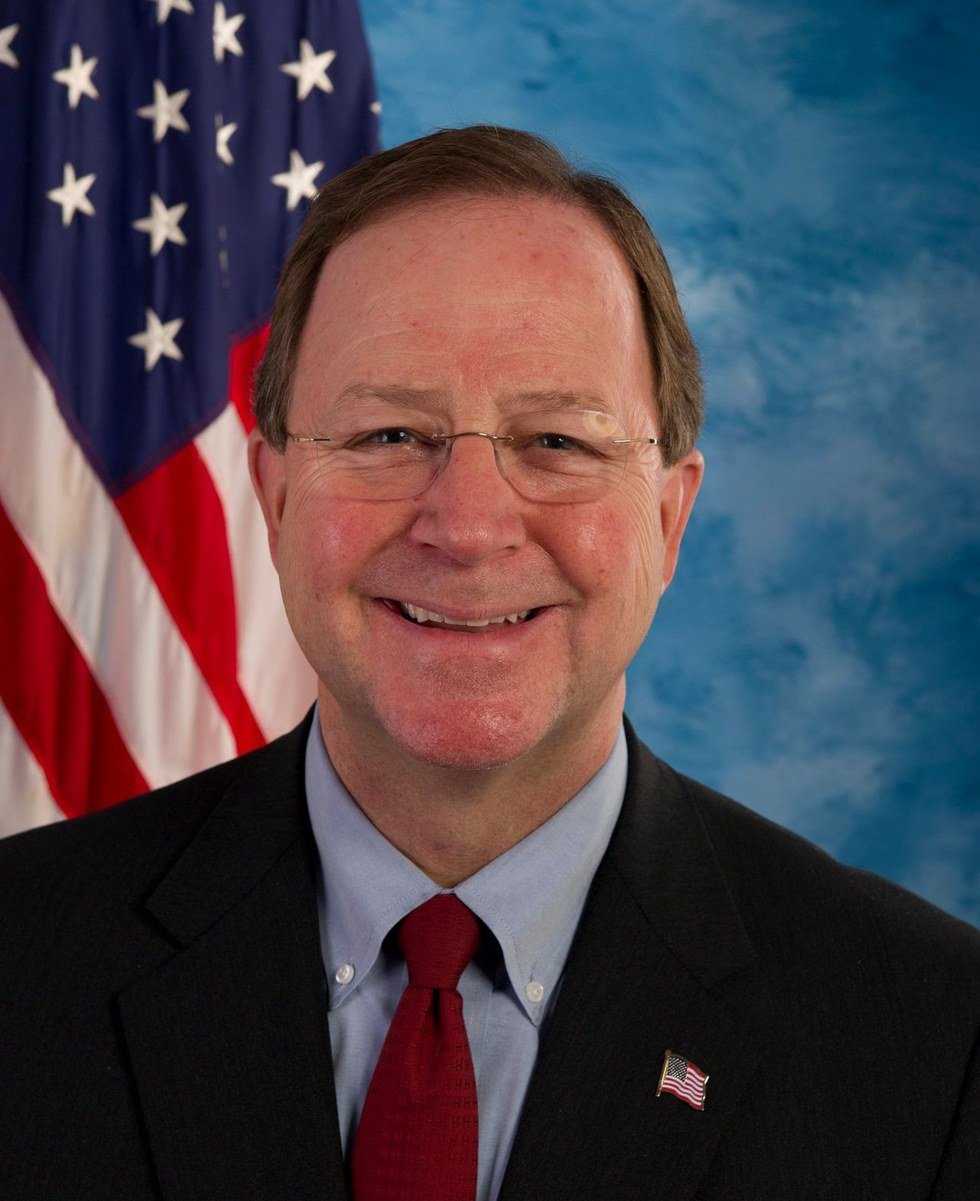
The Representative: Republican Bill Flores is currently serving his third term representing the 17th congressional district of Texas, which includes Waco, Bryan/College Station and north Austin. As a ninth generation Texan, Flores grew up in Stratford Texas, ranching with his family. Through hard work Flores paid himself through college at Texas A&M University receiving a BBA in Accounting and later receiving his MBA at Houston Baptist University. Flores went on to work in the energy industry serving as a CFO, COO, and ultimately as the CEO for Phoenix Exploration Company, an oil and gas company focused on discovering America resources. Flores and his wife Gina have been together for 37 years to date and reside in Bryan, Texas and have two adult sons and two granddaughters.
The interviewer: Emily Dewberry double majored in Political Science and English at Texas A&M University. She was the Editor-in-Chief of Odyssey at Texas A&M, a member of Kappa Alpha Theta, and Aggie 30 Loves.
Odyssey: What actions have you taken in Congress or causes have you championed to improve the lives of college students and recent graduates in your district?
Rep. Bill Flores: Well several things. The reason we go to college or get a college degree, even to community college or a trade school, is to pick up the education we need in order to have a successful career. Once you have that training, that education, what we want to see is an economy where you can flourish, where you have the opportunity to use the skills you have picked up in life and in school to have a great career and great opportunities to have an emotionally and physically healthy family. So my focus in Congress has always been what we can do to create that healthy macroeconomic environment so that young people can have jobs.
If you look in particular at today's college graduates, you have about half of them who get out of school and have limited career opportunities, and they are going back and living with their parents and that I think is just deplorable that we can't do a better job to create an economic environment that your generation has the same opportunities that our generation had coming out of school.
Now the overarching answer, getting into the weeds of more of how Congress affects the lives of college students while they are in college there are a couple of things. One is that we have there are major universities in my district, we have one great technical school and the community colleges. I stay in touch with not only the students but the administers and the professors, the academic community to find out what they think about how Washington could help out those institutions run better. So a lot of college students are getting hit with the ever increasing cost of education and part of that is part of mandates that are coming out of the federal government about how those institution has to do those jobs.
I am trying to reduce the federal mandate so that they are less oppressive and restrictive and return more back to the institution and the states. In terms of financing education we have tried to make the student loan program sustainable. In 2010 as part of the affordable care act, the student loan program was nationalized, in other words the federal government came in and seized all those operations from the banks and making profit off the backs of students and their families to fund the federal government. Now, I think that is wrong and so what we have tried to do is to reform the student loan program to keep it sustainable and keep the costs low. In financing college a few things that we have passed H.R. 529 that expanding saving plans for college allows a family to save on a tax deferred basis, so that their students can go to college that was this year. Last year in the last Congress we passed a smarter solution for student act and it's now law, it passed the Senate and it was signed by the president and that was the one that makes the student loan program more sustainable more than what it was before.
If you look at district 17 we have at least 100,000 people that are involved in higher education, so that’s why this subject is important to me. Looking forward I think we need to think about, I don’t know if the federal government is the place to turn for an answer on this but we have a lot of students today that are making degree choices that may not be the best for them for a career in terms of a career opportunity. Somehow we need to be able to get the counseling resources in our high schools to make sure that they know what career opportunities that are available with different types of degrees and also weather or not there will be a market for that type of degree when they get out of school.
The second area has to do with student loans. So let's say someone gets a degree that they are passionate about but it is has a career that has a lower income profile they should be careful how much student debt they take on, they may want to look at alternatives in financing their education like Pell Grants, local grants, have a job through school like I did, I paid my own way through A&M. I think we need to have a real honest discussion with those students and say, "Hey if you decide to get a degree in something that has a lower income profile in your career we need to make sure that you don’t get over extended through a student loan perspective."
Again, I don’t know that the federal government is the best source to do that, I think it’s done better in local districts. None the less Id like to try and find a way to advocate for better student loan literacy and also help students make better degree choice decisions to make sure that they match them up with their career aspirations.
Odyssey: Increases in college tuition have been outpacing inflation for a few decades, and now the amount of student loan debt has surpassed the credit card debt held by all Americans. What specifically can Congress do to rein in these costs?
Rep. Flores: Restructure the student loan to make it more sustainable. The second thing we’ve done is we have worked pretty hard to try to reduce the federal mandates that are imposed on our public and private higher education institutions. I wish we could say that we have been much more successful then we have but you two different opinions on the way things should be run up here, some people thing you need a heavy federal footprint and others think that those things are best done under the state and local level, and I fall under that ladder.
You look at the two institutions I represent, Texas A&M and part of the UT footprint those are both tier one-research and teaching institutions. One of the key elements of that is the research function and the federal government in the last few years has been imposing one additional mandate after another, and after another on the researchers and so the researchers are having to spend more money on back office activities instead of research activities. What my goal is based on my conversations with these folks is try to recreate that entrepreneurial environment that researchers engage in so that they have more resources to do what they do best and research to fulfill a particular curiosity because that’s how we create knowledge which creates the economy of the future. Some of the things that we spend research dollars on today don’t pay off tomorrow but 20 years they’re huge in terms of opportunity for your generation.
My goal is to try, just as an example, to make research more entrepreneurial again and you do that by backing the federal government out of the picture, leaving the money because the federal government, one of the things it does well is research funding but back it out. But I want to do the same thing more on the traditional academic side, the teaching side is remove the federal mandates that are driving the college president and the provost crazy so that those folks in the academic community at A&M will have the entrepreneurial ability to teach the courses in a more efficient way, substantially more effective for our students.
The Pell Grant program, that program was about to go bankrupt and so we have recalibrated it so that it is sustainable and I had students come from community colleges, A&M, and Baylor and asked them a question: We only have a certain size pot of money for Pell Grants. Would you have more Pell Grants at a lower unit dollar value, or would you rather have fewer Pell Grants with more money per student value? The feedback we got back from them that went into the Pell grant program so that we can for the most good with the Pell Grant dollars that we have, that program is not sustainable. Let’s say you come out of school and you got $100,000 worth of student debt, what’s the best way to pay that off because college cost have gone up. The best way to be able to pay that off is with a great job and the best way to have a great job are to have a great economic environment so that you can have a great career. The best thing we can do for young people today is so when they are in college they have the confidence when they get out that they are going to have that great paycheck coming to them if they choose to go through that particular direction.
Odyssey: Beyond these, which three political issues affecting 18 to 30-year-olds aren’t being talked about enough?
Rep. Flores: It kind of varies, at the beginning of any group meeting I have I always ask the audience: What is the important issue facing America today? I’ll give them a list of sort of nine to 10 topical issues and interestingly enough the one that I am getting back for the millennials is national security. It's not being talked enough about I don’t think and it sort of surprised me the first time I saw it that I got this. I guest lecture at classes from time to time at A&M and Baylor, and I always ask our students this and the first time a class told me it was national security it sort of surprised me and I thought now why is that, If I put myself in your shoes there is a pretty good likelihood that you are getting your news from your smart device and you probably seen a video of somebody losing their head at the hands of an ISIS terrorist. That’s one of the things that caught my attention so that one issue I think that’s not being talked about enough. I think your generation is concerned about it.
The second one is national debt. The bills that you will have to pay for the mistakes of the current generation are huge, it will be the biggest intergenerational transfer of wealth that any society has ever seen in the history of the world. I am trying to make everybody aware of how big to he load is on your generation’s economic opportunity if my generation doesn’t get it fixed and doesn’t get this fixed pretty quickly. It's not fair to your generation what generations prior to me and what prior generations did so I am trying to have that discussion so that we can get your generation more politically involved saying hey we don’t want to pay for y’all's mistakes. If you look at 2016, the millennial cohort is the biggest in size of potential voters. If we can have these candid discussions about the challenges that face your generation than I think that we will start to see the elected officials do a better job of dealing with those instead of kicking the can down the road.
Related to national debt is entitlement reform, the biggest challenge that your generation will face with a fiscal perspective is the entitlement which are driving our national debt.
Odyssey: Congress has a notoriously low approval rating among Americans, regardless of the party in control. Why is the branch that’s supposed to represent the people thought of so poorly by them?
Rep. Flores: When you are in the real world looking in to what happens in Washington you get fed up and feel like that nothing is getting done and everyone is engaged in a food fight that is happening up here. As a person who came from the real world before I did this I see the same thing. It's frustrating to me. I can see why Congress has a low approval rating because they are always fighting with each other, always fighting with each other and instead of trying to put differences aside to do the right thing for your generation and all the generations that come behind you, it seems like everything becomes political.
So whether you are a Democrat or a Republican, you know that Medicare is bankrupt and will crush your generation’s opportunities so why don’t we grapple it. But when we start talking about it one side says well your throwing granny off a cliff and so that sort of chills the conversation and nothing gets done and so that’s why we have a low approval rating and we don’t get as much done as we should. I will tell you this, in the four and a half years I’ve been in Congress the House has passed north of 300 pieces of great legislation that deal with real world issues on the federal budget, national security, on economic opportunity for young people and they have all gone to the Senate and died because of the filibuster rule in the Senate. So I can sit there and I can tell our constituents, hey the House has done a good job, but then the rebuttal is well yeah you are a part of Congress and Congress, as a whole, doesn’t do its job. It's more because of the Senate’s action rather than the House. We are frustrated because we see all the work that we do sit in somebody's trashcan in the north side of the campus here in the Senate.
Odyssey: What’s one specific policy issue on which you’ve bucked your party’s position?
Rep. Flores: There’s one in particular that has come up over the past for years. If you look at Social Security, the Social Security plan isn’t solvent and believe it or not it is easiest entitlement to fix. Not only can today’s retirees or those folks near retirement but it will be there for your generation and my granddaughter’s generation. If we can fix it for future generations than we can fix it for everyone in between. I keep trying to bring this up and they keep trying to swat it down and so this year as the chairman of the Republican Study Committee. In the budget that we put out there as an aspirational budget for the federal government, we put in the patches for Social Security.
That’s where we bucked the position, everyone says, “Oh, don’t talk about Social Security” it's one of those third rails of politics that’ll burn your hands but we took firm grip on that third rail and proposed to fix it.
Odyssey: In your current position, which vote do you most regret making and why?
Rep. Flores: There are a couple of them but one I wish I could go back and redo is one back in 2012. We voted to reauthorize an agency called the Export-Import Bank. The Ex-Im Bank, as it is called, has a real corruption problem. It's systemically corrupt, has a corrupt culture and we proposed to extend the bank charter and asked them to implement several reforms and they didn’t implement the reforms. They didn’t implement the reforms and I guess I should’ve known better at the time that the culture of corrupt the organization would keep it from implementing the reforms. I wish I could go back and redo that and vote against reauthorizing them and let them start the winding down at that point in time, that’s one of those agencies where you just need to shut the doors and lock everybody out and start over with something that fits with what the real world really needs.
Odyssey: Since 1965, who was the best president not named Ronald Reagan and why? [The question was asked this way to remove the most likely choice for the Republican congressman. Democrats Odyssey interviewed were asked the same question, excepting Bill Clinton and Barack Obama.]
Rep. Flores: I would say, George H.W. Bush, the 41st president. Let me say this: I think Ronald Reagan was sort of the pinnacle of presidents so there’s a big gap in between him and Abraham Lincoln and George Washington, and down to the rest, but George H.W. Bush for three reasons.
He worked with Congress. If he had something he wanted to get done he had a very aggressive outreach program with Congress to try and get Congress promote his agenda and we got more done in that time period.
Saddam Hussein and Iraq invaded the country of Kuwait and seized Kuwait and George H. W. Bush put together a great international coalition of countries to go back and kick Saddam Hussein out of Kuwait, and you have to admire the statesmanship that he engaged in to put that coalition together.
The Cold War still going on during the 80s, and it goes back to the end of World War II to the 90s, but Ronald Reagan started trying to win the Cold War aggressively and George H. W. Bush helped finish that and win the cold war. Plus his library is at A&M.
Odyssey: Which interest group or lobby has the most undue influence on Capitol Hill, and why?
Rep. Flores: A lot of people look at lobbying as a bad word or activity. But let's look at it this way: Let's say you as college student has an issue that you are concerned about happening in Washington. In order for you to get your elected representative to deal with that you would have to take time to write a letter or call the office or get on an airplane to come to Washington and sit down with me and talk about your concerns, that’s one way to do it. But another way to do it is to be part of an organization. Let's say your part of Texas A&M, well Texas A&M has a lobbying operation and they take your concerns and aggregate it with the concerns of other students and administrators and faculty and they come up here and talk to me about those issues so that we have an idea of what the real world and the concerns.
Lobbying isn’t all bad. If you’re a dairy farmer in Franklin, Texas just up the road from College Station, you can't take off time to come to Washington because you have cows to milk every day and so it's good to be a member of the Texas Farm Bureau, so that farm bureau can come up here and tell me that what these federal folks are doing is hurting my business.
Lobbying is not all bad work, but with that said there are some organizations that I think are more difficult to work with. In particular it is the lobbyists for labor unions because what I see in the lobbyists for the labor unions do is that they tend to advocate for positions that help the leadership of the unions and not help to job opportunities for the rank-and-file. I don’t think they have an outside influence but I don’t think they do a good job of representing the people that they say that they are to take care of. Because they come up and ask me for economic policies or federal policies that really hurt economic opportunity for a hard working folk that is just trying to get a paycheck and so I think that they are focused on the wrong things quite often.
Odyssey: The gap between the rich and poor continues to get bigger and is on many people’s minds What statistical indicators do you use to analyze this, and what is your solution?
Rep. Flores: There are two statistical indicators that I use. One is called the U-6 unemployment rate. That number includes the people who are unemployed, those who are underemployed, meaning those who are working part time but they want to work full time and it includes those who have just given up on trying to find a job. When you take that group of people and divide it by the total number of available workforce it's still a really ugly number, about one in every 10 or 11 people fits into that U-6 category. You can't grow a healthy economy if you have that many people that are unemployed, underemployed or have just given up. So that’s an important number. Everybody pays attention to the U-3 number, the top line number, those that are unemployed and it leaves out those who have given up or don’t have the job they would like to have, so that’s not a good indicator.
The second metric I look at is the poverty rate. Today poverty is as high as it's ever been in this country. If you look back in the sixties when poverty was a little lower then it is today. We started something called the war on poverty and we spent $19 trillion on the war on poverty, but is higher today than it was before. These federal programs aren’t working. Why do they want to continue down the road where you got more people in poverty and spending your generation’s money?
If you step back and look at what is the single best thing to lift a family out of poverty and that is to help get them a good job with good paycheck. Because the paycheck is the best social program that we have available for families, it's not food stamps, or welfare payment or living in public housing. It’s a paycheck because with a paycheck you feed a family you house a family you educate that family, you grow your local tax base so that you have good schools and you create this robust middle class and that’s the symbol of a good economy and what that does is it lifts all boats when you do that. So that takes me back to the answers we talked about in your first and second questions, in how do we create that robust economy so that people can go for paychecks rather than food stamps.
I’m fine with having a safety net people that are down on their luck, through no fault of their own and so I can see giving them some educational assistance and some income assistance and things like that, but I want them to always be incentivized to grab the rung on the economic ladder so that they climb out of that safety net and climb that ladder of opportunity to a great career and great paychecks. Right now our poverty support system keeps you mired down there and so you get down there and get entangled in it. We got to do something so that you are always better off grabbing that economic ladder of opportunity and get out of it. So how do you get there, there are six or seven things I can think off the top of my head.
One: tax reform. We need to reform the way the regulatory process works here in Washington because they are hurting economic activity.
Two: We need to have real health care reform.
Three: We need to reform our immigration system.
Four: We need to fix the fiscal mess that is going to challenge younger generations.
Five: We need to have free and fair trade agreements with our international partners. Free trade helps lifts all boats, all economies.
Six: I think we need to develop an energy strategy for 21st century. [Former Louisiana] Governor Bobby Jindal and I co-wrote a piece last year called organizing for abundance and it was a real all the above 21st century energy strategy and I think we need something like that.
If we do those things then we can start growing the paychecks out of the equation and get people out of poverty if you look at what happened to poverty during Reagans time all boats were being lifted and people were coming out of poverty and family income are growing at a huge rate compared to where they are today.
Odyssey: What does the word “equality” mean to you and how do we achieve it as a country?
Rep. Flores: When you look at our form of government is fairly unique, the other day was Constitution Day, on September 17, 1787 was the day that new government started the Constitution. Our Constitution is unique because the framers of the Constitution recognized that our power of the government came from man not that government gave the powers to people. The limited set of powers that the federal government has come from people. The best way to have equality is what’s in our preambles and that is to guarantee life liberty and the pursuit of happiness for everybody.
In order to do that we go back to our trying to fulfill what our Constitution laid out so that the federal government is not the granter of liberties to people; it is the guarantor -- the protector of the liberties that people have. We need to recognize what is equality, equality of opportunity it is not the equality of outcomes. I want you to have the same opportunities that I had. I grew up poor and I got to ultimately be in a corner office as a CEO, and then did something silly and ran for Congress. I want every person in your generation to have that same opportunity. Now whether or not people exercise it is up to them but I want them to have the opportunity because a government can try and guarantee equality of outcome but it is not going to happen because pretty soon the people that want the outcome without the work are going to take from those who do the work to get the outcome and so it doesn’t work.
You’ve heard the old story that if you work hard you have an A in class and someone else comes in and has a D, there’s no reason they should take away from the A to give the person with the D so you have an equal outcome. Everybody has the opportunity to get an A and that’s what I want everyone to have, that equal opportunity in this country irrespective of background and origin and things like that.
Odyssey: Finally, if you could have a drink with any non-politician dead or alive, who would it be and what would you drink?
Rep. Flores: Well I always prefer to hang out with non-politicians, let's put it that way and my drink of choice is a margarita and with Belinda Carlisle of the Go-Go’s rocker band, or Carrie Underwood or Katy Perry.

















