
This interview was conducted via phone in the fall of 2015, but the questions and responses remain relevant, and will be so for the foreseeable future.
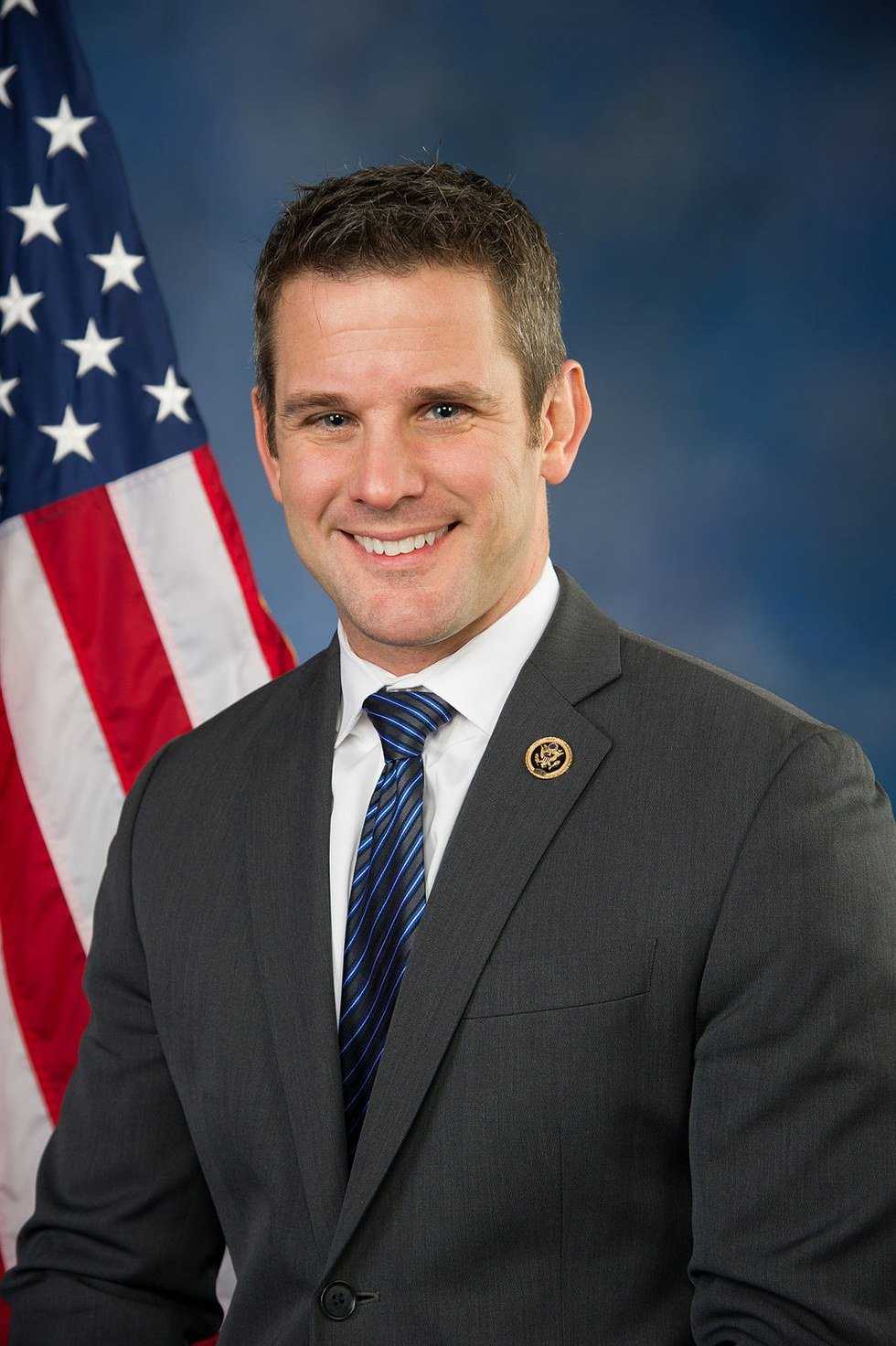
The Representative: Adam Kinzinger was sworn into the House of Representatives in January 2011 and represents for the 16th congressional district of Illinois. A Republican, he attended Illinois State University and became one of the youngest county board members in McLean County for promoting restoration of the local government and promoting people’s rights within it. After serving on the McLean County board, Kinzinger enlisted in the United States Air Force serving in the Air Force Special Operations, Air Combat Command, Air Mobility Command and the Air National Guard. He continues to serve as a pilot in the Air National Guard. Currently, Kinzinger is a member of the Energy & Commerce Committee and the Foreign Affairs Committee.
The interviewer: Mia Volpe is a student at Illinois State University where she majors in Public Relations and minors in Dance Performance. She is a member of the Phi Sigma Sigma sorority and served as the Membership Recruitment Chair. In her free time, you can find Mia rooting for the Chicago Blackhawks on TV, binge-watching "The Tonight Show with Jimmy Fallon" and air-drumming to her favorite songs.
Odyssey: What actions have you taken in Congress or causes have you campaigned to improve the lives of college students and recent graduates in your district?
Rep. Adam Kinzinger: Well, it’s actually pretty easy. Number one, I’m a supporter of Pell Grants, which obviously people use very importantly to be able to afford school. We’ve talked a lot about keeping universities accountable and how much they’re charging for tuition and ensuring they’re not spending more money than they need to; that’s been pretty important. I voted in favor of the Smarter Solutions for Students Act, and that actually kept the interest rates on the student loans at 3.4% when they were set to expire at 6.8%. So that’s obviously important to help people stay in school and be able to afford it.
Beyond just the affordability side, one of the biggest things we can do is insure that somebody has a job when they come out of college. You know, debt is terrible but if you can afford to pay it when you come out of college; that’s a good thing and so we’ve obviously been working hard to create jobs and we’ve seen an economy that’s come back from the hole it was in.
Odyssey: Increases in college tuition have been outpacing inflation for a few decades, and now the amount of student loan debt has surpassed the credit card debt held by all Americans. What specifically can Congress do to rein in these costs, if anything?
Rep. Kinzinger: I’d say both on the state and federal level, obviously most universities are funded directly by the state, it’s important for lawmakers though to hold these universities accountable again to where they’re spending their money. This idea that the federal government can just send a huge check to everybody to go to college is really just transferring that from one entity to another. Somebody has to pay for it and frankly when money’s free and easy, universities, in many cases, think they can keep skyrocketing costs, so I think one of the most important things is giving people the ability to have student aid and to have student loans, but then at the end of the day, making sure these universities are keeping their cost increase to either at or below inflation.
Odyssey: Beyond college costs, which three political issues affecting 18 to 30-year-olds aren’t being talked about enough?
Rep. Kinzinger: One I think that’s not being talked about enough is defense of the country’s national defense. You know a lot of the times, obviously, we live in a very unstable world and it’s a world where I, as a veteran of two wars, you know, kids graduating from college or going to college may have to face the potential of serving in the military and will definitely have to face their nation being involved in armed conflict. I think America’s role in the world is something that needs to be discussed more and, unfortunately, I think in colleges and as a guy that went to ISU and it was a great program, but in colleges I think the kind of middle ground philosophy or conservative philosophy is not talked about enough, and I think that’s an important discussion to have.
That’s one, and then another one obviously is just, I think, the future of energy in this country. Energy is not just about putting gas in your gas tank, it’s about manufacturers being able to build products for less and being able to sell them for less, making them more competitive and frankly, when I was in college, versus today, when I was in college we felt we could always rely on the Middle East for energy and today, we realize that we are energy-independent. So, I think that’s a very important issue. Then, just jobs and spending federal spending. If we keep spending more money than we have, it’s going to eventually be to where most of your taxes are actually going to go to maintaining the debt and not actually getting you services.
Odyssey: Congress has a notoriously low approval rating among Americans, regardless of the party in control. Why is the branch that’s supposed to represent the people, thought of so poorly by them?
Rep. Kinzinger: Well, I think it’s a couple of reasons. Number one, Congress throughout history, has never had a favorable approval rating because one of America’s favorite pastimes is not trusting or going after their politicians and the founding of our country. Our country was founded on distrust of our government, which is not a bad thing.
You know, look, I think Congress needs to listen more to the middle of America, not just to the far right or far left; I think that would be helpful. But truthfully, Congress is a faceless institution. What you are talking about, Congress generically, yeah all you see in Congress is fighting and arguing that’s actually the role of Congress is to fight and argue but what you see is most people actually like their congressman and congresswoman and so I think, historically, and probably in the far future Congress will have a very well approval rating but we have to, I think, do more to listen to the middle of America and not just the far right or the far left.
Odyssey: What’s one specific policy issue on which you’ve bucked your party’s consensus?
Rep. Kinzinger: There’s a few. One of the big ones, I think, I would have to say, is keeping government open. There was the issue of the fiscal cliff, which we had about three years ago, you could research what the fiscal cliff was but, it basically preserved tax cuts for 99% of Americans but it was a compromise and I voted with the minority in my party and also, the Violence Against Women Act, which passed recently, I voted for. The majority of my party voted against, not because they support violence against women but because there were some disagreements in some of the language there. So, there have been a number of issues that I’ve bucked the party in. I’m pretty independent, but you know, at the end of the day I’m a republican so most of my votes typically fall in line with the Republican Party.
Odyssey: In your current position, which vote do you most regret making and why?
Rep. Kinzinger: That’s a good question; the one I most regret making was for the Budget Control Act of 2011, and that’s what eventually led to sequester, which is this indiscriminate cuts along the border of our military. I knew we had to raise the debt limit, it was important, which was the argument and the Budget Control Act intended to make republicans and democrats come together and find ways to cut spending and it actually failed and so as a result we have this thing called sequester, and that’s probably the vote I regret the most. Every vote I take, at that moment, I think it's the right thing for the country but I’m also a big enough person to admit when it turns out not to be.
Odyssey: Since 1965, who was the best president not named Ronald Reagan and why? [The question was asked this way to remove the most likely choice for the Republican congressman. Democrats Odyssey interviewed were asked the same question, excepting Bill Clinton and Barack Obama.]
Rep. Kinzinger: There’s only a few then left that I would fall in line with, but I would say George H.W. Bush was good. But that he would be a tie between him and his son, George W. After 9/11, (he) understood that you had to keep terrorists, you had to fight them on their ground before they came to ours. George H.W. Bush, I think, really took The United States from a point where we felt like, you know, we couldn't win a war because of Vietnam. People have this Vietnam syndrome and it led us to victory to liberate Kuwait, brought a huge world coalition together and did it with very few causalities. What I admired about George H.W. was he’s a calm leader, he wasn't a yeller or a screamer, he was a calm leader and that’s what I think we need is calm leadership in this country, not people that just yell and scream.
Odyssey: Which interest group or lobby has the most undue influence on Capitol Hill, and why?
Rep. Kinzinger: I don’t know that’s a tough one to answer. I mean, you know, interest groups and lobby groups, you know, many people are members of these groups, so AARP for instance, for retired folks, the vast majority of retired people are in AARP. Well, AARP has a lobby out here. I’d say the groups that, and I don't know any specifically, but there are groups that fight against any discussion of reforming social security and reforming entitlements. The fact is people our age, frankly, I’m older than you but people in our age group should be very worried about the future of social security. Not just for us, but for our parents and there are a lot of groups maybe like AARP that get a lot of money to scare seniors to think that we’re going to take their social security away, and so that’s something that worries me is when we can’t have an adult discussion about things like social security.
Odyssey: The gap between the rich and poor continues to get bigger and is on many people’s minds. What statistical indicators do you use to analyze this? What is your solution?
Rep. Kinzinger: I obviously believe there’s a gap that’s growing in research and I’ve seen it in a number of areas. I think that part of the reason that's occurring, frankly, is because of what we had as disappearing manufacturing in this country. If you think about after World War II, the thing that created the middle class, the huge middle class of the fifties, sixties, and seventies was manufacturing. Kids, you know, could either finish college or not even go to college, go to high school and come out and get a good, paying job for their families, making cars, making whatever. That has disappeared and now we’re starting to see a resurgent in manufacturing but it has disappeared and I think that’s a huge contributor to it.
A lot of people will tell you the answer to this is just to tax the rich and take their money away and give it to the poor and I don't agree. I think the best way to solve the income gap is to give people that are on the low end of the scale more opportunities to make more money. It’s not to make everybody jealous of people who have money, because people who have money, it frankly doesn’t change your life either way, but it’s to give people on the low end of the spectrum an opportunity to succeed. I think one of the greatest equalizers, by the way, for maybe somebody who is born into a bad environment than a good environment is education. People who have the opportunity for good education, they can go out and, frankly, compete with the best of them.
Odyssey: What does the word “equality” mean to you, and how do we achieve it as a country?
Rep. Kinzinger: Well, I just think equality means what it is -- all men are created equal, as we knew from the founding of this country. While we’ve always had difficulties in achieving that, the reality is you look at, I think frankly, any country around the world and we’re head and shoulders above them in terms of achieving it. Look at the United States and what it represents, men, women, and then people of every ethnicity and from every country. This is a country that says whether you’re black, white, Asian, Hispanic, you have the opportunity to get hired, get a job and succeed. Now are there people that are born into tough environments, like if you’re born in the inner city of Chicago, are you at a disadvantage? Yeah, absolutely and I think we ought to be continuing to give people born into some of the worst parts of downtown Chicago or of the south-side of Chicago, give them an opportunity to break that cycle of poverty and succeed. That, to me, would be the greatest step toward equality to ensure that every kid born has an opportunity to succeed just like a kid born in Dallas, Texas or anywhere else.
Odyssey: Finally, if you could have a drink with any non-politician dead or alive, who would it be and what would you drink?
Rep. Kinzinger: A non-politician? Let me think here. I’d say one thing would be Clint Eastwood. Just because that would be awesome to just have a beer with him. I’ve met him before and I’d definitely drink a Smithwick's. It's a good Irish beer, it's one of my favorites.