
Humans desperately seek validation for both our actions and for our being in general; it is perhaps the one trait that we all inherently share. As a result of this, we want to relate to characters in the media, especially through the accessible form of television. These characters give us a feeling that we are not alone, and that our struggles are both heard and understood. This situation can be a double-edged sword, however, in the case of mental illness (specifically OCD) and how it is represented-- or misrepresented-- on TV.
Nowadays in situation comedies, Obsessive Compulsive Disorder (OCD) is often used as a punchline or as a quirk, rather than being seen as an actual disorder. OCD is a form of anxiety disorder characterized by exactly what its name would imply: a series of obsessions and compulsions. Many people are more familiar with the compulsions, some of the most common of which being cleaning, counting, touching, or an urge to check on something multiple times despite all logic (such as a locked door, or whether or not a faucet is running). The obsessions, however, are disturbing, intrusive thoughts or ideas that constantly berate you. The obsessions are what drive the compulsions, creating an association in the brain that “if I do this compulsion, then my obsession will not happen.” Obsessions are characterized by being extreme, such as a fear that you or your loved ones will die, and that is what makes the urge to complete the compulsion so strong. When considering the actual symptoms of OCD, the disorder loses a certain amount of cuteness.
On the popular and long-running CBS television show, The Big Bang Theory, Sheldon Cooper, one of the main characters, is often made the butt of the joke for his compulsive tendencies. Sheldon needs to knock on a door three times, say the name of the person he is trying to contact, and repeat two more times, bringing to mind the rituals of touching and especially counting. The other characters often make fun of his compulsions by not allowing him to complete it for comedic effect.
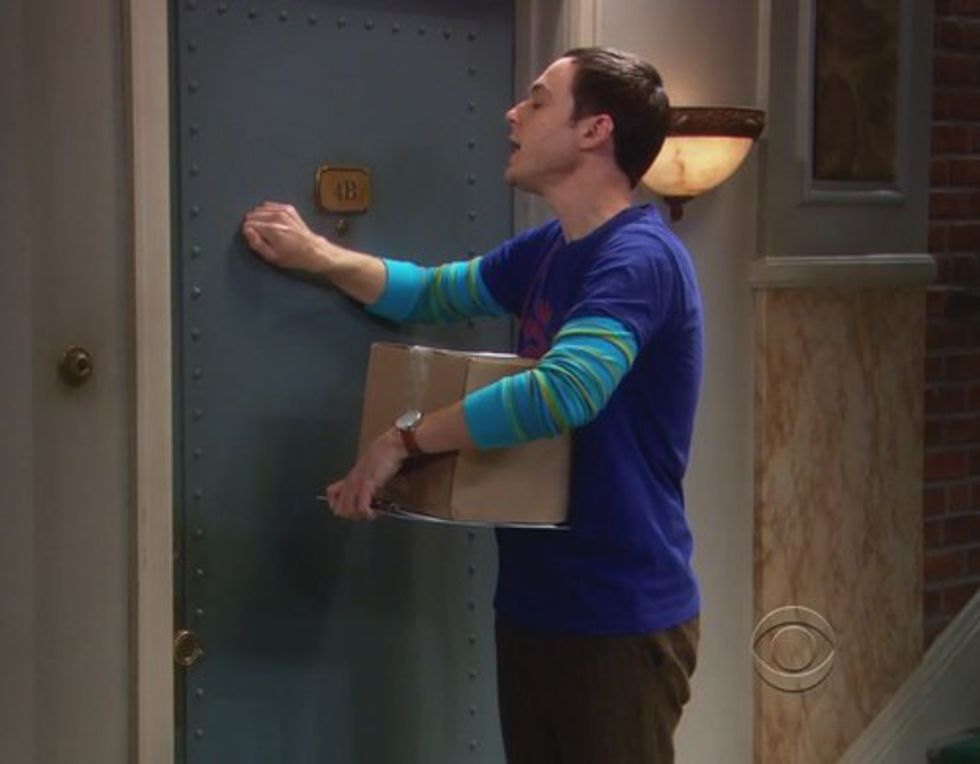
*Knock, Knock, Knock* I don't know why, I just have a hunch never to let Chuck Lorre houses sit.
There is a fine line between bringing something to light through comedy, and delegitimizing it, but The Big Bang Theory accomplishes the latter by proposing OCD as something to be laughed at ignorantly, rather than something to be laughed at with a fundamental understanding. That said, there have also been multiple instances of realistic representations of OCD on sitcoms, such as the character of Dr. Kevin Casey in NBC’s (and then ABC’s) Scrubs. As Scrubs took place in a fictitious hospital known as Sacred Heart, the show was not exactly starved for opportunities to deal with difficult medical issues, mental or otherwise. But the show went out of its way to introduce Kevin Casey, brought to life by Michael J. Fox. Kevin Casey has OCD. This is a well known fact amongst the doctors, and the other characters respect Casey’s boundaries and appreciate his talent as a physician. However, during a post-surgery scene, Kevin cannot stop washing his hands, and has a resulting breakdown. He throws medical equipment about the room and shouts, and is eventually left to continue his ritualistic washing. Here, Scrubs shows that OCD is a very real and sometimes destructive disorder, and that living with it is a constant battle that people have to come to terms with because they do not have a choice. Using Sheldon’s apparent disorder as a punchline is not funny, it is lazy writing.
Not only are characters often made to be a punchline for their mental illnesses, but they are sometimes portrayed as a type or hero or savior, giving them heightened mental abilities. In USA’s Monk, for instance, we again see an unrealistic portrayal of Obsessive Compulsive Disorder through the main character of Adrian Monk. Monk is a detective whose somewhat unconventional means of getting to the truth through his OCD make him more of an asset than his fellow detectives in the context of the show. The biggest problem with Monk’s portrayal is that the protagonist is really only noteworthy because of what his illness allows him to do, not because of his own traits or abilities, so much so that Monk’s very tagline is “Obsessive. Compulsive. Detective.” It is because of his disorder that he can solve certain mysteries, not because of he, himself. This mistaken idea appears in multiple shows and movies alike, but it can sometimes be a fine line of whether a character has traits of their disorder, or if their disorder is the only thing about the character that makes them worth our time. And this fine line often becomes completely invisible in the case of the media.
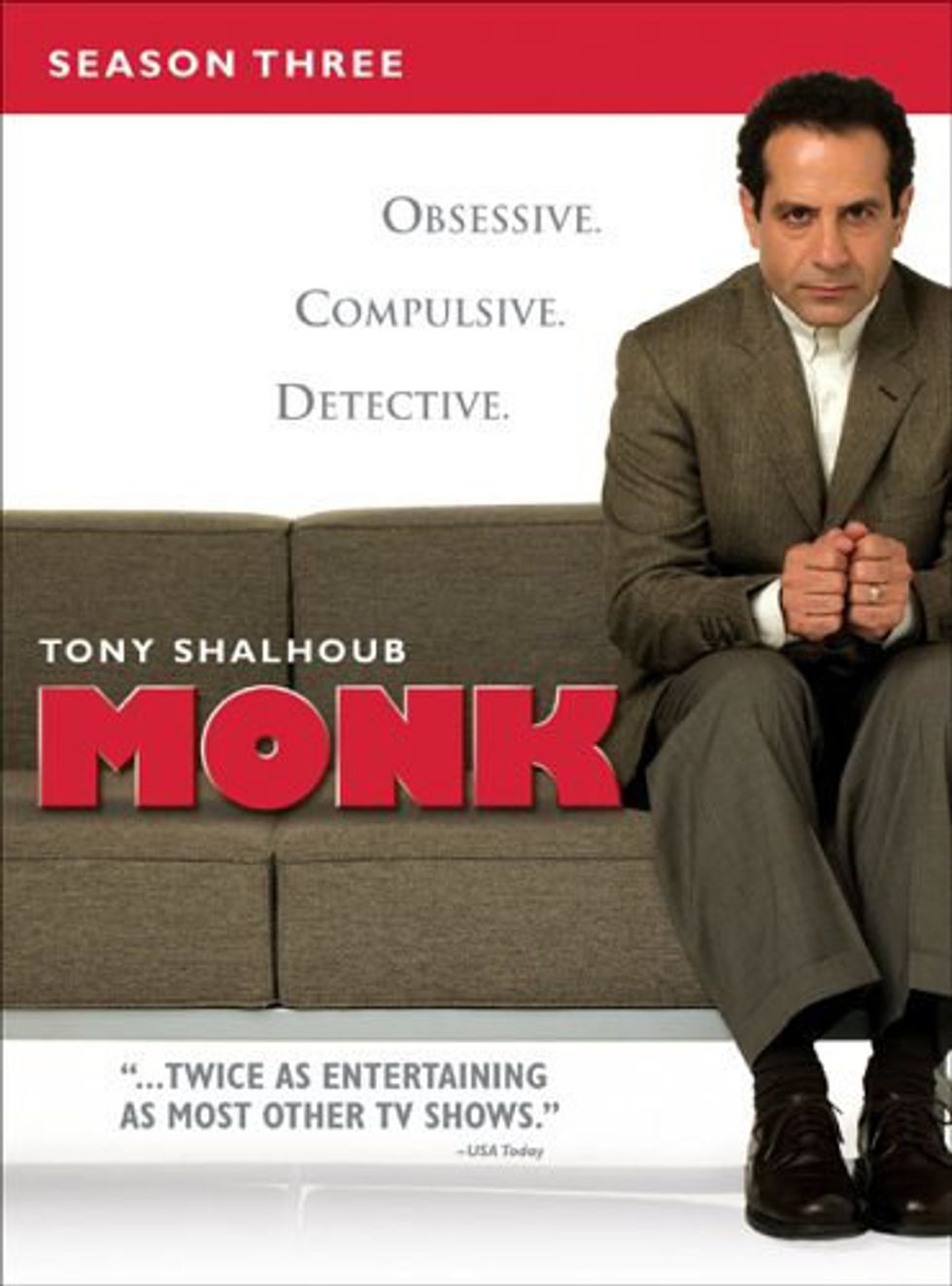
Is it Monk, or a spinoff of Everybody Loves Raymond? He looks so much like Brad Garrett I honestly can't tell. Also, yeah, I wasn't joking about the tagline thing.
While it is certainly encouraging that the number of characters dealing with mental illness in television is increasing, this cause for hope loses steam when considering that these characters often present dangerously incorrect ideas. Whether a show treats mental illness as nothing but a punchline, uses it to deify someone, or inherently misunderstands a disorder in any other way, it is crucial for us to understand what mental illness is and how it truly affects people, both real and fictional. With nearly 32 ½ million likes on Facebook, The Big Bang Theory and similar shows clearly have a significant cultural impact, but what do we do if that impact is more hurtful than anything else? It is important to bring topics to light through the media, but with 12.6 suicides per 100,000 lives, the highest rate we have seen in 25 years, it is clear that our culture’s ignorance about mental illness is not something to laugh about.