
"Children in Flint, Michigan, in the United States of America, in the year 2016, are being poisoned." It’s March 6th, and the media attention surrounding the Flint Water Crisis has reached its peak. These are the words of the adored presidential candidate, Bernie Sanders, at this year’s 7th democratic debate -- understandably hosted in Flint. Eventual nominee Hillary Clinton would share the same views, but allow me to block quote host Anderson Cooper for those unfamiliar with Flint:
The tap water is toxic. Public servants, public institutions not only failed to prevent the crisis, their decisions created this crisis. The state of Michigan, in an effort to save money, switched Flint’s water source to a cheaper, but riskier alternative, the Flint River. Safeguards were ignored. That river water corroded residential pipes, and for nearly two years, lead leaked into the water used in people’s homes. Now, for much of that time, the state downplayed the danger, even in the face of growing complaints and physical evidence.
For 100 days, the federal government knew about it, and yet in all that time nobody told the people of Flint. They bathed in the water, they drank it, and so did their kids.
If you were unfamiliar with Flint until now, hopefully Mr. Cooper’s synopsis has given you a rudimentary understanding of the issue. What he, and the candidates failed to mention was the role of students from Virginia Tech who tested the water. These self-proclaimed citizen scientists were the ones to discover lead in the water. They have their own blog, which serves as an outstanding example of what undergraduate students can do to help communities. From the snafu in Flint, many questions were raised about the role of government, if we can trust the government, and the consequences of such mistakes. It was my role to take these questions and ask, if that’s happening in Michigan, what is going on in North Carolina? Let’s take a look:
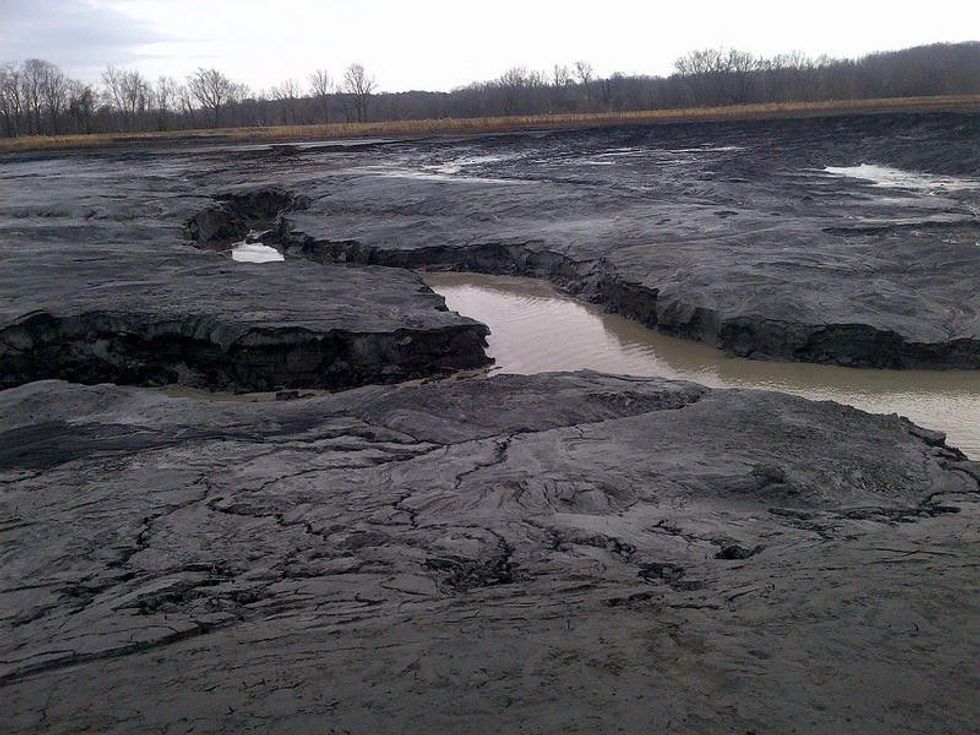
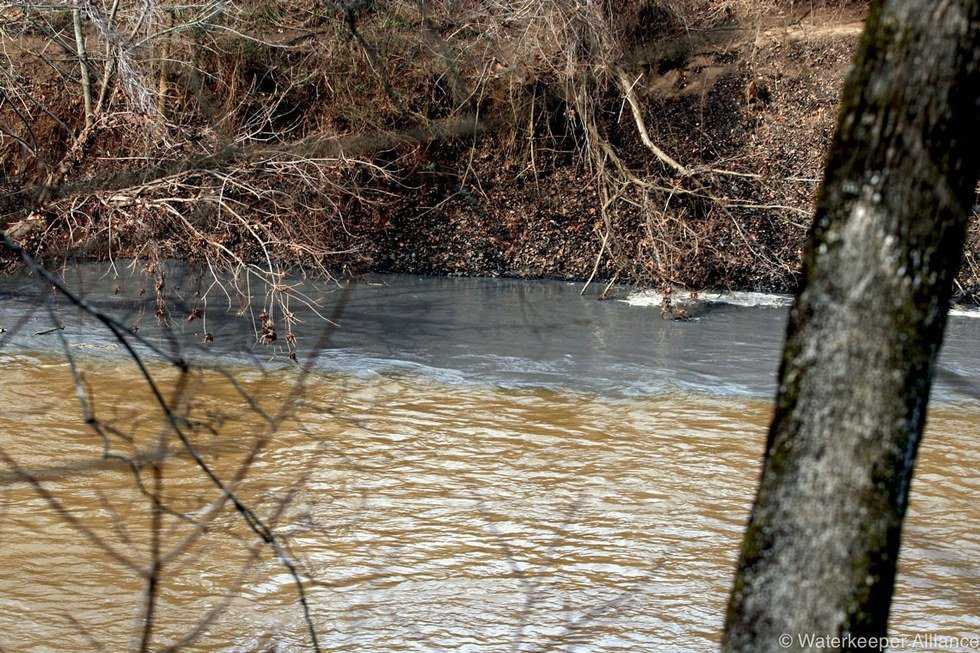
This is the Dan River, the site at which a Duke Energy spill spewed 30,000 tons of coal ash into the water. 30,000 tons is a difficult number to conceptualize, so for reference, The Statue of Liberty weighs 225 tons. We have dumped the equivalent weight of 133 Statues of Liberty into a river, earning the Dan Oil Spill the title of third biggest coal ash spill in the U.S. Its eventual contamination range would be 70 miles of river. Duke Energy, who provide power to 8 million people, should be responsible for clean-up. Even the most ardent coal supporters must concede this – but how such an event came about and is being handled is what makes our story interesting. The spill itself occurred in February 2014, so there has been over two and a half years for clean-up.
However, before we get into clean-up, we should ask ourselves how such an event happened in the first place. Greenpeace, an environmental activist group featured in my last article, have an answer. According to their article, in 2009 Duke Energy lobbyists met with the Obama Administration, in a meeting without a record to discuss how coal ash should be handled. The consensus after the meeting was that coal ash shouldn’t be classified as hazardous waste. For Greenpeace, this decision was an abomination; coal ash is toxic, containing a slew of heavy metals including arsenic and lead. Had the coal ash been defined as hazardous waste, it would have been put under stricter regulation, and not wound up in a river.
The leak itself took days to plug – Duke Energy’s lack of preparedness was so great that they didn’t know what type of pipe burst, or where it happened. Such opposition to regulation paid its price and far more coal ash was spilled than if Duke Energy were ready for such an event. Duke Energy have spent the bare minimum on regulation and records – such behaviors are encouraged to supplement their bottom line. However, high-risk fiscal irresponsibility by such large companies have externalities that affect more than just the company itself.
So Duke Energy made a horrendous mistake – but the real disorder begins after the spill. The Coal Ash Management Commission is created despite Governor Pat McCrory’s best efforts (he vetoed the bill to create the commission) and Duke Energy are ordered to pay a 25 million dollar fine. The fine was later reduced, incredibly, to 6.6 million, and that smaller fee is still in dispute today. From the 2014 spill came much awareness about coal ash and its poisonous tendencies. Sampling was done around Duke’s coal powered plants, and over four hundred letters are sent out to residences near the plants warning them of unclean drinking water. The water maintained federal standards for many contaminants, but they are still at higher than normal levels because of the plant. However, a couple months later, the warnings are rescinded. People are told that their water is fine to drink – even when it may not be. On June 6th, 2016, Governor Pat McCrory vetoed a second, supplementary Coal Ash Management Commission Bill. The house never overturns his veto, even though Pat openly says he is expecting it.
Governor Pat McCrory has twice shown his willingness to obstruct the clean-up of our state. He claims that it is an overreach of government in both of his vetoes. However, his real interests may lie in the fact that he worked for Duke Energy for 28 years prior to becoming governor. Suddenly, our situation seems a little bit fishy. Though we can’t demonize McCrory for his past, when he invites Duke Energy officials over to his executive mansion, as shown in this WRAL article, suspicions start to arise. The meeting has no records. As recently as August 2nd, our State Toxicologist deemed water unsafe to drink due to high carcinogen (cancer causing) metals, throwing McCrory’s former company back into the spotlight, and the courtroom.
In both Flint and North Carolina, what’s at stake is something as simple as water for working families. Unfortunately, the solution is lost in political chaos: If our state toxicologist says the water is poisonous, we take his word for it. Unfortunately, that isn’t the case - two officials from the Department of Environmental Quality (DEQ) wrote an “open letter” to Ken Rudo, our toxicologist, critiquing his findings and citing his report as a “disservice to public health.” One of McCrory’s cabinet members alleged Rudo lied under oath. Such attempts to slur our scientist is a political theatre harmful to the people of North Carolina.
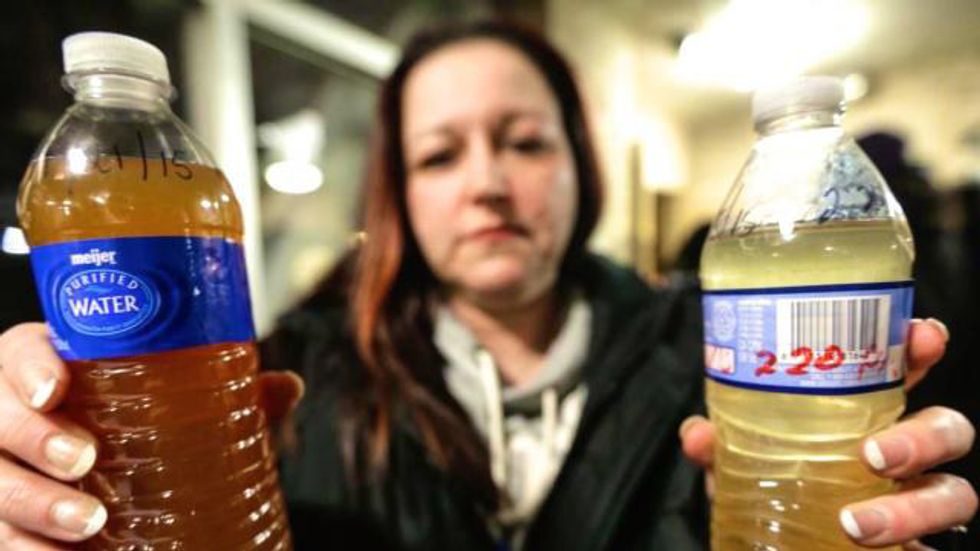
Another Flint to North Carolina similarity is the trustworthiness of government – in Flint, government officials eager to be reelected neglected to inform their taxpayers of poisonous water, despite the fact it was visibly brown when it flowed from the taps (samples pictured above). McCrory’s allegiances are more questionable, but he does side with his former employer on every occasion despite vast criticisms of both himself and Duke Energy. Do not forget the lobbyists in Washington who convinced Obama’s administration that coal ash isn’t toxic, spurring this entire mess.
To expect government to work perfectly would be ridiculous. Our government is comprised of people, error prone as we are. Grand mistakes happen, and sometimes it comes with tremendous environmental effect. However, patronage to a company, oneself, or any entity other than the constituency to which a politician serves is a disservice to their people. There is a gubernatorial election October 7th in North Carolina. It isn't my place to select candidates for you - but read about "Our State's Flint" and you may find that the choice is quite easy.