From 1894 to 1896, the Ottoman Sultan Abdul Hamid II sanctioned bloody pogroms against the Empire's Christian minorities. An ultra-conservative ruler, he despised the liberal Tanzimat reforms which attempted to Westernize the decaying Empire. Instead, Hamid saw Islamization of the Empire as the only option to save it.
With this new passion for Islam came a new hatred for Christianity, particularly the rebellious Armenian minority in what is today Southeast Turkey. Infuriated by continual Armenian calls for reform, Abdul-Hamid told one reporter in 1890 that he would give "those Armenians...a box on the ear which will make them...settle their revolutionary ambitions." What he was referring to would be large scale massacres of Armenian villages by Muslim Turkish and Kurdish soldiers. The Sultan's "box on the ear" resulted in the deaths of up to 300,000 Armenians and an additional 25,000 Assyrians.
The invention of the telegraph and camera in the 19th century allowed the Western World to witness with horror the atrocities of the Hamidian Sultanate. The New York Times ran an article in 1896 headlined "Armenian Holocaust." According to historian Michael B. Oren, much of the American Press called for the government to remove "if not by political action than by resort to the knife... the fever spot of the Turkish Empire."
Then Presidential Candidate William McKinley named the saving of the Christian Armenians as one of his chief foreign policy goals. Various members of the French government appealed to the authority of their government to intervene in the massacres. The entire Christian West was outraged at the great evil perpetrated against their religious brethren in the East.
If only such attitudes prevailed today.
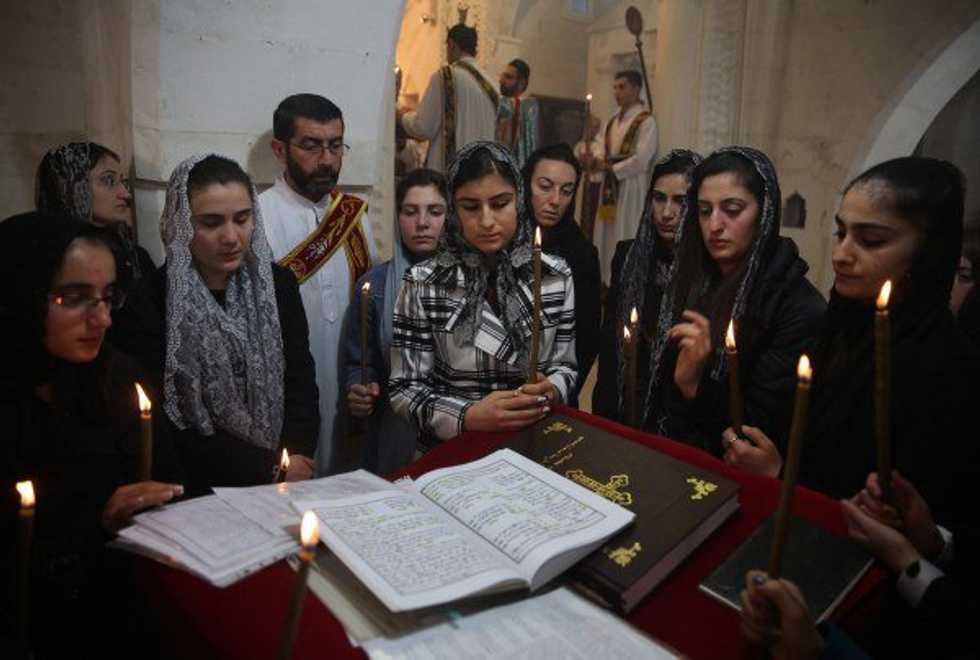
Since the U.S. led deposition of Saddam Hussein in 2003, life has become increasingly hard for the Assyrian Christian community, one of the most ancient in the world. Some estimates claim that two-thirds of Assyrian Christians have fled their historic homeland between 2003 and 2011. With Hussein removed, the subsequent destabilization of the country led to a power vacuum that Islamist insurgents hoped to fill. Once again, Christians were seen as an easy scapegoat. Attacks on Assyrian Christians increased. The rise of ISIS in 2014 only escalated the dangers, bringing the destruction of Iraq's Christian community to its completion.
But the West has ignored what's been happening.
Consider the silence of the media concerning the horrific attacks against Christians. In 2014, ISIS bombed the Armenian Genocide Memorial in Deir El-Zor, Syria, a church which contained the bones of genocide victims. Think of the importance of this. A group of Islamists destroying an Armenian Genocide Memorial is like a group of Neo-Nazis burning Auschwitz to the ground.
The Assyrian Community in America has cried loudly about the kidnapping and crucifixion of their relatives in Iraq. But these pleas have fallen on deaf ears.
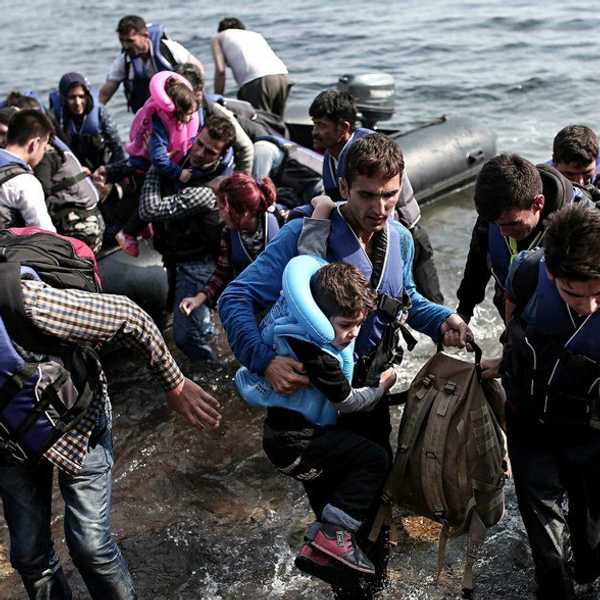
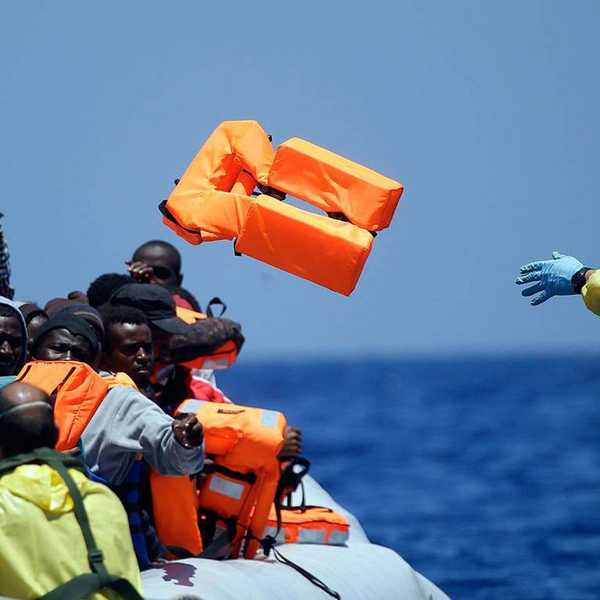
But perhaps no greater indication of our neglect of Christians can be seen than in Syrian refugee demographics. According to the State Department Refugee Processing Center, since the Civil War started in 2011, the U.S. has brought in 2,025 Sunni Muslims, and a grand total of 54 Christians.
Makes you think doesn't it?
When asked about the wide discrepancy in the number of Christians and Muslims coming into the United Sates, Jana Mason, the UN High Commissioner for Refugee's senior adviser for government relations and external affairs said, "We don't know...We don't want to speculate."
Well, that's a sign of someone who's thinking about the issue! Really puts the capital "H" in humanitarian doesn't it!
Now, to be fair, experts have pointed out a number of reasons for the discrepancy. Religious minorities in Assad's Syria feel safer than the Sunni majority. So many would rather stay in Syria than risk a journey to the West. Many Christians, particularly the Armenians, have been escaping to Lebanon and Armenia without having to go through refugee camps. Many refuse to leave at all, understanding that if they leave, the centuries-old communities they are a part of will disappear. In fact, just weeks after Islamist militias attacked the Armenian village of Kessab in Syria, the villagers returned to try to carry on with life there.
Even still, these reasons, in my view, do not properly account for such a large discrepancy in numbers. And it still doesn't excuse the callous responses of the U.N.
Nina Shea, former Commissioner of the U.S. Commission of International Religious Freedom, has criticized the situation in the U.N. refugee camps. For example, she notes how most of Syria's religious minorities live in Urban centers. Since most of the UN camps are in remote parts of Syria, it's difficult for these minorities to apply for entrance to the camp.
Syriac Orthodox Bishop Yostinos Boulos Safar has asked the UN to reach out to minorities within these urban centers in case they are otherwise unable to apply to the camps. The U.N., however, has done little to help.
However, it was an editorial in The Telegraph by Lord George Carey, the former Archbishop of Canterbury, which shed some horrifying light to the situation. He brought to attention reports from a charity called the Barnabas Fund which stated that many Christians are refusing to enter U.N. refugee camps. According to many of the Christians living there, Islamist gangs have made death threats to any Christians who enter, scaring them away. Nina Shea has also highlighted this growing issue, claiming that the refugee camps have become heavily infiltrated with violent Islamist gangs.
The Middle East has become so dangerous for Christians, they are not even safe in Refugee Camps.
Also of important note are the lack of Shiite Muslims and Yazidi refugees, two other religious minorities who are facing increased persecution in Syria and Iraq. This is interesting, considering the reasons the UN used as to why Christians don't go through refugee camps don't seem to apply to them. The bulk of Yazidis live in places directly controlled by ISIS. And what would the incentive of Shiite Muslims to stay in Iraq and Syria be?
Again, I understand the reasons behind these bizarre numbers are complex and multifaceted, but when multiple Christian charities and leaders consistently make similar complaints, can't the UN do more than shrug their shoulders and say, "We've tried?"
Shouldn't the West, which for centuries saw itself as the protector of Christians around the world, at least be a little more gracious in abdicating their historic role?
In my last article, I discussed the increase of migrants committing rape and sexual assaults in Europe. By doing so, I hope I caused readers to ask the question: What kind of people are we letting in? Now, dear readers, I hope to leave you with perhaps an even more pressing question about refugees.
What kind of people are we leaving behind?