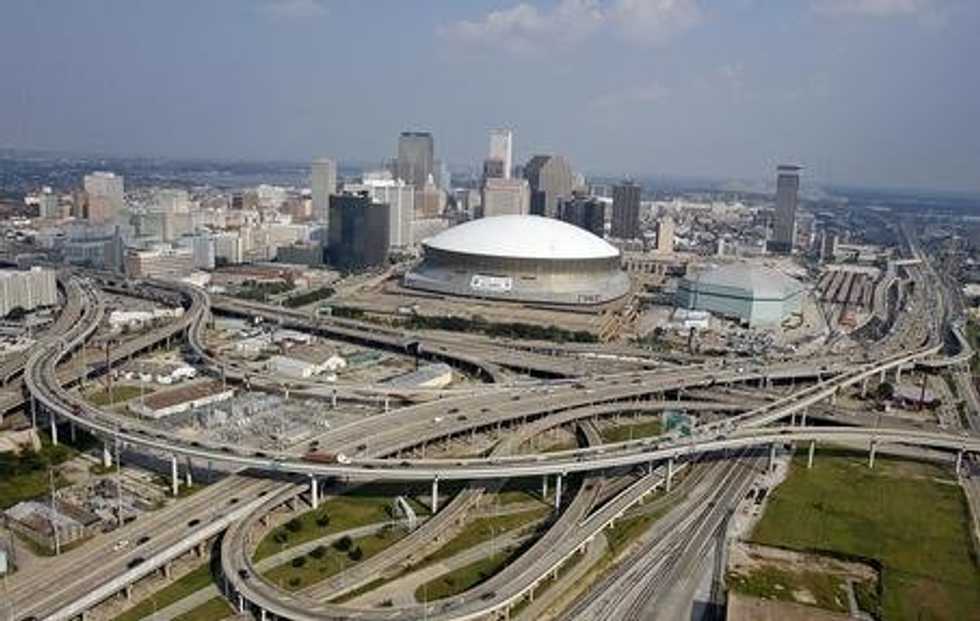
This was the week that marked 10 years since Hurricane Katrina flooded out the magnificent, historic, and always classic New Orleans, Louisiana. While the storm herself did some real damage, the epic flooding was the failure of man-made levees and poor urban planning. I would summarize more but we all remember watching the news (live, in shock) and seeing the images: neighborhoods under water, the roof of the Superdome scattered, and innocent people suffering in massive seas around destroyed homes.
The people of this country are not deterred easily, and we never back down from a challenge. Katrina though, was different. Over 1,800 people lost their lives in the wake of the disaster, and the collateral damage was truly catastrophic. Domestic aid did not arrive early or quickly, and conditions were like that of a third world - no utilities, no reliable water, and seemingly little help. Normally this is when we would see that inherent, American pride come through. While New Orleans maintained a large part of their loyal residents, the flesh and blood that keeps NOLA in its soul, it also lost many. A year after the storm, the population was HALF what it was prior to the disaster. For many, the return back home just did not seem worth it. The glory of New Orleans would not be lost, but it would take a very serious blow.
10 years have passed now, and the city moves as any other, with a heartbeat as strong as before. I had the privilege of spending time in New Orleans this summer, as residents and tourists alike were braving the hot and humid days. Commerce has returned, tourism is thriving, and things are changing. Though I must say, there is still a lot of damage. It was terribly naive of me to think that 10 years in an American city would result in a total clean-up, but Katrina left scars still very visible today. I saw the Lower 9th Ward, and one of the sites of a levee breach. Homes are still standing empty, just four walls and parts of a roof. Grassy patches of land are clearly shaped in ways that showed that a house used to be there, the home of a family swept away in the waters 10 years ago.
New Orleans has been on the mend since that fateful week 10 years ago when so much was lost, and there are still many issues - far beyond any damage to physical. Infrastructure still has problems, and the black community is suffering the worst. Some 50% of black children are living in poverty in New Orleans, and income inequality is actually GROWING. Communities are suffering from a shortage of low-income housing.
The problems are very real, but it is not all troubling. There is something that can ensure that New Orleans always remains its charming self: the savior is us, the young people. It is the responsibility of Generation Y, Millennials, to keep not only New Orleans on a path forward, but the entire country. We are responsible for looking out for musicians, artists, and the wonderful cultures of New Orleans. The Creole, Cajun, and many other diverse colors of NOLA remain unwavered, but the fate of the future of the city belongs in the hands of us. We must maintain and grow the tourism, bring industry, and not turn a blind-eye to people in need. NOLA is such a vibrant, spectacular city - we have to keep it that way.