Well, it’s that time of the year again when real NBA media people are filling out and submitting ballots for season awards such as MVP, Defensive Player of the Year, Coach of the Year, All-NBA teams, etc. I like to pretend I’m a real media person, so for the second straight year, I’m undertaking the professional endeavor.
Most Valuable Player
- Stephen Curry
- Kawhi Leonard
- LeBron James
- Kevin Durant
- Chris Paul
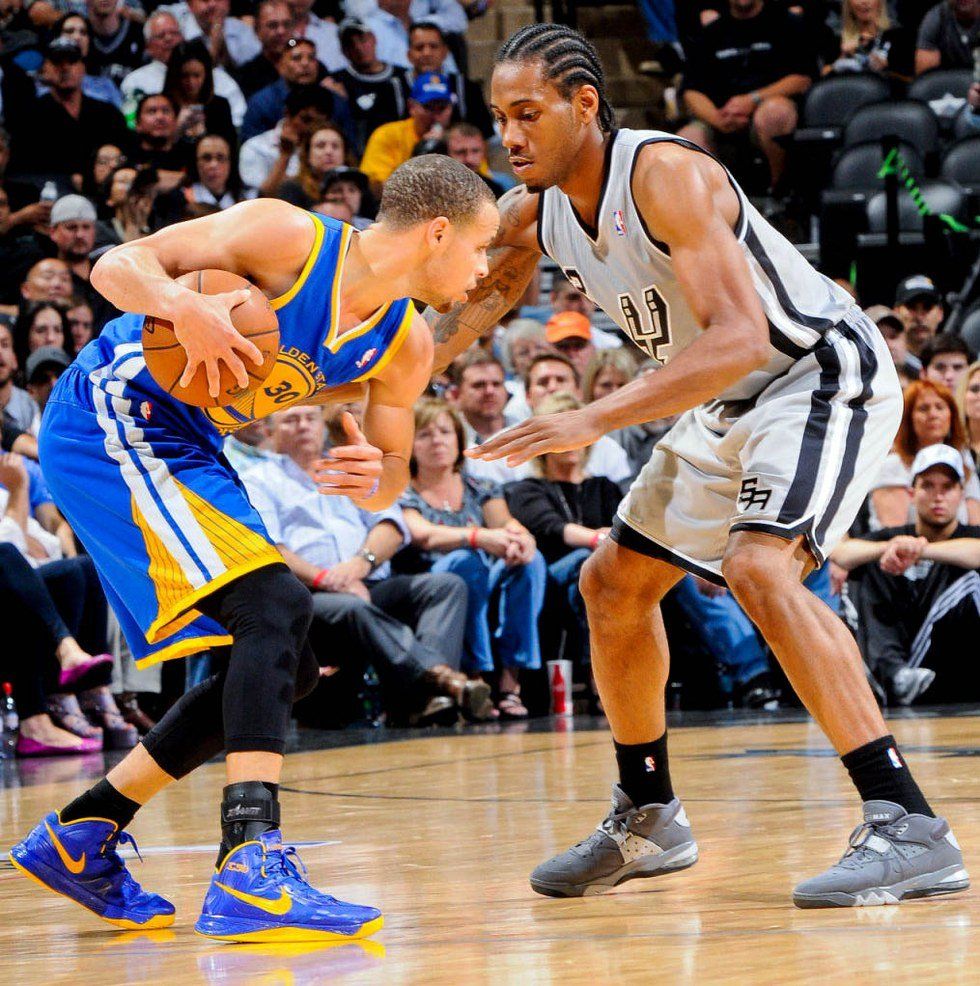
Curry’s MVP bid will be unanimous, and rightfully so. Curry’s potency beyond the 3-point line has warped opposing defenses in a manner never before witnessed. He sends defenses into a mental frenzy even when not possessing the ball as his gravity has reached levels of impact even Einstein couldn’t have theorized. The only question concerning Curry is whether this season is the greatest individual season of all time.

Leonard has cemented himself as the best two-way player in the league and grasped the reigns of the Spurs winning machine. Leonard is the rare player that can simply envelop a game within a few minutes of impactful dominance at both ends. Leonard’s night-to-night consistency and effort are an overlooked component of his ascension to stardom, which has crested due to his offensive development. It’s fair to quibble about Leonard’s free throw and assist rates when comparing him to offensive savants such as LeBron James, Kevin Durant and Russell Westbrook, but he still produces at top-level efficiency by way of his versatility and strength in the post, improvement in his stop-and-go scoring moves and the development of his 3-point stroke that has made him one of the most lethal spot up shooters in the league.
James always has a case for the MVP crown by way of the mystic of the unstoppable force that results from James flipping his self-created switch. LeBron packs a second gear of firepower into his artillery with his bullzdozing drives to the hoop as well as the physical and mental makings of an all-world defender, if only for spurts. However, that’s the problem with LeBron and why his days of MVP monarchy may have passed him by. He doesn’t bring it every night, casually playing the role of matador on defense and pick-and-roll settler on offense. Meanwhile, the earthquakes he causes in “The Land” with his dumbfounding quotes, social media exploits and manipulative hold over the organization have bred instability and chaos within the Cavaliers organization.
The Durant-Westbrook media-created competition manifests itself in this season’s MVP balloting. It’s not hard to craft an argument for both stars, but with OKC failing to challenge 60 wins and vastly underwhelming post the All-Star break, it becomes harder to justify when considering Paul’s spectacular season. Durant gets the edge here because of the amalgamated nature of his offensive effectiveness as well as the Thunder’s team performance when Durant is the sole conductor.
| Minutes | OKC offensive rating | OKC defensive rating | OKC net rating | |
| 488 | 115.7 | 107 | 8.7 | |
| 662 | 112 | 106.6 | 5.4 |
Durant’s raw numbers (28.2 PPG, 28.2 PER, and 63.4 true shooting percentage) rank third, second and second, respectively in the entire NBA, but it’s the threat he poses as a spot up option and his work off the ball that gives him the advantage over Westbrook’s hypercompetitive, athletically-infused triple doubles. Also Westbrook’s maniac blitzkriegs in jumping passing lanes and tendencies to space out defensively can leave the Thunder vulnerable at that end. Durant isn’t a shining example of exemplary NBA defense and doesn’t produce the vineable defensive feats Westbrook does, but he’s improved tons at that end, and when he’s locked in, Durant’s length, athleticism and ameliorated footwork can make him an enviable wing defender.

It would be far from an unforgiveable heist to bump Paul out of the fifth spot in favor of Westbrook, but considering the Clippers finished the regular season with just two less wins than the Thunder without Blake Griffin for more than half of the season and the team becomes a dirty, ripped up doormat when Paul sits, it’s harder to justify.
| Clippers offensive rating | Clippers defensive rating | Clippers net rating | |
| 111.9 | 100.1 | 11.8 | |
| 98.3 | 102.4 | -4.2 |
Paul’s savvy in the pick-and-roll with DeAndre Jordan contains immense value as it single-handedly makes the Clippers comfortably a top-10 offense even with Griffin punching trainers, Austin Rivers’ tunnel-vision disease and Wesley Johnson, Luc Richard Mbah a Moute and Jeff Green attempting to pass as floor spacers. Paul’s work at the defensive end remains All-NBA level with his intrusive pestering on the ball and overall scrappiness.
Defensive Player of the Year
- Kawhi Leonard
- Draymond Green
- Paul Millsap
The Draymond vs Kawhi argument:
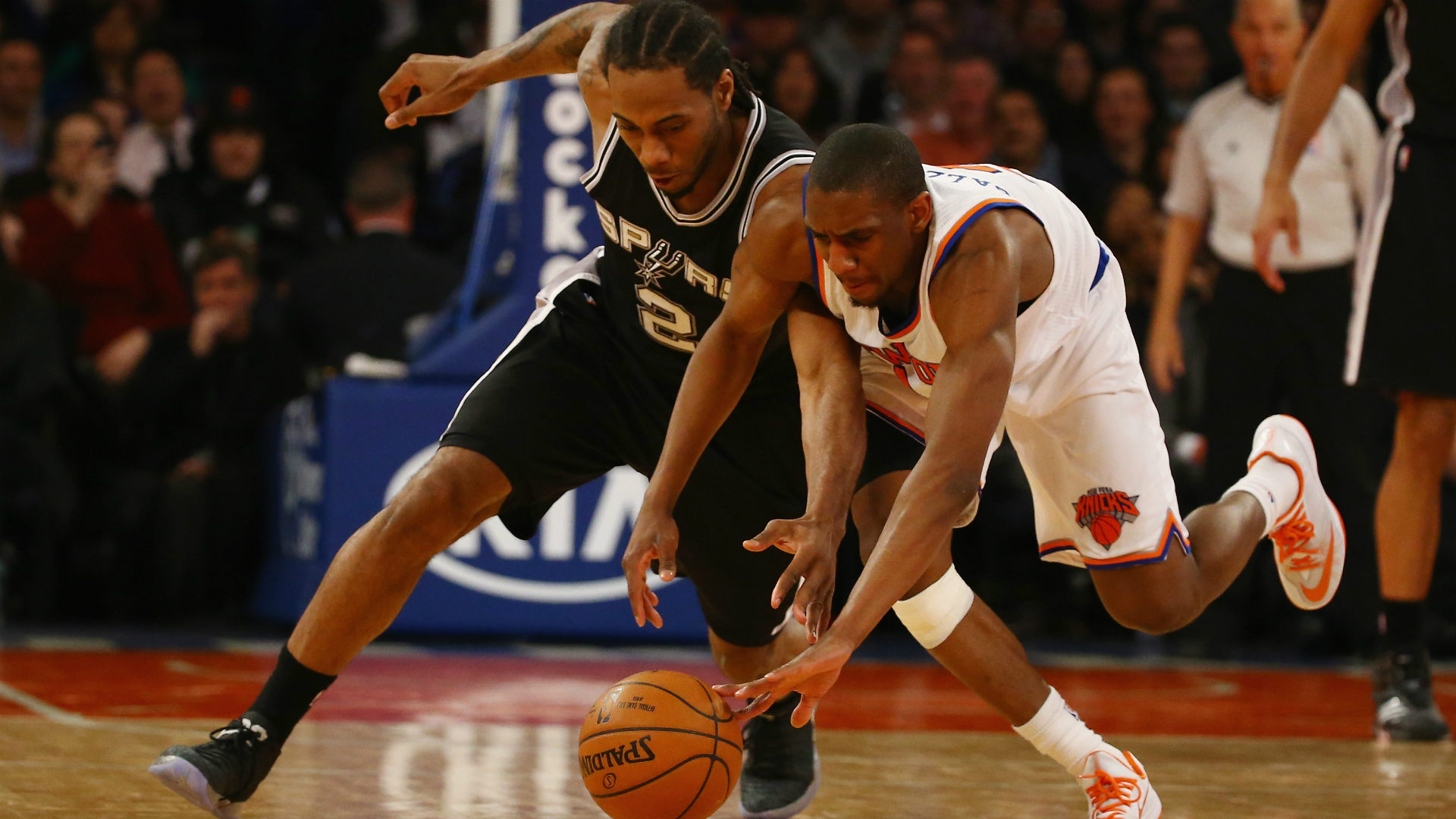
The case for Kawhi: Leonard is the single best man-to-man defender in the game with his combination of effort, activity, athleticism and Hamburger Helper hands, which swipe away dribbles and protrude into passing lanes. Kawhi is ruthless on the defensive end, altering opponents’ offenses as they attempt to steer clear of the devastating damage he can inflict. Also if Leonard is going to receive backlash for his offensive dependence on the Spurs’ system, whether it’s warranted or not, he deserves praise for his independence on the defensive end and how his singular presence has contributed to the Spurs’ historic defensive output this season.
The case for Draymond: Green, in a nutshell, may be the slightly lesser defender of the two, but the manner in which his defensive abilities has a sparked a basketball revolution and unlocked the Warriors’ destructive power in its totality gives Green unmatched value. In other words, while Leonard is the league’s most outstanding defender, Green is the most valuable. His siwtchability is the modern-day antidote to spread offensive attacks, while his active hands and elongated wingspan generate maximum vexation from opposing offense. Green’s grit and tenacity, which gives him the ability to hold up against the league’s behemoths only extends Green’s value, making him the ultimate epicenter of successful NBA defense.
Rookie of the Year
- Karl-Anthony Towns
- Kristaps Porzingis
- Nikola Jokic
Towns should be a unanimous choice and he may already be a top-15 NBA player. His brute post work exists in conjunction with deft footwork and polished maneuvers to jet past or spin around defenders, while his jumper has all the makings of a floor-spacing five man. Towns shot 35 percent from 3 this season, granted on a limited 86 attempts. Regarding Towns’ already-acquired offensive skill, only nine players with a usage rate above Towns posted a better PER: Curry, Durant, Westbrook, LeBron, Paul, Kawhi, Anthony Davis, James Harden and DeMarcus Cousins. Not bad company young fella.
Coach of the Year
- Gregg Popovich
- Steve Kerr
- Steve Clifford
Kerr vs Popovich vs the traditional candidate debate:
Kerr has concocted and engineered a basketball hegemon, whose encore to one of the most dominant seasons in NBA history was breaking the all-time wins record and inspiring a steady stream of persiflage across the NBA landscape. However, Kerr’s back injury cost him the team’s first 43 games, and while he was still deeply involved with the daily process, it shouldn’t be discounted. Having said that, it would be an all-time farce if Kerr failed to collect a Coach of the Year award over the last two seasons.

Popovich has seamlessly transitioned the Spurs from the pace-and-space precedent to a thought-to-be antiquated style of successful basketball as San Antonio tied the league’s all-time mark with a 40-1 home record. It’s a marvel that Popovich has consistently been ahead of the league trend in breeding success in San Antonio, and to his credit, the goad of such transitions hasn’t been a shift of his inner beliefs as it relates to playing philosophy, but instead an adaption to alterations in personnel and player ascension and decline.
The traditional candidate comes in the form of Clifford or Portland’s Terry Stotts—coaches whose teams drastically outperformed initial expectations. Clifford has been a wizard in fortifying the Charlotte defense by way of conservative schematics, and the team’s transition to playing small and jacking 3s was a formidable undertaking considering the Hornets ranked 24th in 3-point attempts last season and dead last in percentage at 31.8. Stotts successfully reconciled with losing four starters from last year’s playoff squad by utilizing a complex offensive system built on constant motion and frequent off-ball screening that strained defenses to the limits of attentiveness and activity. Stotts’ salesmanship also garners merit, as he induced a complete buy in from the team’s star and overall roster by granting all five guys on the court the freedom to attack and facilitate in the team’s free-flowing offense.
Sixth Man of the Year
- Andre Iguodala
- Ed Davis
- Enes Kanter
Iguodala’s candidacy for the sixth man award exists in contrast to traditional winners, who often play the role of bench gunner and put up gaudy point totals. Although some feel Iguodala has passed the postulated threshold of missed games, the versatility he provides the Warriors on both ends is critical. Simply put—would you rather Iguodala or Jamal Crawford, Will Barton, Davis, etc.?
Most Improved Player
- C.J. McCollum
- Kemba Walker
- Will Barton
On its face, Curry and Leonard may be the most qualified players for most improved, but in the spirit of the award, which should be renamed to “breakout player,” C.J. McCollum garners the hardware after significantly increasing his production an efficiency.
| Minutes | PER | Usage | True shooting percentage | Assist/TO ratio | |
| 2,780 | 17.75 | 26.4 | 54.5 | 16.4/9.5 | |
| 973 | 13.15 | 19.1 | 53.4 | 12.6/9.4 |
McCollum’s herky-jerky driving game and pull up shooting off the bounce has complimented Damian Lillard well and has allowed to Portland to remain competitive when Dame sits. In fact, the Trail Blazers have been better with McCollum lineups without Lillard than vice versa. McCollum isn’t being confused for Chris Paul defensively, but he tries hard to fight through picks and track guys off the ball.
All-NBA First Team
Guards: Steph Curry, Chris Paul
Forwards: Kawhi Leonard, LeBron James
Center: Draymond Green

Green’s played just under 25 percent of his minutes at center, not enough to qualify in my book, but historically, the All-NBA team is supposed to tell us who the best players in the league were that particular season and Green certainly qualifies in that aspect. The 2015-16 season should be documented in history as the reign of the Warriors and the small-ball transformation, and no player embodies those two facets more than Green, who has also been a top-10 player this season.
All-NBA Second Team
Guards: Russell Westbrook, Kyle Lowry
Forwards: Kevin Durant, Paul Millsap
Center: DeAndre Jordan
Lowry’s work over the first 75 percent of the season just held off Lillard, Harden and Klay Thompson. Westbrook, Durant and the always-underappreciated Paul Millsap are locks. Jordan receives a lot of flak for his shortcomings, so much so that he doesn’t get enough credit for his strengths such as inflicting physical and psychological damage on opponents on rolls to the rim and turning back drivers as a rim protector. He’s still jumpy on defense and can struggle when he has to venture out to the 3-point arc in pick-and-rolls, but Jordan is one of the more effective big defenders in the league as only five players who defended over 450 shots at the rim was more of a deterrent. Jordan’s also an NBA ironman, a huge advantage over more fragile centers like Al Horford, Cousins and Anthony Davis.
All-NBA Third Team
Guards: Damian Lillard, James Harden
Forwards: Paul George, LaMarcus Aldridge
Center: Al Horford
It was difficult to leave Thompson on the third team in favor of two dudes who place defense low on the priority list. Harden is disgraceful. Ditto for his offseason training, but Harden ranked second in the league in scoring and played a whopping 3,125 minutes, dragging Houston’s rudimentary offense into the playoffs.
Horford gets the nod of Towns, Cousins, Andre Drummond and Whiteside. Millsap may be the Hawks’ best player, but it’s Horford’s discipline and high IQ on both ends that makes coach Budenholzer’s system shine.
All-Defense First Team
Guards: Chris Paul, Avery Bradley
Forwards: Kawhi Leonard, Draymond Green
Center: Hassan Whiteside

Bradley’s the game’s premier on-ball irritant with a bulldog mentality and his impressive wingspan provides a natural advantage as well. Whiteside’s excessive swatting finally began to manifest with improved defensive play from the Heat overall in the last third of the season when he became more diligent in when and what to target with his big paws and showed more reliability in high ball screens.
All-Defense Second Team
Guards: Ricky Rubio, Klay Thompson
Forwards: Paul George, Paul Millsap
Center: Rudy Gobert
Rubio is the shimmering example of what shear effort can do for a player on the defensive end. Thompson, despite not rating favorably by metrics such as ESPN’s Real Plus-Minus, allots Curry the easier defensive assignment by defending quick an agile point guards, and Thompson’s ability to stand his ground in the post on switches is such an underrated aspect of his defensive value. George is a first team-caliber defender, but the two best defenders on Earth are also forwards. Millsap’s quick hands (1.8 SPG) and overlooked spryness (1.7 BPG) are valuable in any setting, while his footwork and body control make him a small-ball antidote. Gobert missed 20 games, but he’s the best rim protector in the league and his lateral agility gave Curry and the Warriors trouble this season.