
I come from a small town, around two hours north of New York City. I'll always be eternally grateful for the wonderful childhood that I had in such a small, pictureseque town. Along with my environment, my family shaped my childhood. My parents would take my brother and I into New York City often and wouldn't hesitate to expose us to the various boroughs of the city. I have memories of walking through Harlem with my mother asking to get my hair braided. Both being very interested in art at young age, my brother and I grew up watching a lot of films-- old ones and especially foreign ones. The portrayal of different cultures from around the globe excited me so much. My brother was extremely intrigued by Asian culture, especially traditional clothing. It isn't there any longer, but if you can remember Pear River Mart in SoHo -- that was our haven. I loved looking at the silk coats and Chinese accessories. In addition to foreign fashion, we were never hesitant to try new foods, with a special liking for Indian cuisine. I still thank my parents for the cultural appreciation they instilled in my brother and me.
The public school I attended was small -- perhaps a little less than a hundred students per graduating class. I didn't even realize how tiny my school was until I left home for college a few years ago, nor did I realize how Caucasian it was. My mother jokingly describes the high school (and the town) as "mayonnaise" due to the majority of Irish, Italian and Polish people.
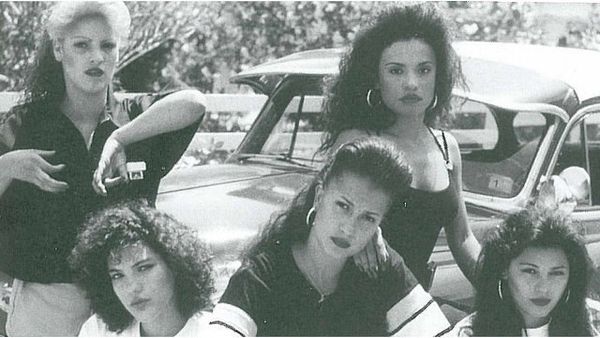
Yet, despite the Caucasian atmosphere of my surroundings, I found myself captivated by Black culture. I can attribute this fascination to two main predecessors: first, the simple fact of being interested in a culture that was different than my own, just as I had always been; and second, my love of rap and hip-hop. I wanted to understand Black culture and emulate it myself. I wanted to dread my hair and even buy grills. My group of friends shared the same love of "hood" culture and would often borrow slang, fashion and food that we called "ghetto" (I cringe looking back on this). I guess we thought it made us cool or unique or something -- because we were different than our peers. Eventually, my fascination extended to Latino, Hispanic and Indian culture, borrowing and loving only specific aesthetic parts that I cherry-picked.
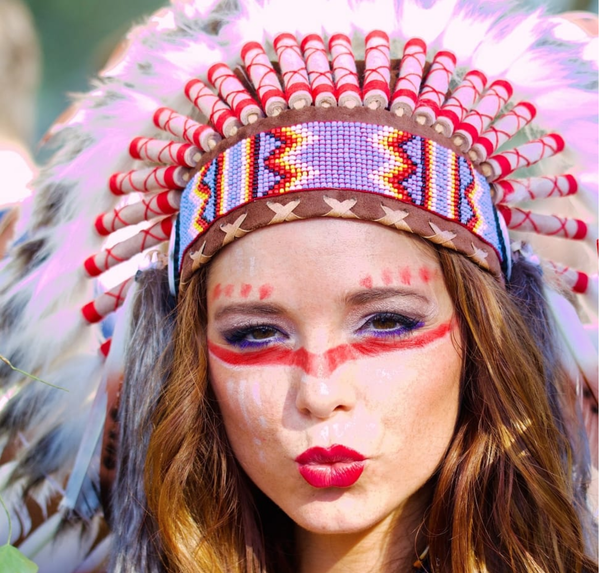
Towards the end of high school, I started to experience a type of conviction, perhaps even guilt. I began reading thoughts and perspectives of people whose culture was being mocked and borrowed from, and my eyes were opened. I started seeing a few, rare articles surface on news networks about ethnic groups being offended by certain Halloween costumes -- for example, the "Indian" costume: a Caucasian person wearing headdress, feathers and fake animal skin to achieve the look of the the oppressed minority people who are native to our country.
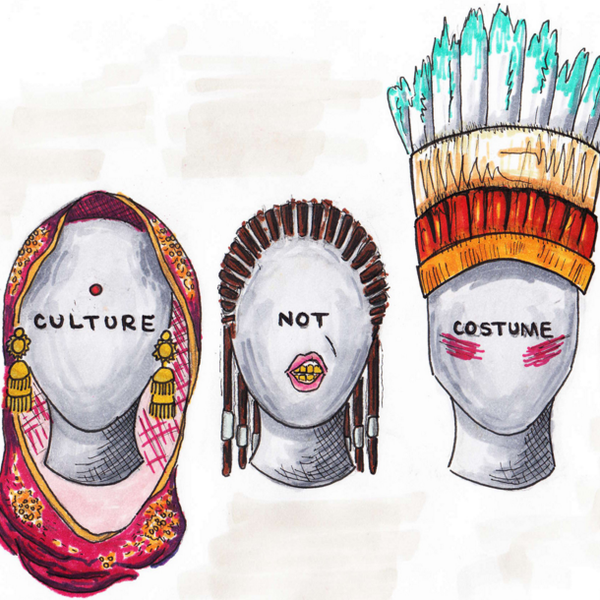
This is similar to the idea of white people carelessly adorning their foreheads with their own version of a "bindi" to look interesting for a music festival, yet having no earthly idea of the historical, religious or ethical background of the culture they are cherry-picking from. It wasn't until the past year that I had actually heard the term "cultural appropriation." Actress Amandla Stenberg comments that "Appropriation occurs when style leads to racist generalizations or stereotypes where it originated but is deemed as high-fashion, cool or funny when the privileged take it for themselves." I realize what mistake I have personally been making for years through my attempted emulation of Black culture... and the mistake our society has been collectively making for over a century through blackface, sports team mascots, Halloween costumes, slang and so many other aspects of society.
Admittedly, I had some difficulty comprehending the concept at first, but I believe it truly comes down to consideration, awareness and discernment. Understanding that I personally belong to a race that has oppressed various ethnic groups in horrific ways leaves me with the duty to protect those who have been mistreated, to ensure that intolerance does not reoccur and to fight for justice in the current injustice that is taking place. I can recognize that injustice is taking place when the culture of an ethnic group is being robbed, mocked and exploited. I also understand that this issue is deeper than costumes, slang and hairstyles... that at the very core of this mess is a deep-rooted racism (white privilege) that is so integrated into our day-to-day life as Americans that it's hard to detect, that is, unless we educate one another.
In the past three years, I've aimed to learn as much as I can about cultural appropriation, yet I still believe there's more for me to familiarize myself with. There are many instances where I'm unsure if cultural appropriation is taking place, where my judgment is blurred. Although different cultures still excite me, just as they did when I was younger, I'm trying to find the difference between truly, honestly appreciating culture and the misappropriation of culture.
The main goal is respect and protection of others: to educate myself on the lifestyles of others, but not to pillage the honor that is sealed in their precious heritage. '
Practical ways of achieving this? Confront injustice. Be patient with those who are unfamiliar with cultural appropriation (remember, this is a relatively new term). Apologize to those whose way of life is mocked and copied. Most importantly, practice a genuine love to all people